Hyperbaric Oxygen Therapy After Plastic Surgery: Can It Support Recovery?
5 min read
AUTHOR

MEDICALLY REVIEWED BY

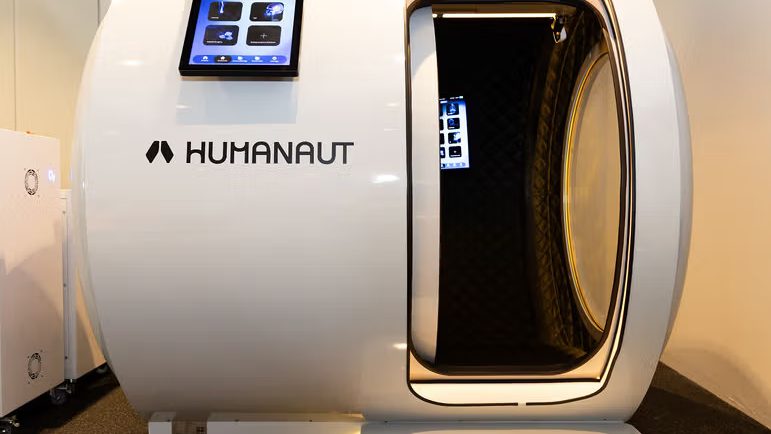
If you've recently had plastic surgery, or you're weighing a procedure, you may have come across hyperbaric oxygen therapy after plastic surgery as a way to potentially support healing. It's a reasonable question to ask: does breathing concentrated oxygen in a pressurized chamber actually help a body recover from surgery, or is it just another wellness trend layered onto an already significant decision?
Hyperbaric oxygen therapy (HBOT) does have real, FDA-cleared evidence behind it - but that clearance applies to a narrower set of circumstances than "plastic surgery" in general. This article walks through what HBOT is, where the FDA-cleared evidence actually applies, what the newer research on hyperbaric oxygen therapy and plastic surgery recovery specifically shows for elective cosmetic procedures, and how a program like Humanaut Health's fits into the picture.
What Is Hyperbaric Oxygen Therapy?
HBOT involves breathing concentrated oxygen inside a pressurized chamber. Under increased atmospheric pressure, considerably more oxygen dissolves directly into blood plasma than normal breathing allows, and that oxygen-rich plasma is carried to tissue throughout the body - including tissue that may be healing from a recent procedure (Francis & Baynosa, Advances in Wound Care, 2017).
How HBOT May Support Tissue Healing
The proposed mechanism centers on oxygen-starved tissue. When oxygen delivery to a surgical site is compromised, cells have a harder time doing the basic work of repair. Higher plasma oxygen levels are thought to stimulate fibroblast activity and collagen synthesis, and to upregulate vascular endothelial growth factor (VEGF), a signal that helps new blood vessels form in oxygen-deprived tissue (Francis & Baynosa, Advances in Wound Care, 2017). This mechanism is well established in principle; how much it translates into meaningful clinical benefit depends heavily on the specific surgical context, which is where the evidence gets more nuanced.
What's FDA-Cleared - and What Isn't
This is the single most important distinction in any honest discussion of HBOT and cosmetic procedures. HBOT is FDA-cleared and recognized by the Undersea and Hyperbaric Medical Society (UHMS) for a specific, limited list of indications, which includes compromised skin grafts and flaps and certain problem wounds (Carter et al., Plastic and Reconstructive Surgery Global Open, 2026; Molina-Vega et al., Plastic and Reconstructive Surgery Global Open, 2026).
That cleared population is generally reconstructive or trauma-related tissue compromise - a skin graft that isn't taking, a flap showing signs of poor blood supply, a wound that isn't healing as expected. It is not the same clinical picture as routine, uncomplicated recovery from an elective cosmetic procedure performed on otherwise-healthy tissue, such as a facelift or tummy tuck with no signs of compromise. Evidence for that second, more common scenario is newer, smaller in volume, and still considered preliminary - so when you see HBOT marketed broadly for "plastic surgery recovery," it's worth asking which of these two very different situations is actually being described.

The Evidence for Flap and Graft Healing: The FDA-Cleared Side
The strongest research base for HBOT sits with compromised grafts, flaps, and problem wounds. A large systematic review of 24 comparative studies (2,246 patients) found a sizable effect favoring HBOT for flap and graft survival within four weeks, though the authors rated the certainty of that evidence as very low to moderate using GRADE criteria (Carter et al., Plastic and Reconstructive Surgery Global Open, 2026). A separate systematic review reported flap and graft salvage rates ranging from roughly 64% to 100% across the studies it included, with notable variation between them (Molina-Vega et al., Plastic and Reconstructive Surgery Global Open, 2026). Pooled case-series data similarly suggest flap survival rates around 62.5% to 97% with HBOT, compared with 35% to 78% in untreated comparisons (Yousef, Solomon & Hom, Laryngoscope, 2022).
It's worth being equally direct about the limits here. A Cochrane review - generally considered the highest standard of evidence - examined four trials on HBOT for acute surgical and traumatic wounds and found inconsistent results, with all four trials rated at unclear-to-high risk of bias; the authors concluded there is a genuine lack of high-quality evidence in this space (Eskes et al., Cochrane Database of Systematic Reviews, 2013). More recent, better-designed research has added some support: a 2025 randomized controlled trial in patients with post-traumatic wounds found HBOT was associated with significantly higher skin graft uptake on day four (92.44% versus 88.12%) and faster donor-site healing than standard care alone (Uniyal et al., Wounds, 2025).
Why Timing May Matter
One consistent theme across this research is timing. Pooled data suggest outcomes are generally better when HBOT begins within roughly 48 hours of a flap or graft being identified as compromised, with effectiveness appearing to decline the longer treatment is delayed (Yousef, Solomon & Hom, Laryngoscope, 2022). This is a pattern worth understanding, not a rule to self-apply - the decision to use HBOT after a surgical complication is a clinical one, made with the surgical team.
Hyperbaric Oxygen Therapy and Plastic Surgery Recovery: What the Cosmetic-Specific Evidence Shows
Separate from the reconstructive evidence above, a smaller and newer body of research looks specifically at HBOT alongside elective cosmetic procedures performed on healthy tissue.
Facelift Recovery
A small case-control study of 20 facelift patients found that those who received HBOT healed significantly faster than those who didn't (an average of 13.3 days versus 36.9 days), with no HBOT-related complications reported (Neel, Mousa, Al-Terkawi, Bakr & Mortada, Aesthetic Surgery Journal Open Forum, 2023). The sample size here is small, and the authors themselves called for larger, prospective trials before drawing firm conclusions.
Abdominoplasty (Tummy Tuck) Recovery
In a retrospective cohort of 356 abdominoplasty patients, those who received HBOT preoperatively - as a preconditioning protocol, not after surgery - saw postoperative complications fall from 32.6% to 8.4%, with preoperative HBOT emerging as an independent protective factor in multivariate analysis (Friedman et al., Plastic and Reconstructive Surgery Global Open, 2019). It's an important nuance that this particular study used HBOT before surgery, not as a strictly post-operative recovery tool.
Liposuction, Body Contouring, and Combined Aesthetic Procedures
A 2025 systematic review and meta-analysis pooling 11 studies and 734 aesthetic-surgery patients found a mean wound-healing time of 11.30 days among those treated with HBOT, describing the findings as encouraging but still preliminary given the heterogeneous, mostly small studies involved (Mortada et al., Aesthetic Plastic Surgery, 2025). A separate descriptive cohort of 296 patients receiving post-operative HBOT after liposuction, abdominoplasty, and breast procedures reported an overall complication rate of 10.7% with no reported infections - though this study had no untreated comparison group, so it can describe an outcome but can't establish that HBOT caused it (Aguilar et al., Plastic and Reconstructive Surgery Global Open, 2024).
Fat Grafting: A Preliminary, Preclinical Signal
For fat grafting specifically, the evidence is earlier-stage still. An animal study found that HBOT was associated with better-preserved graft volume and tissue structure after fat transplantation (Liang, Sun, Yi & Lv, Aesthetic Plastic Surgery, 2023). As this is animal data, it should be read as a preliminary, mechanistic signal rather than a demonstrated human outcome.
HBOT After Plastic Surgery: A Realistic Picture
Taken together, the evidence suggests HBOT may be a genuinely useful adjunct in specific situations - particularly compromised flaps, grafts, and problem wounds, where the FDA-cleared indication applies and a meaningful, if imperfect, evidence base exists. For elective cosmetic procedures in otherwise-healthy tissue, the picture is promising but still developing: individual studies on facelifts, abdominoplasty, and combined aesthetic procedures point in a favorable direction, but they are mostly small, retrospective, or lack control groups. None of this should be read as a guarantee, and HBOT is not a substitute for surgical skill or standard post-operative care. A companion article on this site covers hyperbaric oxygen therapy's general benefits and risks in more depth, for readers who want the broader picture beyond the surgical-recovery context.
Safety Considerations
In supervised clinical settings, HBOT is generally described in the literature as well tolerated. That said, it isn't appropriate for everyone - certain lung conditions, uncontrolled fever, and some ear or sinus issues are among the reasons a clinical team may advise against it for a given patient. This article can't substitute for an individualized evaluation; anyone considering HBOT after surgery should discuss their specific history and procedure with both their surgeon and the HBOT provider before starting.
How Humanaut Health Supports Post-Surgical Recovery
Humanaut Health does not perform plastic surgery. Its HBOT program is designed as adjunctive recovery support for patients who have had - or are considering - a procedure performed elsewhere, delivered by trained clinical staff and offered alongside other regenerative, recovery-focused therapies such as stem cell therapy. For patients navigating post-surgical recovery who want to understand whether hyperbaric oxygen therapy could be a reasonable addition to their plan, Humanaut Health's HBOT program is one piece of the broader concierge longevity care the clinic provides, alongside regenerative therapies like stem cell therapy.
FAQ
Is hyperbaric oxygen therapy FDA-cleared for plastic surgery recovery?
It depends on the situation. HBOT is FDA-cleared for a specific, narrow set of indications that includes compromised skin grafts and flaps and certain problem wounds - generally reconstructive or trauma-related tissue compromise. It is not broadly cleared for routine, uncomplicated recovery from elective cosmetic surgery, where the evidence is newer and more preliminary.
What is HBOT after plastic surgery used for?
In its FDA-cleared context, it's used to support healing when a graft or flap shows signs of compromised blood supply, or with certain problem wounds. In elective cosmetic surgery, smaller studies have explored HBOT alongside recovery from facelifts, abdominoplasty, liposuction, and fat grafting, though this use is considered adjunctive and still emerging.
Is HBOT after plastic surgery safe?
Existing studies have generally reported HBOT as well tolerated, including in small facelift and abdominoplasty studies that found no related complications. As with any therapy, suitability depends on individual health history, which is why it's discussed with a clinical team rather than self-directed.
How soon after surgery can HBOT be started?
For compromised flaps and grafts, research suggests outcomes tend to be better when HBOT begins within about 48 hours of the problem being identified. Timing for elective, non-complicated recovery use is decided case by case with the surgical and HBOT care teams.
Does HBOT help with swelling and bruising after cosmetic surgery?
Some of the cosmetic-specific studies report faster healing times in HBOT-treated patients, which may relate to reduced swelling, though most of this research focuses on overall wound-healing timeframes rather than swelling and bruising specifically, so it shouldn't be read as a direct, proven effect on those symptoms.
Can HBOT help with fat grafting or fat transfer recovery?
The evidence here is still preliminary and comes mainly from an animal study showing better-preserved graft volume with HBOT. This is a useful early signal, but it hasn't yet been confirmed in human clinical trials specific to fat grafting.
Does Humanaut Health perform plastic surgery?
No. Humanaut Health is a concierge longevity and regenerative medicine clinic, not a plastic surgery provider. Its HBOT program is offered as adjunctive recovery support for patients who have had, or are considering, a procedure performed elsewhere.
Key Takeaways
- Hyperbaric oxygen therapy after plastic surgery is FDA-cleared only for a specific population - compromised grafts, flaps, and certain problem wounds - not for cosmetic surgery recovery broadly.
- The strongest evidence sits with reconstructive and trauma-related tissue compromise, where systematic reviews report meaningful flap and graft survival benefits, tempered by low-to-moderate certainty ratings.
- Evidence specific to elective cosmetic procedures (facelift, abdominoplasty, liposuction, fat grafting) is smaller, newer, and still considered preliminary.
- Timing appears to matter for compromised tissue, with earlier HBOT initiation associated with better outcomes.
- Humanaut Health offers HBOT as adjunctive recovery support, not as a plastic surgery provider.
If you're exploring whether hyperbaric oxygen therapy could support your own post-surgical recovery, learn more about Humanaut Health's HBOT program and how it fits alongside the clinic's other recovery-focused services.
References
- Francis A, Baynosa RC. "Hyperbaric oxygen therapy for the compromised graft or flap." Advances in Wound Care, 2017; 6(1):23-32. DOI: 10.1089/wound.2016.0707
- Carter MJ, Eckert KA, Fife CE, Gelly HB. "Systematic Review of Comparative Studies Evaluating Hyperbaric Oxygen Therapy on Skin Flap and Graft Surgical Indications." Plastic and Reconstructive Surgery Global Open, 2026; 14(5):e7750. DOI: 10.1097/GOX.0000000000007750
- Molina-Vega J, Cascavita CT, Pferdehirt RE, Vardanian AJ. "Current Use of Hyperbaric Oxygen Therapy in Plastic Surgery: A Systematic Review." Plastic and Reconstructive Surgery Global Open, 2026; 14(8):e7989. DOI: 10.1097/GOX.0000000000007989
- Eskes A, Vermeulen H, Lucas C, Ubbink DT. "Hyperbaric oxygen therapy for treating acute surgical and traumatic wounds." Cochrane Database of Systematic Reviews, 2013, Issue 12, Art. No. CD008059. DOI: 10.1002/14651858.CD008059.pub3
- Uniyal M, Ahmad I, Dhiman AK, Kumar A, Sarkar B, et al. "The effect of hyperbaric oxygen therapy on split-thickness skin graft uptake in posttraumatic wounds and donor site healing: a randomized controlled trial." Wounds, 2025; 37(3):134-140. DOI: 10.25270/wnds/24157
- Yousef A, Solomon I, Hom DB. "Can Hyperbaric Oxygen Salvage a Compromised Local/Regional Skin Flap?" Laryngoscope, 2022; 132(10):1892-1894. DOI: 10.1002/lary.30160
- Neel OF, Mousa AH, Al-Terkawi RA, Bakr MM, Mortada H. "Assessing the Efficacy of Hyperbaric Oxygen Therapy on Facelift Outcomes: A Case-Control Study." Aesthetic Surgery Journal Open Forum, 2023; 5:ojad065. DOI: 10.1093/asjof/ojad065
- Friedman T, Menashe S, Landau G, Sherf M, Wiser I, Seligman Y, et al. "Hyperbaric Oxygen Preconditioning Can Reduce Postabdominoplasty Complications: A Retrospective Cohort Study." Plastic and Reconstructive Surgery Global Open, 2019; 7(10):e2417. DOI: 10.1097/GOX.0000000000002417
- Mortada H, González JE, Husseiny YM, Al Jabbar I, Sultan F, Alrobaiea S, Fouda Neel O. "Efficacy of Hyperbaric Oxygen Therapy as an Adjunct in Aesthetic Surgery: A Systematic Review and Meta-analysis." Aesthetic Plastic Surgery, 2025; 49:2498-2512. DOI: 10.1007/s00266-025-04728-9
- Aguilar HA, Ramírez BA, Serrano HM, Villabona SJ, Hoyos AE, Varela A. "Experience of Hyperbaric Chamber Usage in Aesthetic Plastic Surgery Practice for Recovery and Complication Prevention." Plastic and Reconstructive Surgery Global Open, 2024; 12(11):e6264. DOI: 10.1097/GOX.0000000000006264
- Liang J, Sun X, Yi L, Lv J. "Effect of Hyperbaric Oxygen Therapy on the Survival Rate of Autologous Fat Transplantation." Aesthetic Plastic Surgery, 2023; 47(1):423-429. DOI: 10.1007/s00266-022-03096-y