Hyperbaric Oxygen Therapy for PTSD: What Research Shows
5 min read
AUTHOR

MEDICALLY REVIEWED BY

Post-traumatic stress disorder can follow a person for years, even after months of therapy and several medication trials. That persistence has pushed researchers to ask whether some cases involve lasting changes in brain tissue, and whether a physical intervention might help. Hyperbaric oxygen therapy for PTSD is one of the approaches drawing attention, largely because of a series of small trials in combat veterans.
This article walks through what PTSD involves, how pressurized oxygen is thought to act on the brain, what the trials found, where guidelines stand, and what safety questions matter. At Humanaut Health, the goal is to help readers understand the evidence clearly before making any decision with their care team.
What Is PTSD and Why Do Some Cases Resist Treatment?
PTSD can develop after exposure to a traumatic event such as combat, assault, or a serious accident. Its symptoms usually fall into four groups: intrusive memories or nightmares, avoidance of reminders, negative changes in mood and thinking, and heightened arousal such as poor sleep or a strong startle response.
The condition is especially common after military service. A review of the field estimates that up to 30% of veterans returning from combat zones may be affected, and that a meaningful share do not respond fully to standard treatment (Doenyas-Barak et al., Frontiers in Neuroscience, 2023).
One research perspective links persistent symptoms to measurable changes in fronto-limbic brain circuits, the networks connecting emotional processing centers with regions that regulate attention and fear responses (Doenyas-Barak et al., Frontiers in Neuroscience, 2023). If those circuits are altered, the reasoning goes, a therapy aimed at brain tissue itself might complement psychological care. That idea is still being tested.
How Hyperbaric Oxygen Therapy Works
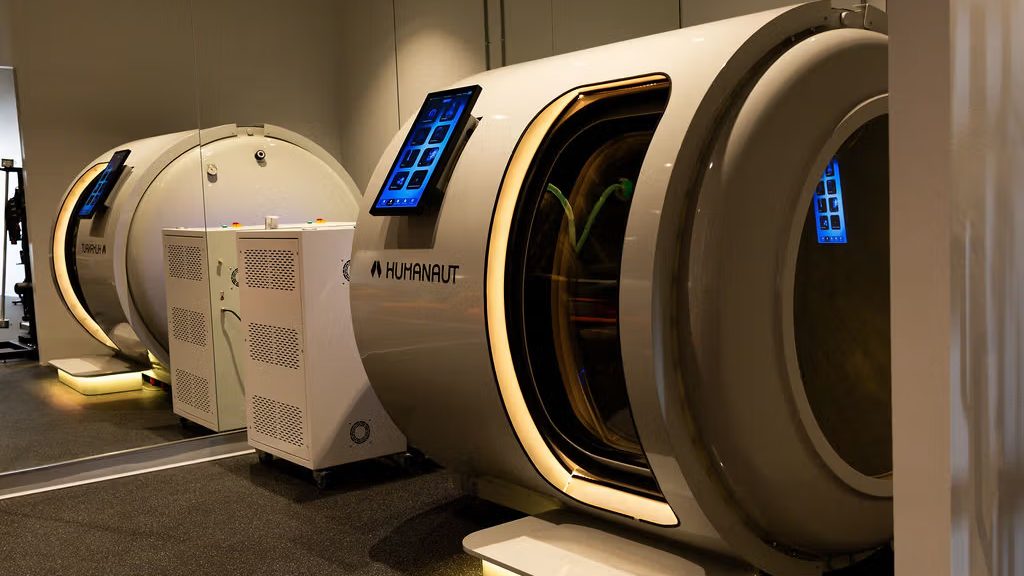
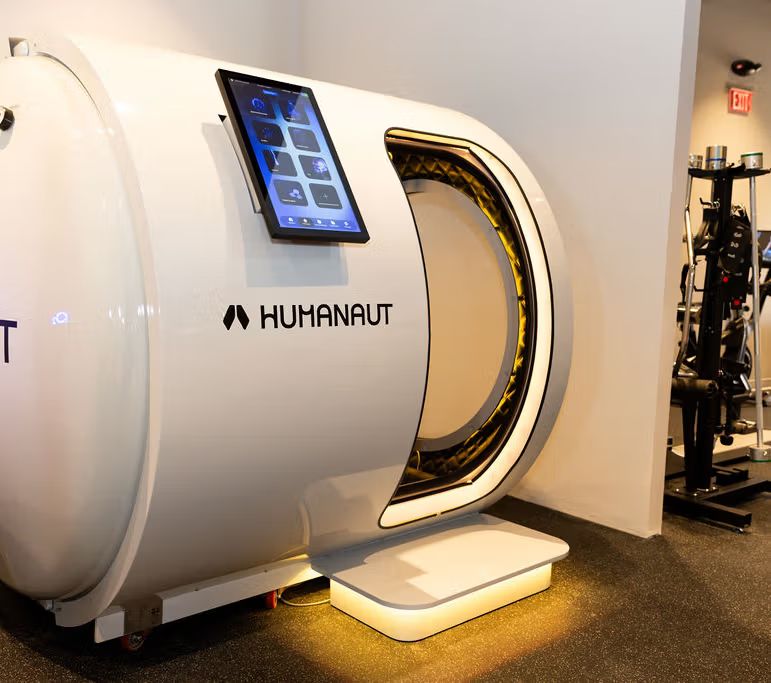
During hyperbaric oxygen therapy, a person breathes close to 100% oxygen inside a chamber pressurized above normal atmospheric pressure. In the PTSD research, pressures generally ranged from about 1.5 to 2.4 atmospheres absolute (ATA), with sessions lasting 60 to 90 minutes.
Higher pressure allows much more oxygen to dissolve into the blood plasma, which increases oxygen delivery to tissues. That physical effect is why HBOT has long been used for conditions such as decompression sickness and carbon monoxide poisoning.
It is important to separate established uses from experimental ones. The U.S. Food and Drug Administration has cleared hyperbaric chambers for a specific list of conditions, including decompression sickness, air or gas bubbles in blood vessels, carbon monoxide poisoning, and certain non-healing wounds (U.S. FDA, "Hyperbaric Oxygen Therapy: Get the Facts"). PTSD is not on that list. Humanaut Health covers the broader basics of the therapy in its general overview of hyperbaric oxygen therapy benefits and risks.
Why Researchers Are Studying Hyperbaric Oxygen Therapy for PTSD
The working theory is that repeated exposure to high-pressure oxygen, interrupted by short air breaks, creates fluctuations in oxygen levels that the body reads as a repair signal. Researchers describe this as a "hyperoxic-hypoxic paradox" (Doenyas-Barak et al., Frontiers in Neuroscience, 2023).
According to this hypothesis, those signals may influence gene expression and support several processes:
- New blood vessel growth may improve circulation in under-supplied brain regions.
- Mitochondrial activity may increase, supporting cellular energy production.
- Neuroplasticity may be encouraged, helping brain networks reorganize.
- Inflammatory signaling may be regulated rather than amplified.
These mechanisms come largely from laboratory and imaging work, and they have not been proven to explain clinical results in PTSD. They are best understood as plausible explanations that researchers are still evaluating.
What the HBOT PTSD Research Shows
The clinical evidence comes from two main groups of studies: trials designed specifically for PTSD, mostly from one Israeli research center, and U.S. military trials that focused on mild traumatic brain injury but also measured PTSD symptoms.
The Israeli Veteran Trials
In a 2022 randomized trial, 35 veterans with treatment-resistant PTSD were assigned either to 60 daily HBOT sessions or to no additional treatment. Among the 29 who completed the study, the HBOT group showed significant improvement on a clinician-rated PTSD scale, along with changes on brain imaging (Doenyas-Barak et al., PLoS One, 2022). Because the control group received no sham procedure, expectation effects could not be ruled out.
A larger follow-up trial addressed that gap. It randomized 63 male combat veterans to 60 daily 90-minute sessions of 100% oxygen at 2 ATA or a sham of room air at 1.02 ATA, which is barely above normal pressure. Of the 56 who completed treatment, the oxygen group showed greater improvement in PTSD symptoms than the sham group, and resting-state MRI suggested changes in connectivity across major brain networks (Doenyas-Barak et al., Journal of Clinical Psychiatry, 2024).
A later analysis of the same participants found that people who improved by at least 35% by the end of treatment tended to keep improving at the three-month follow-up (Danan et al., Brain and Behavior, 2025). This was a post hoc analysis, so it generates hypotheses rather than confirming them.
Military Trials With Sham Controls
Earlier U.S. Department of Defense trials tell a more complicated story. In a 2012 study of 50 service members with mild brain injury, oxygen at 2.4 ATA was compared with air at 1.3 ATA, and both groups improved, with no significant difference on a PTSD checklist (Wolf et al., Journal of Neurotrauma, 2012).
The HOPPS trial randomized 72 service members to oxygen at 1.5 ATA, a 1.2 ATA air sham, or routine care. Oxygen performed no better than the sham, although both chamber groups improved compared with routine care (Miller et al., JAMA Internal Medicine, 2015).
The BIMA trial produced a more favorable signal. Among 71 participants, about half of whom met PTSD criteria, oxygen at 1.5 ATA was associated with improved PTSD symptoms at 13 weeks, especially in those with PTSD. However, those changes did not persist beyond six months (Weaver et al., Undersea and Hyperbaric Medicine, 2018).
What the 2024 Systematic Review Concluded
A 2024 systematic review pooled eight studies with 393 participants in total, each with fewer than 75 people. The authors reported improvement across a wide range of doses and described a near-linear relationship between cumulative oxygen dose and symptom change (Andrews & Harch, Frontiers in Neurology, 2024). They also noted important limits: PTSD was often a secondary outcome, designs varied widely, and one author works in the hyperbaric field.
Study | Participants | Protocol | PTSD-related finding | |
Wolf et al., 2012 | 50 service members with mild brain injury | 30 sessions, 2.4 ATA oxygen vs 1.3 ATA air | No significant difference; both groups improved | |
Miller et al., 2015 | 72 service members with post-concussive symptoms | 40 sessions, 1.5 ATA oxygen vs 1.2 ATA air vs routine care | Oxygen no better than sham; both chamber groups improved | |
Weaver et al., 2018 | 71 service members, about half with PTSD | 40 sessions, 1.5 ATA oxygen vs 1.2 ATA air | Improvement at 13 weeks; faded by 6 months | |
Doenyas-Barak et al., 2022 | 35 veterans with treatment-resistant PTSD | 60 sessions vs no added treatment | Significant improvement; no sham control | |
Doenyas-Barak et al., 2024 | 63 male combat veterans | 60 sessions, 2 ATA oxygen vs 1.02 ATA air | Greater improvement than sham; imaging changes |
Why the Evidence Is Still Considered Mixed
The central debate concerns the sham chambers. Critics point out that blinded trials using low-pressure air did not confirm a clear advantage for oxygen, and suggest that structured daily attention and expectation may explain much of the improvement seen in both groups (Bennett, Diving and Hyperbaric Medicine, 2018).
Supporters respond that pressures of 1.2 to 1.3 ATA are not truly inactive, so those "sham" arms may have delivered a lower dose rather than a placebo (Andrews & Harch, Frontiers in Neurology, 2024). Both arguments are reasonable, and the question has not been settled.
Other limitations matter too. Most positive results in HBOT PTSD studies designed specifically for the condition come from a single research center, participants have been mostly male veterans, sample sizes are small, and long-term durability is uncertain. Independent replication in larger and more diverse groups, including civilians, would strengthen confidence considerably.
What Guidelines Say About HBOT Treatment for PTSD
The 2023 U.S. Department of Veterans Affairs and Department of Defense guideline recommends individual, manualized trauma-focused psychotherapy as the preferred first-line treatment. Named options include prolonged exposure, cognitive processing therapy, and eye movement desensitization and reprocessing (EMDR), with paroxetine, sertraline, or venlafaxine as medication choices (Schnurr et al., Annals of Internal Medicine, 2024).
On hyperbaric oxygen, the guideline takes a neutral position. It neither recommends for nor against HBOT for PTSD because of insufficient evidence, and the VA classifies the use as investigational (U.S. Department of Veterans Affairs, CDI 00075).
In practical terms, HBOT should not replace evidence-based psychotherapy or medication. Any discussion of it is best coordinated with the treating mental health clinician, as a possible addition for people who remain impaired after adequate standard care.
Safety Considerations
HBOT is generally considered safe when delivered by trained staff under appropriate supervision, but it is not risk-free. The most common issue is pressure-related discomfort or injury to the middle ear and sinuses. Less common effects include temporary changes in vision and, rarely, oxygen toxicity affecting the lungs or central nervous system (Heyboer et al., Advances in Wound Care, 2017).
PTSD studies have reported an additional consideration. At the highest doses studied, 30% to 39% of participants experienced a temporary but significant worsening of emotional symptoms during treatment, and middle ear barotrauma rates ranged from 5.5% to 43% across studies (Andrews & Harch, Frontiers in Neurology, 2024).
The time commitment is also substantial. Trial protocols involved 30 to 60 sessions, often five days a week over two to three months. People with claustrophobia or certain ear, sinus, or lung conditions may need careful screening before starting, since these factors can raise the risk of pressure-related complications.
Anyone experiencing thoughts of self-harm should contact a healthcare professional or the 988 Suicide and Crisis Lifeline right away rather than waiting for any experimental option.
Who Might Discuss HBOT Treatment for PTSD With a Clinician?
Based on the current evidence, the conversation is most relevant for adults whose symptoms persist despite adequate first-line care and who are medically cleared for pressurized chamber exposure. It is a question to explore with a care team, not a substitute for established treatment.
Helpful questions to raise include:
- The provider should explain which pressure, oxygen level, and session count are proposed, and how these compare with published protocols.
- The care team should describe how treatment will be coordinated with an existing therapist or psychiatrist.
- The clinic should outline how emotional flare-ups and ear symptoms are monitored and managed.
- The provider should clarify that this use is investigational and not FDA-cleared.
PTSD is distinct from everyday work stress, though chronic stress physiology overlaps with some of the same sleep and mood pathways. Readers interested in that topic can review Humanaut Health's article on executive burnout. Related HBOT research on traumatic brain injury and post-concussion syndrome is covered in separate Humanaut Health articles on those conditions.
Frequently Asked Questions
Is hyperbaric oxygen therapy FDA-approved for PTSD?
No. The FDA has cleared hyperbaric chambers for a limited list of conditions such as decompression sickness and carbon monoxide poisoning, and PTSD is not included. Its use for PTSD is considered investigational.
How many HBOT sessions were used in PTSD studies?
Protocols ranged from 30 to 60 sessions. The two Israeli PTSD trials used 60 daily sessions, while U.S. military trials used 30 to 40 sessions at lower pressures.
Does HBOT PTSD research include civilians?
Very little so far. Most participants in the PTSD trials have been military veterans or service members, largely men, so results may not apply equally to civilians or women.
Can HBOT replace therapy or medication for PTSD?
No. Trauma-focused psychotherapy remains the preferred first-line treatment under the VA/DoD guideline, with specific medications as alternatives. HBOT has only been studied as a possible addition for people who have not responded adequately.
How long do the effects of HBOT treatment for PTSD last?
The answer is still unclear. One military trial found that gains faded by six months, while an analysis of the Israeli trial suggested that people with a strong early response tended to keep improving at three months.
Can HBOT make PTSD symptoms worse?
Temporarily, it may. In some high-dose studies, roughly a third of participants had a reversible flare of emotional symptoms during the treatment course, so close monitoring is important.
Why did sham groups improve in some HBOT studies?
Researchers disagree on the reason. Some attribute it to expectation and the structure of daily sessions, while others argue that mild pressure in the sham chambers had a biological effect of its own.
Does the VA cover HBOT for PTSD?
The VA currently classifies HBOT for PTSD as investigational and does not consider it medically necessary. Its guideline neither recommends for nor against the treatment because of insufficient evidence.
Key Takeaways
- Interest in hyperbaric oxygen therapy for PTSD rests mainly on a handful of veteran trials, several of which reported fewer symptoms after 40 to 60 chamber sessions.
- The most rigorous PTSD-focused study used a near-normal-pressure sham and still favored oxygen, yet it enrolled only male combat veterans at one Israeli center.
- In two of three U.S. military studies, people breathing air at slightly raised pressure improved about as much as those given oxygen, which keeps the picture unsettled.
- Neither the VA/DoD guideline nor the FDA currently supports this use: the guideline stays neutral for lack of evidence, and PTSD sits outside the FDA-cleared indications.
- Proven options such as prolonged exposure, cognitive processing therapy, and EMDR stay at the center of care, with chamber treatment discussed only as a possible extra.
- Ear pressure injury and short-lived emotional flare-ups were the main problems reported, which makes medical screening and close supervision worthwhile.
Explore HBOT With Humanaut Health
Curious whether pressurized oxygen sessions belong in a wider, measurable recovery plan? Talk with the clinical team about Humanaut Health's hyperbaric oxygen therapy program.
References
- Doenyas-Barak K, Catalogna M, Kutz I, Levi G, Hadanny A, Tal S, Daphna-Tekoha S, Sasson E, Shechter Y, Efrati S. "Hyperbaric oxygen therapy improves symptoms, brain's microstructure and functionality in veterans with treatment resistant post-traumatic stress disorder: A prospective, randomized, controlled trial." PLoS One, 2022; 17(2):e0264161. DOI: 10.1371/journal.pone.0264161
- Doenyas-Barak K, Kutz I, Lang E, Assouline A, Hadanny A, Aberg KC, Levi G, Beberashvili I, Mayo A, Efrati S. "Hyperbaric Oxygen Therapy for Veterans With Combat-Associated Posttraumatic Stress Disorder: A Randomized, Sham-Controlled Clinical Trial." Journal of Clinical Psychiatry, 2024; 85(4):24m15464. DOI: 10.4088/JCP.24m15464
- Danan D, Grosskopf Y, Mayo A, Efrati S, Kutz I, Lang E, Alon U, Doenyas-Barak K. "Hyperbaric Oxygen Therapy for PTSD: Threshold Effect for Sustained Symptom Improvement in a Biologically Based Treatment." Brain and Behavior, 2025; 15(8):e70757. DOI: 10.1002/brb3.70757
- Andrews SR, Harch PG. "Systematic review and dosage analysis: hyperbaric oxygen therapy efficacy in the treatment of posttraumatic stress disorder." Frontiers in Neurology, 2024; 15:1360311. DOI: 10.3389/fneur.2024.1360311
- Doenyas-Barak K, Kutz I, Lang E, Merzbach R, Lev Wiesel R, Boussi-Gross R, Efrati S. "The use of hyperbaric oxygen for veterans with PTSD: basic physiology and current available clinical data." Frontiers in Neuroscience, 2023; 17:1259473. DOI: 10.3389/fnins.2023.1259473
- Miller RS, Weaver LK, Bahraini N, et al.; HOPPS Trial Team. "Effects of hyperbaric oxygen on symptoms and quality of life among service members with persistent postconcussion symptoms: a randomized clinical trial." JAMA Internal Medicine, 2015; 175(1):43-52. DOI: 10.1001/jamainternmed.2014.5479
- Weaver LK, Wilson SH, Lindblad AS, et al. "Hyperbaric oxygen for post-concussive symptoms in United States military service members: a randomized clinical trial." Undersea and Hyperbaric Medicine, 2018; 45(2):129-156. DOI: 10.22462/03.04.2018.1
- Wolf G, Cifu D, Baugh L, Carne W, Profenna L. "The effect of hyperbaric oxygen on symptoms after mild traumatic brain injury." Journal of Neurotrauma, 2012; 29(17):2606-2612. DOI: 10.1089/neu.2012.2549
- Schnurr PP, Hamblen JL, Wolf J, et al. "The Management of Posttraumatic Stress Disorder and Acute Stress Disorder: Synopsis of the 2023 U.S. Department of Veterans Affairs and U.S. Department of Defense Clinical Practice Guideline." Annals of Internal Medicine, 2024; 177(3):363-374. DOI: 10.7326/M23-2757
- U.S. Department of Veterans Affairs, Community Care. "Hyperbaric Oxygen Therapy for Posttraumatic Stress Disorder and Traumatic Brain Injury" (CDI 00075). URL: https://department.va.gov/vha/community-care/cdi-templates/cdi00075/
- U.S. Food and Drug Administration. "Hyperbaric Oxygen Therapy: Get the Facts." Consumer Update. URL: https://www.fda.gov/consumers/consumer-updates/hyperbaric-oxygen-therapy-get-facts
- Bennett MH. "Evidence brief: hyperbaric oxygen therapy (HBOT) for traumatic brain injury and/or post-traumatic stress disorder." Diving and Hyperbaric Medicine, 2018; 48(2):115. DOI: 10.28920/dhm48.2.115
- Heyboer M 3rd, Sharma D, Santiago W, McCulloch N. "Hyperbaric Oxygen Therapy: Side Effects Defined and Quantified." Advances in Wound Care, 2017; 6(6):210-224. DOI: 10.1089/wound.2016.0718