Ozone Therapy vs Hyperbaric Oxygen Therapy: Key Differences Explained
5 min read
AUTHOR

MEDICALLY REVIEWED BY

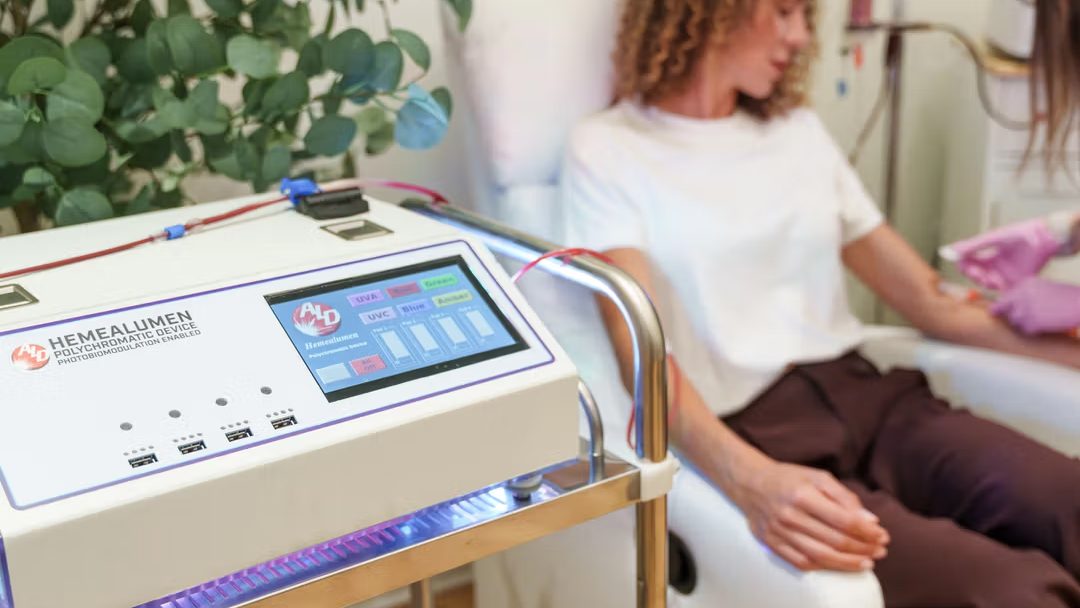
Two therapies built around oxygen tend to come up in the same conversations about recovery, inflammation, and longevity. Because both involve oxygen, many people assume they work the same way. They do not. Comparing ozone therapy vs hyperbaric oxygen reveals differences in the gas used, how it reaches the body, the regulatory picture, and the depth of supporting research.
This guide explains what each therapy is, how researchers think each one works, what the clinical evidence does and does not show, and what safety considerations apply. At Humanaut Health, both therapies are approached as part of evidence-based therapies delivered under physician oversight, so the goal here is clarity rather than a sales pitch.
What Is Hyperbaric Oxygen Therapy?
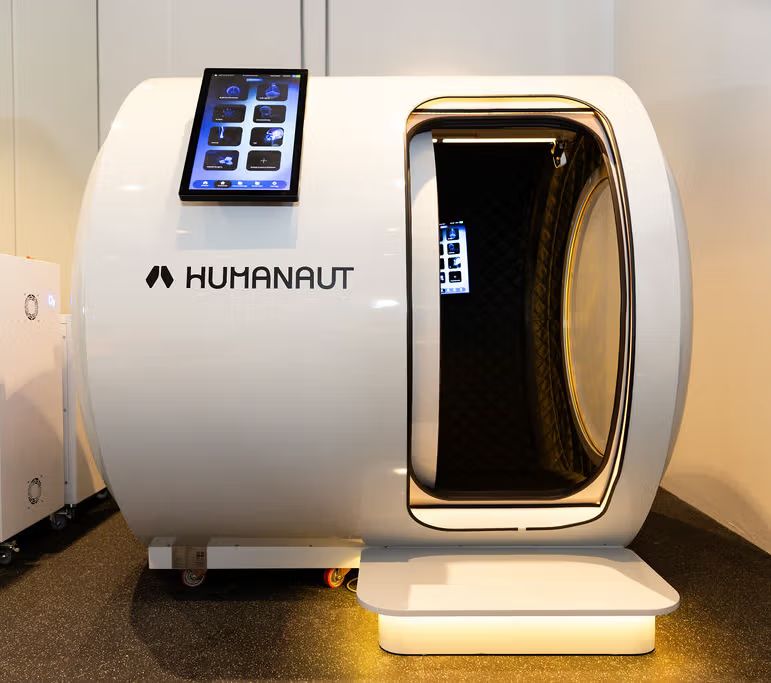
Hyperbaric oxygen therapy (HBOT) involves breathing close to 100% oxygen inside a chamber pressurized above normal atmospheric pressure, typically two to three times higher. Under that pressure, far more oxygen dissolves directly into the liquid part of the blood, which allows it to reach tissues with compromised circulation (Ortega et al., Medicina, 2021); Leach et al., BMJ, 1998).
Researchers believe the benefits extend beyond simple oxygen delivery. Proposed mechanisms include the growth of new blood vessels, modulation of inflammatory signaling, and mobilization of stem and progenitor cells. Some of these effects appear to be driven by short, controlled increases in reactive oxygen and nitrogen species (Thom, Plastic and Reconstructive Surgery, 2011). Much of this mechanistic work comes from laboratory and animal studies, so it explains plausibility rather than proving outcomes.
A typical session lasts 60 to 120 minutes, and treatment plans often involve a series of sessions rather than a single visit.
What Is Ozone Therapy?
Medical ozone therapy uses a gas mixture that is mostly oxygen with a small fraction of ozone (O3), a highly reactive form of oxygen. It is never meant to be breathed. Instead, it is delivered through other routes, such as mixing it with a person's own drawn blood before returning it (autohemotherapy), passing blood through an extracorporeal circuit, injecting it into joints or discs, rectal insufflation, or topical application (Khan et al., Medical Gas Research, 2017).
The leading theory holds that ozone reacts almost instantly with compounds in blood, creating a brief, mild oxidative stress. Proponents suggest this stress acts as a signal that may prompt the body to increase its own antioxidant and immune responses, provided the dose stays within a narrow range (Bocci et al., Medicinal Research Reviews, 2009). This framework comes largely from researchers who advocate the therapy, and it remains a theory rather than an established mechanism.
EBO2 therapy, sometimes called EBOO, is one extracorporeal form of ozone therapy in which blood is oxygenated, ozonated, and filtered outside the body before being returned. Humanaut Health has also compared plasmapheresis and EBOO for readers weighing blood-based therapies.
Ozone Therapy vs Hyperbaric Oxygen: Key Differences at a Glance
The table below summarizes the main practical and scientific distinctions.
Factor | Hyperbaric Oxygen Therapy | Ozone Therapy | |
Gas used | Close to 100% oxygen | Oxygen mixed with a small fraction of ozone | |
How it enters the body | Breathed in under pressure | Never inhaled; given via blood, injection, rectal, or topical routes | |
Core idea | Raise dissolved oxygen in blood and tissue | Use brief, controlled oxidative stress as a biological signal | |
Session format | Whole-body chamber, often a series of sessions | Varies by route, from a single injection to extracorporeal sessions | |
Regulatory status | Accepted for a defined list of medical conditions | No FDA-recognized medical application | |
Evidence base | Cochrane reviews and consensus guidelines for specific uses | Mostly small studies; Cochrane review inconclusive | |
Main risks | Ear barotrauma, temporary vision change, rare seizures | Route-related; rare but serious gas embolism reported |
Sources:
Ortega et al., 2021; Mathieu et al., 2017; Khan et al., 2017; Liu et al., 2015.
How the Regulatory Status Differs
HBOT has a defined place in conventional medicine. Professional bodies recognize it for a specific list of conditions, including decompression sickness, air or gas embolism, carbon monoxide poisoning, certain non-healing wounds, and delayed radiation injury (Mathieu et al., Diving and Hyperbaric Medicine, 2017). The European consensus also lists many uses as not accepted. Applications outside the recognized list, such as general wellness or cognitive support, are considered off-label.
Ozone sits in a very different regulatory position. A U.S. federal regulation describes ozone as "a toxic gas with no known useful medical application in specific, adjunctive, or preventive therapy" and restricts ozone-generating devices in medical settings where safety and effectiveness have not been proven (21 CFR 801.415). No ozone therapy is FDA-approved for any condition. Any clinic offering it in the United States is doing so outside FDA approval, which is why physician screening and transparent informed consent matter.
What Does the Research Show?
Evidence for HBOT
The strongest evidence for HBOT covers its accepted indications. For chronic wounds, a Cochrane review of 12 randomized trials with 577 participants found that HBOT increased the rate of diabetic foot ulcer healing at six weeks (risk ratio 2.35, 95% CI 1.19 to 4.62), although this benefit was not evident at one year and several trials had design limitations (Kranke et al., Cochrane Database of Systematic Reviews, 2015). For uses outside the accepted list, evidence is generally weaker and more mixed.
Evidence for Ozone Therapy
Research on ozone covers a wide range of conditions, but study quality is a recurring concern. A Cochrane review of ozone for diabetic foot ulcers included three small randomized trials with 212 participants and concluded that firm conclusions were not possible because of unclear methods and risk of bias (Liu et al., Cochrane Database of Systematic Reviews, 2015).
An evidence and gap map identified 26 systematic reviews on ozone, spanning pain, infection, inflammation, and wound healing. Many of the included reviews were rated low or critically low in methodological quality (Serra et al., Frontiers in Public Health, 2023). The map is useful for showing where research exists, but it does not on its own establish that ozone works.
Head-to-Head Studies
Direct comparisons of hyperbaric oxygen vs ozone therapy are scarce. The most relevant human study, a non-randomized trial of 114 people with venous leg ulcers, compared topical hyperbaric oxygen with local ozone over 30 sessions. Ulcer area shrank by about 70% in the oxygen group versus about 41% in the ozone group, and complete healing occurred in 28% versus 4% of patients. No adverse effects were reported in either group (Pasek et al., International Journal of Environmental Research and Public Health, 2023).
Two caveats apply. The study used topical oxygen applied around the limb, not a whole-body chamber, and patients were not randomized. A related study of 129 patients by the same group found that quality of life improved with both approaches (Pasek et al., Medicina, 2023). No large randomized trial has compared chamber HBOT with systemic ozone therapy.
Safety Considerations
HBOT has a well-characterized safety profile. Middle ear barotrauma, a feeling of pressure or pain in the ears, is the most common side effect, with reported rates ranging widely from about 2% to 84% depending on the population. Temporary nearsightedness can develop over a course of treatment and usually resolves within weeks. Oxygen toxicity seizures are rare, estimated in recent data at roughly 1 in 2,000 to 3,000 treatments, and are typically reversible (Heyboer et al., Advances in Wound Care, 2017). With proper screening, the authors describe HBOT as among the safest therapies in use.
Ozone risks depend heavily on the route. Inhaled ozone irritates the lungs and can cause delayed fluid buildup, which is why it is never breathed in clinical use (21 CFR 801.415). Routes that introduce gas into the bloodstream carry a rare but serious risk of gas embolism, and at least one death during oxygen-ozone therapy has been attributed to this complication. Careful technique, appropriate equipment, and individual screening are central to reducing these risks.
Can Ozone and HBOT Be Used Together?
The question is not always ozone vs hyperbaric oxygen therapy. Some integrative clinicians use the two in the same care plan, reasoning that they act through different pathways. However, no controlled trial has tested whether combining them improves outcomes compared with either one alone, so any combined approach rests on clinical judgment rather than proven synergy.
Decisions about either therapy depend on the condition, health history, medications, and personal goals. A physician can review factors such as ear and lung health for HBOT, or blood and vascular considerations for ozone, before recommending a personalized, proactive plan.
Frequently Asked Questions
Is ozone therapy the same as oxygen therapy?
No. Ozone therapy uses oxygen mixed with a small amount of ozone, a more reactive molecule, while hyperbaric oxygen therapy uses close to 100% oxygen breathed under pressure. Their proposed mechanisms and delivery routes are different.
Which has more scientific evidence, HBOT or ozone therapy?
HBOT has a larger and higher-quality evidence base for its accepted indications, including Cochrane-reviewed trials and consensus guidelines. Ozone research is broad but mostly made up of small studies of mixed quality.
Is ozone therapy FDA approved?
No. Federal regulation describes ozone as a toxic gas with no known useful medical application, and no ozone therapy is approved for any condition in the United States.
Is hyperbaric oxygen vs ozone therapy better for wound healing?
HBOT has more supporting evidence for certain chronic wounds, particularly diabetic foot ulcers in the short term. One non-randomized study of venous leg ulcers favored topical oxygen over local ozone, but larger randomized trials are needed.
What are the most common side effects of HBOT?
Ear pressure or barotrauma is the most common side effect, followed by temporary changes in near vision. Oxygen toxicity seizures are rare and usually reversible.
Is ozone ever inhaled during treatment?
No. Inhaled ozone can damage the lungs, so medical ozone is given through other routes such as blood treatment, injection, or topical application.
How should someone decide between ozone vs hyperbaric oxygen therapy?
The choice depends on the condition, the strength of evidence for that specific use, and individual risk factors. A qualified physician can explain the realistic benefits and risks of each option.
Key Takeaways
- Ozone therapy vs hyperbaric oxygen therapy is a comparison of two different gases, delivery methods, and evidence bases.
- HBOT delivers nearly pure oxygen under pressure and is accepted for a defined list of conditions.
- Ozone therapy uses an oxygen-ozone mixture given by non-inhaled routes and has no FDA-recognized medical application.
- Evidence for HBOT is stronger for specific indications, while ozone research consists mostly of small or lower-quality studies.
- Both therapies carry risks that call for physician screening, and no large trial has compared or combined them directly.
Explore Your Options With Humanaut Health
To learn whether pressurized oxygen may fit a personalized care plan, explore hyperbaric oxygen therapy at Humanaut Health.
References
- Ortega, M.A., Fraile-Martinez, O., Garcia-Montero, C., et al. "A General Overview on the Hyperbaric Oxygen Therapy: Applications, Mechanisms and Translational Opportunities." Medicina, 2021; 57(9):864. DOI: 10.3390/medicina57090864
- Leach, R.M., Rees, P.J., Wilmshurst, P. "ABC of oxygen: Hyperbaric oxygen therapy." BMJ, 1998; 317(7166):1140-1143. DOI: 10.1136/bmj.317.7166.1140
- Thom, S.R. "Hyperbaric Oxygen: Its Mechanisms and Efficacy." Plastic and Reconstructive Surgery, 2011; 127(Suppl 1):131S-141S. DOI: 10.1097/PRS.0b013e3181fbe2bf
- Khan, S., Wilson, A.L., Gandhi, J., Vatsia, S., Khan, S.A. "Ozone therapy: An overview of pharmacodynamics, current research, and clinical utility." Medical Gas Research, 2017; 7(3):212-219. DOI: 10.4103/2045-9912.215752
- Bocci, V., Borrelli, E., Travagli, V., Zanardi, I. "The ozone paradox: Ozone is a strong oxidant as well as a medical drug." Medicinal Research Reviews, 2009; 29(4):646-682. DOI: 10.1002/med.20150
- Mathieu, D., Marroni, A., Kot, J. "Tenth European Consensus Conference on Hyperbaric Medicine: recommendations for accepted and non-accepted clinical indications and practice of hyperbaric oxygen treatment." Diving and Hyperbaric Medicine, 2017; 47(1):24-32. DOI: 10.28920/dhm47.1.24-32
- Undersea and Hyperbaric Medical Society. "Indications for Hyperbaric Oxygen Therapy." URL: https://uhms.org/resources/featured-resources/hbo-indications.html
- U.S. Food and Drug Administration. Code of Federal Regulations, Title 21, Section 801.415 ("Maximum acceptable level of ozone"). URL: https://www.ecfr.gov/current/title-21/chapter-I/subchapter-H/part-801/subpart-H/section-801.415
- Kranke, P., Bennett, M.H., Martyn-St James, M., Schnabel, A., Debus, S.E., Weibel, S. "Hyperbaric oxygen therapy for chronic wounds." Cochrane Database of Systematic Reviews, 2015; (6): CD004123. DOI: 10.1002/14651858.CD004123.pub4
- Liu, J., Zhang, P., Tian, J., et al. "Ozone therapy for treating foot ulcers in people with diabetes." Cochrane Database of Systematic Reviews, 2015; (10): CD008474. DOI: 10.1002/14651858.CD008474.pub2
- Serra, M.E.G., Baeza-Noci, J., Mendes Abdala, C.V., Luvisotto, M.M., Bertol, C.D., Anzolin, A.P. "The role of ozone treatment as integrative medicine. An evidence and gap map." Frontiers in Public Health, 2023; 10:1112296. DOI: 10.3389/fpubh.2022.1112296 (https://doi.org/10.3389/fpubh.2022.1112296)
- Pasek, J., Szajkowski, S., Travagli, V., Cieslar, G. "Topical Hyperbaric Oxygen Therapy Versus Local Ozone Therapy in Healing of Venous Leg Ulcers." International Journal of Environmental Research and Public Health, 2023; 20(3):1967. DOI: 10.3390/ijerph20031967
- Pasek, J., Szajkowski, S., Cieslar, G. "Quality of Life in Patients with Venous Leg Ulcers Treated by Means of Local Hyperbaric Oxygen Therapy or Local Ozone Therapy: A Single Center Study." Medicina, 2023; 59(12):2071. DOI: 10.3390/medicina59122071
- Heyboer, M., Sharma, D., Santiago, W., McCulloch, N. "Hyperbaric Oxygen Therapy: Side Effects Defined and Quantified." Advances in Wound Care, 2017; 6(6):210-224. DOI: 10.1089/wound.2016.0718
- Marchetti, D., La Monaca, G. "An Unexpected Death During Oxygen-Ozone Therapy." American Journal of Forensic Medicine and Pathology, 2000; 21(2):144-147. DOI: 10.1097/00000433-200006000-00010