Stem Cell Therapy for Elbow Pain: Fast Relief & Recovery
5 min read
AUTHOR

MEDICALLY REVIEWED BY

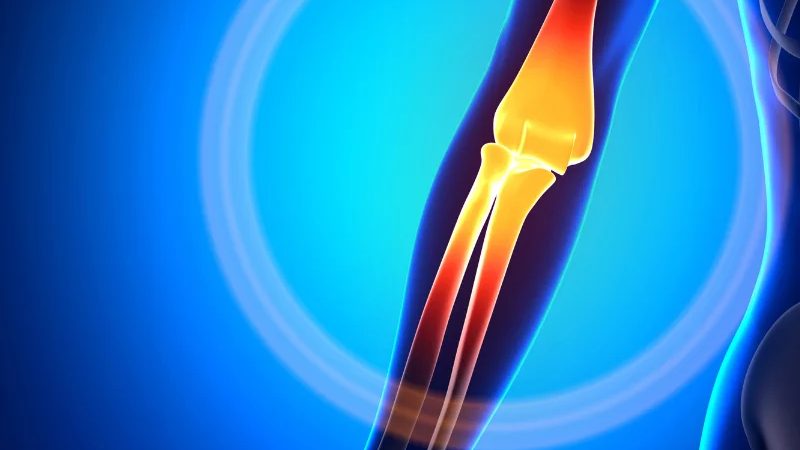
Chronic elbow pain - the kind that lingers despite rest, ice, bracing, and physical therapy - is common among active adults, from tennis and golf players to office workers with repetitive strain. When conservative care doesn't fully resolve symptoms, some patients look for regenerative options before considering surgery. Stem cell therapy for elbow pain is one such approach under active clinical investigation, using mesenchymal stem cells (MSCs) injected directly into the affected tendon. Because research in this specific area is still emerging, it's worth understanding what stem cell for elbow pain actually involves, what the current evidence shows - including its real limitations - how it compares with other options, and who may be a reasonable candidate.
What Causes Chronic Elbow Pain?
Most persistent elbow pain traces back to tendinopathy at one of two tendon origins. Lateral epicondylitis ("tennis elbow") involves degeneration of the common extensor tendon at the outer elbow, while medial epicondylitis ("golfer's elbow") affects the common flexor tendon on the inner elbow; less commonly, chronic pain stems from elbow joint osteoarthritis.
Despite the "-itis" suffix, research indicates these conditions are largely degenerative rather than purely inflammatory - repeated microtrauma leads to disorganized collagen fibers and impaired healing over time. This helps explain why some patients don't fully respond to rest, NSAIDs, or corticosteroid injections, none of which directly address the underlying degenerative tendon changes.
How Stem Cell Therapy for Elbow Pain Works
This treatment typically involves mesenchymal stem cells (MSCs) derived from a patient's own adipose (fat) tissue or, in some studies, from allogeneic (donor) sources. Under ultrasound guidance, the cells are injected directly into the degenerated portion of the extensor or flexor tendon.
MSCs are thought to act through several proposed mechanisms: anti-inflammatory paracrine signaling (releasing molecules that calm the local tissue environment), stimulation of tendon matrix repair, and modulation of the degenerative biology that keeps chronic tendinopathy from healing on its own (Lee et al., Stem Cells, 2015); Khoury et al., J Exp Orthop, 2021; Itro et al., Pharmaceutics, 2022). This differs from platelet-rich plasma (PRP), which delivers concentrated growth factors from a patient's own blood but does not introduce living stem cells.
What Does the Clinical Evidence Show?
Elbow-Specific Pilot Studies and Case Data
Direct evidence remains limited to small pilot studies and a case report, but the available data is worth examining closely. A 2015 dose-comparison pilot study injected allogeneic adipose-derived MSCs into the common extensor tendon of 12 patients with chronic lateral epicondylitis. Over 52 weeks of follow-up, researchers observed improvements in pain, elbow performance scores, and ultrasound-measured tendon defect area, with no significant adverse effects reported (Lee et al., Stem Cells, 2015).
A 2021 pilot study of 18 tennis players with treatment-resistant lateral epicondylitis found mean maximum pain scores (VAS) improved from 6.28 ± 1.65 to 1.0 ± 0.43 at 6 months (p<0.001), with significant QuickDASH function gains as well. Average return to play was approximately 3.3 months (Khoury et al., J Exp Orthop, 2021). A case report also described a professional golfer with a large extensor tendon tear who improved after combined MSC and PRP injection, with imaging suggesting tendon-like tissue regeneration (Freitag et al., BMJ Case Reports, 2020).
What Broader Systematic Reviews Say
Because elbow-specific trials are few and small, it's important to be transparent about what the wider evidence base shows. A 2017 systematic review of stem cell therapy for tendon disorders - which included lateral epicondylitis studies - found no level 1–3 evidence supporting its use and concluded the therapy was not yet supported for routine clinical practice (Pas et al., Br J Sports Med, 2017). A 2020 updated systematic review reached a similar conclusion: while newer studies showed early positive signals for pain and function, overall study quality remained low, with small sample sizes and few controlled trials, and larger randomized studies were still considered necessary before this therapy could be recommended more broadly (van den Boom et al., Orthop J Sports Med, 2020).
More recent pooled analyses offer a somewhat more encouraging picture. A 2021 systematic review and meta-analysis of prospective clinical studies found that MSC administration was associated with a statistically significant reduction in pain-on-motion across tendon-disorder studies, though the authors again cautioned that the evidence remained preliminary given small sample sizes and inconsistent protocols (Cho et al., Ann Rehabil Med, 2021). A 2022 systematic review similarly found that adipose-derived MSCs were consistently associated with improved pain and function across tendinopathy studies, with a favorable short- to mid-term safety profile (Itro et al., Pharmaceutics, 2022). Taken together, the honest takeaway is that research in this area is promising but still emerging - larger, elbow-specific controlled trials are needed before it can be considered an established, guideline-endorsed treatment.
Safety Considerations
The elbow-specific pilot studies above reported no significant adverse effects through 52 weeks of follow-up (Lee et al., 2015); Khoury et al., 2021). Because a dedicated elbow-specific safety review does not yet exist, the best available systematic safety data comes from a related joint: a 2025 systematic review of stem cell injections for knee osteoarthritis found a transient adverse event rate of 12.3%, most often mild injection-site swelling or pain resolving within 4 weeks, with no major complications reported (Riggle et al., HSS Journal, 2025) - broadly consistent with the safety signals observed in the elbow-specific pilot data.
No stem cell product is currently FDA-approved for orthopedic or tendon-related use; the only FDA-approved stem cell products in the United States are cord-blood-derived hematopoietic products for unrelated indications. Anyone considering this therapy should seek evaluation from a qualified provider familiar with current regulatory status and protocols.

How Does Stem Cell Therapy Compare to Other Options?
Versus corticosteroid injections: Steroids often provide fast, short-term relief, but repeated use has been associated with potential long-term tendon weakening and does not address the underlying degenerative tendon biology.
Versus PRP: Platelet-rich plasma delivers concentrated growth factors rather than living cells and is often used as an earlier-line regenerative option. Stem cell treatment for elbow pain introduces living MSCs capable of a broader range of proposed regenerative activity, though - as noted above - with a thinner elbow-specific evidence base than PRP currently has.
Versus surgery: Surgical debridement or repair is generally reserved for severe, refractory cases and involves recovery time and surgical risk. Stem cell-based approaches are being studied as a less invasive option for candidates who have not responded to conservative care, though they are not positioned as a replacement for surgery when surgery is clinically indicated.
Who May Be a Candidate?
Based on the populations studied in available pilot research, adults with chronic lateral or medial epicondylitis, or elbow tendinopathy that has not adequately responded to rest, physical therapy, bracing, or NSAIDs, may be reasonable candidates for evaluation - particularly those seeking a non-surgical, regenerative-focused option who understand that elbow-specific evidence is still developing.
Candidacy is determined through a comprehensive clinical evaluation, including imaging such as ultrasound or MRI. A thorough diagnostic workup, including advanced diagnostics, is typically the appropriate starting point before any regenerative treatment plan is considered.
Frequently Asked Questions
What is stem cell treatment for elbow pain?
A regenerative approach in which mesenchymal stem cells, typically from a patient's own adipose tissue, are injected under ultrasound guidance into a degenerated elbow tendon to support healing rather than simply mask pain.
How does it differ from PRP therapy for the elbow?
PRP uses concentrated growth factors from a patient's blood, while this approach introduces living stem cells. Some studies have combined the two, though each has a distinct mechanism and evidence base.
Is stem cell for elbow pain FDA-approved?
No. No stem cell product is currently FDA-approved for orthopedic or tendon-related applications. The only FDA-approved stem cell products are cord-blood-derived hematopoietic products used for other, unrelated indications.
How long does it take to see results after treatment?
In the pilot studies reviewed, meaningful pain improvement was reported by 6 months, with one study noting an average return to sport-related activity of about 3.3 months. Individual timelines vary and haven't been established in large trials.
What are the risks of stem cell injections for the elbow?
Elbow-specific pilot studies reported no significant adverse effects through 52 weeks. Broader systematic safety data from a related joint found a 12.3% rate of mild, transient reactions such as injection-site swelling, with no major complications reported.
Can stem cell therapy help tennis elbow or golfer's elbow specifically?
Available pilot studies have focused primarily on lateral epicondylitis (tennis elbow), showing improvements in pain and function. Evidence specific to medial epicondylitis (golfer's elbow) is even more limited, so candidacy should be discussed individually with a provider.
Who is a good candidate for this treatment?
Adults with chronic, treatment-resistant elbow tendinopathy who haven't achieved adequate relief from conservative care, and who understand the current evidence limitations, may be reasonable candidates pending a full clinical evaluation.
How is the procedure performed?
In the studies reviewed, adipose tissue was collected from the patient (or a donor in one study), processed to isolate mesenchymal stem cells, and injected into the affected tendon under ultrasound guidance for accurate placement.
Key Takeaways
- Stem cell therapy for elbow pain is an emerging regenerative option for chronic lateral and medial epicondylitis, but elbow-specific research remains limited to pilot studies, a dose-comparison trial, and a case report
- Available pilot data reported meaningful pain and function improvements, including a VAS reduction from 6.28 to 1.0 at 6 months in one study of tennis players, with no significant adverse effects through 52 weeks
- Two systematic reviews of stem cell therapy for tendon disorders broadly concluded that overall evidence remains insufficient for routine clinical recommendation, while more recent meta-analyses found statistically significant associations with reduced pain
- The best available systematic safety data (from knee osteoarthritis research) found a 12.3% rate of mild, transient adverse events and no major complications
- No stem cell product is FDA-approved for orthopedic or tendon use
- Candidacy depends on individual evaluation, including imaging and a review of prior conservative treatment
To learn whether regenerative medicine approaches may be appropriate for chronic elbow pain, Humanaut Health offers comprehensive, evidence-based evaluation as part of its concierge longevity care.
References
- Lee, S.Y., Kim, W., Lim, C., Chung, S.G. "Treatment of Lateral Epicondylosis by Using Allogeneic Adipose-Derived Mesenchymal Stem Cells: A Pilot Study." Stem Cells, 2015; 33(10):2995–3005. DOI: 10.1002/stem.2110
- Khoury, M., Tabben, M., Rolón, A.U., Levi, L., Chamari, K., D'Hooghe, P. "Promising improvement of chronic lateral elbow tendinopathy by using adipose derived mesenchymal stromal cells: a pilot study." Journal of Experimental Orthopaedics, 2021; 8:6. DOI: 10.1186/s40634-020-00320-z
- Freitag, J., Shah, K., Wickham, J., Tenen, A. "Effect of autologous adipose-derived mesenchymal stem cell therapy in combination with autologous platelet-rich plasma in the treatment of elbow tendinopathy." BMJ Case Reports, 2020; 13(6):e234592. DOI: 10.1136/bcr-2020-234592
- Pas, H.I.M.F.L., Moen, M.H., Haisma, H.J., Winters, M. "No evidence for the use of stem cell therapy for tendon disorders: a systematic review." British Journal of Sports Medicine, 2017; 51(13):996–1002. DOI: 10.1136/bjsports-2016-096794
- van den Boom, N.A.C., Winters, M., Haisma, H.J., Moen, M.H. "Efficacy of Stem Cell Therapy for Tendon Disorders: A Systematic Review." Orthopaedic Journal of Sports Medicine, 2020; 8(4):2325967120915857. DOI: 10.1177/2325967120915857
- Cho, W.S., Chung, S.G., Kim, W., Jo, C.H., Lee, S.U., Lee, S.Y. "Mesenchymal Stem Cells Use in the Treatment of Tendon Disorders: A Systematic Review and Meta-Analysis of Prospective Clinical Studies." Annals of Rehabilitation Medicine, 2021; 45(4):274–283. DOI: 10.5535/arm.21078
- Itro, A., Trotta, M.C., Miranda, R., Paoletta, M., De Cicco, A., Lepre, C.C., Tarantino, U., D'Amico, M., Toro, G., Schiavone Panni, A. "Why Use Adipose-Derived Mesenchymal Stem Cells in Tendinopathic Patients: A Systematic Review." Pharmaceutics, 2022; 14(6):1151. DOI: 10.3390/pharmaceutics14061151
- Riggle, C., McLellan, M., Bohlen, H., Wang, D. "Complications of Stem Cell–Based Injections for Knee Osteoarthritis: A Systematic Review." HSS Journal, 2025; 21(4):476–484. DOI: 10.1177/15563316241271058
- U.S. Food and Drug Administration. "Important Patient and Consumer Information About Regenerative Medicine Therapies." FDA Center for Biologics Evaluation and Research, ongoing guidance. Available at: fda.gov