EBOO Therapy Benefits, Risks, and What the Evidence Really Shows
5 min read
AUTHOR

MEDICALLY REVIEWED BY

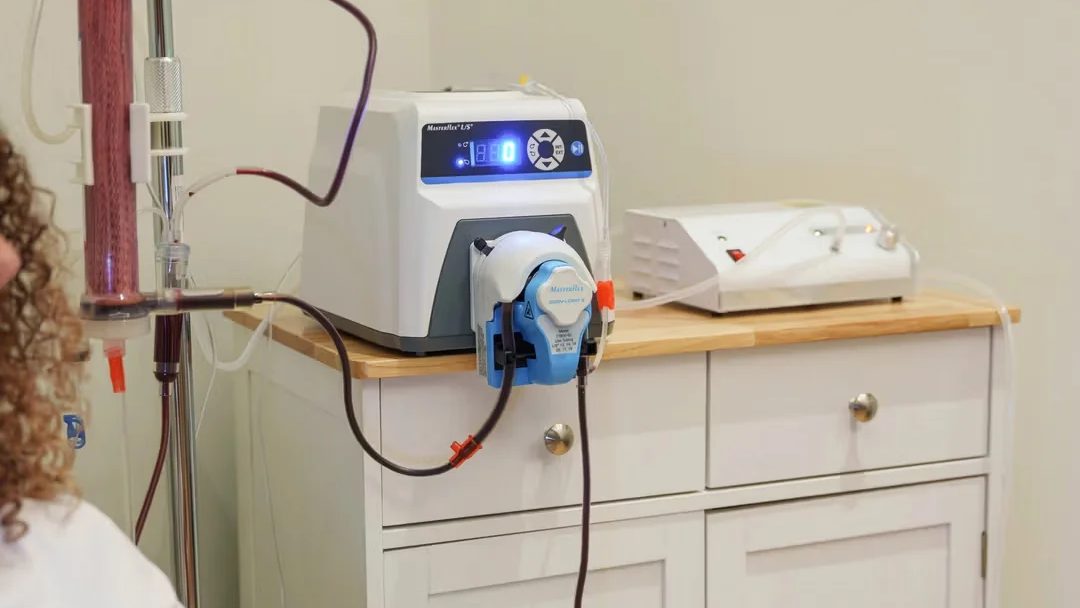
Interest in EBOO therapy benefits has grown quickly as extracorporeal blood oxygenation and ozonation has moved from a niche procedure into longevity and wellness clinics- but marketing claims online often outpace what has actually been studied. EBOO (Extracorporeal Blood Oxygenation and Ozonation) draws blood from the body, exposes it to a controlled oxygen-ozone mixture, and returns it through a closed-loop system. This article covers how EBOO works, the evidence behind each claimed benefit, its regulatory status, and its safety considerations. Readers weighing EBOO against therapeutic plasma exchange should see the dedicated plasmapheresis vs. EBOO comparison.
What Is EBOO Therapy, and What Is It Used For?
What is EBOO treatment used for, and how does it work? Standard EBOO uses a specialized extracorporeal apparatus that processes several liters of heparinized blood per session, exposing it to a controlled oxygen-ozone mixture before returning it to the body (Di Paolo, Gaggiotti & Galli, Redox Report, 2005). This differs from simpler ozone administration in scale: dosimetry research found this extracorporeal, dialysis-style approach can deliver substantially more total ozone per session- though this reflects delivery volume, not proven clinical benefit, and the study's authors have industry ties to ozone-therapy practice.
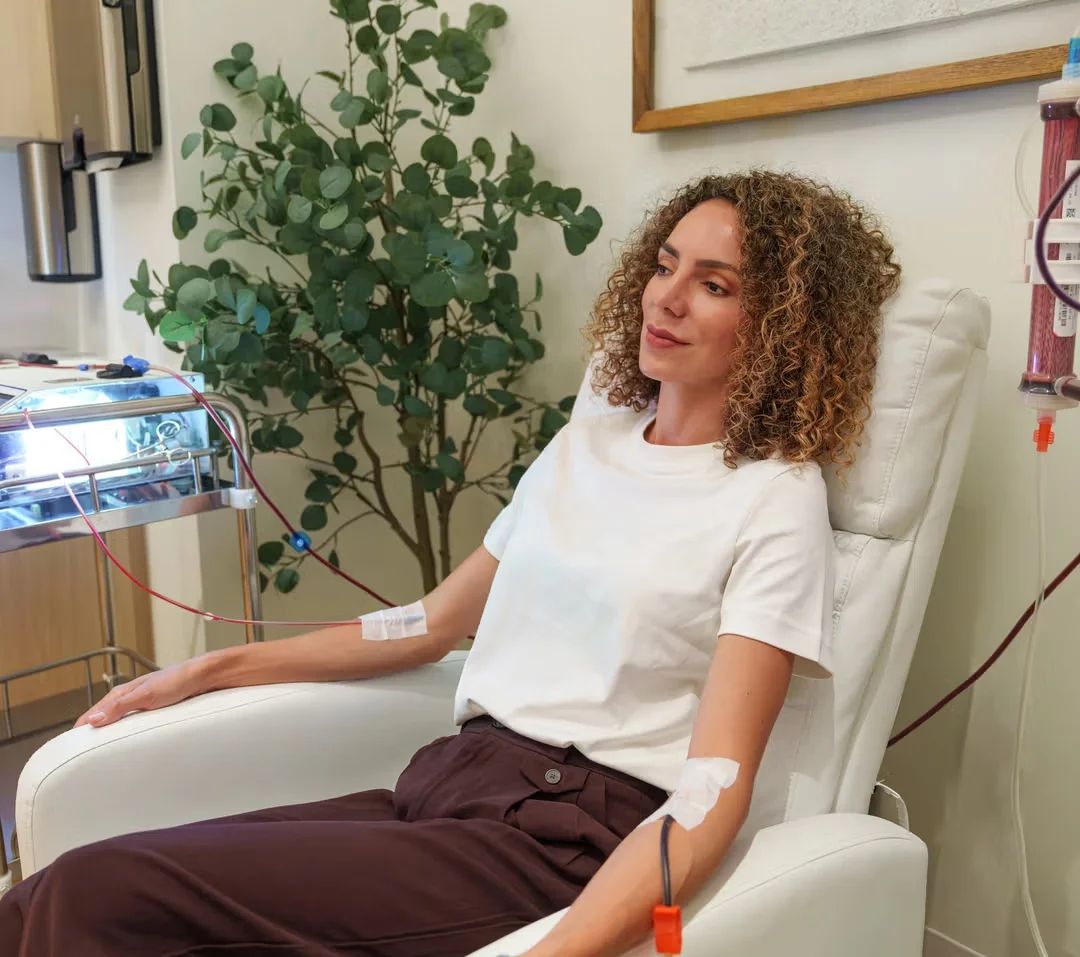
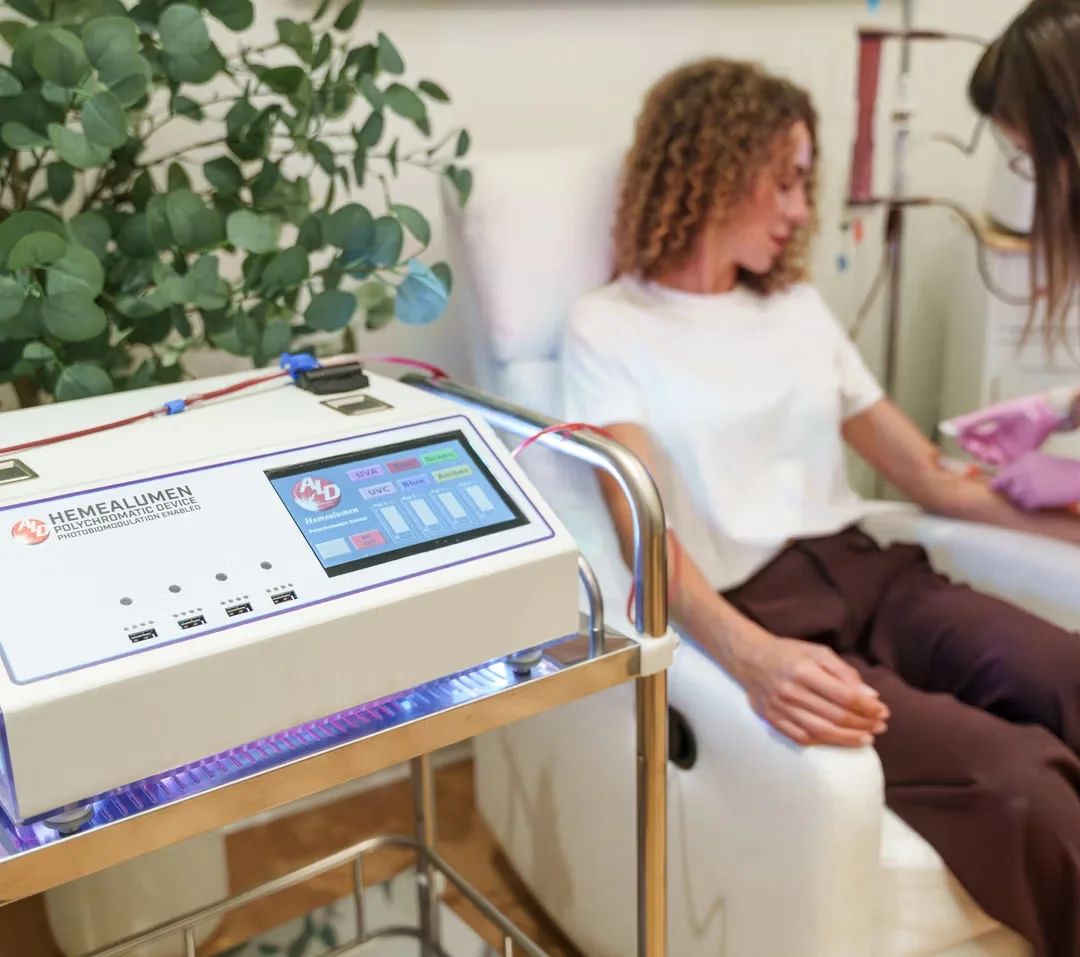
Humanaut Health's own EBO2 therapy, one of several blood cleansing therapies offered in a physician-supervised setting, builds on this base approach: a closed-loop system in which blood is drawn, oxygenated and ozonated, filtered to help remove inflammatory compounds, exposed to photobiomodulation (light therapy), and returned- a five-step, RN-administered process taking about 90 minutes. Readers deciding between EBOO and plasmapheresis should see the full comparison of these two therapies.
The Science Behind EBOO: How Ozone Is Thought to Work in the Body
The proposed rationale behind EBOO rests on controlled, low-dose oxidative stress rather than the broad toxicity most people associate with ozone gas. Research into ozone's effect on blood describes a hormetic, or inverted-U, dose-response relationship: doses below a certain threshold appear to have essentially no effect, a moderate "therapeutic window" is associated with adaptive antioxidant responses and no observed toxicity, while higher doses risk overwhelming antioxidant capacity Bocci, Zanardi & Travagli, J Transl Med, 2011. This dose-dependence is part of why EBOO is administered through controlled clinical equipment rather than at home.
Researchers have also proposed that this controlled oxidative signal may modulate immune cell activity and endothelial (blood vessel lining) function (Di Paolo, Gaggiotti & Galli, Redox Report, 2005). This is a proposed biological mechanism supported by laboratory and observational research, not a confirmed clinical pathway verified through large randomized trials- plausible, but not the same as demonstrated clinical benefit.
What Are the Claimed EBOO Therapy Benefits?
Marketing for ozone-based blood therapies commonly describes a broad list of benefits of EBOO therapy, including improved circulation, reduced inflammation, immune support, cellular detoxification, and increased energy Humanaut Health. Each claim below is broken out by its actual evidence tier- clinical trial, proposed mechanism, or company description- since these carry very different levels of confidence.
Circulation and Vascular Symptoms
This is the one area with actual EBOO-specific controlled-trial data. In a small trial of 28 peripheral artery disease patients, EBOO was associated with significantly greater regression of skin lesions than intravenous prostacyclin, plus improvements in pain, itching, and general well-being- notably, without a measurable change in arterial blood flow itself, suggesting a mechanism beyond simply improving circulation mechanically (Di Paolo et al., 2005). This trial studied diagnosed peripheral artery disease with skin lesions, not general circulation in healthy adults, and should not be generalized beyond that context.
Inflammation and Immune Function
Claims that EBOO reduces inflammation or supports immune function rest primarily on the mechanistic research described above, not on dedicated trials measuring inflammatory markers before and after EBOO. Researchers have proposed that controlled oxidative exposure is thought to modulate immune and endothelial cell activity (Bocci, Zanardi & Travagli, J Transl Med, 2011; Di Paolo, Gaggiotti & Galli, Redox Report, 2005), but this remains a hypothesis under investigation, not an established effect. No EBOO-specific trial directly measured inflammatory or immune biomarkers as a primary outcome.
Energy and Cellular Detoxification
Of all the claimed benefits, this is the one with the least direct evidence behind it. Improved energy and cellular detoxification are commonly described in wellness marketing for ozone-based blood therapies, including by Humanaut Health in describing its own EBO2 service, but this framing has not been independently confirmed in controlled human trials identified in the current research base. The proposed link runs through the same oxidative-stress and antioxidant-response mechanism discussed above, but no dedicated study measured energy levels or a validated marker of "cellular detoxification" as an outcome. This should be understood as a plausible, marketed claim rather than a clinically demonstrated effect.
What Does the Peer-Reviewed Research Actually Show?
A clear-eyed look at EBOO therapy benefits starts with an honest admission: the EBOO-specific evidence base is thin, older, and produced almost entirely by a single Italian research group- just the 28-patient controlled trial and 82-patient uncontrolled case series described above, and nothing beyond them at comparable scale (Di Paolo et al., 2005; Di Paolo et al., 2000).
It is critical to separate this thin, EBOO-specific evidence from the larger, more rigorous body of research on medical ozone therapy in general. A 2026 umbrella review of systematic reviews and meta-analyses of RCTs screened over 1,200 records and found sufficiently robust evidence for only four indications- chronic periodontitis, COVID-19, diabetic foot ulcers, and third-molar surgery- and EBOO was not among the indications reviewed at all (Cacciatore et al., Med Sci (Basel), 2026). Even within those four, study quality was rated critically low on the AMSTAR-2 tool. A separate umbrella review of ozone therapy for knee osteoarthritis found a similar pattern- some pain-reduction signal (not superior to hyaluronic acid) and no serious adverse events, but again critically low review quality, and an unrelated therapy (intra-articular injection) (Lino et al., Front Physiol, 2024).
In short, general ozone-therapy research offers an encouraging but low-certainty safety signal for unrelated conditions, while EBOO-specific efficacy evidence remains limited to one small trial and one uncontrolled series from the same group- a distinction worth keeping in mind rather than assuming general findings apply to EBOO.
How Does EBOO Compare to Other Options?
Compared with standard intravenous ozone autohemotherapy, EBOO-style extracorporeal systems are generally designed to process a larger blood volume and deliver more total ozone per session, per direct dosimetry measurements- though this reflects delivery capacity, not proven superior outcomes (Rowen, Grabovac & Su, Med Gas Res, 2022/2023). EBO2 is Humanaut Health's enhanced version of this base approach, adding filtration and photobiomodulation within a closed-loop, RN-administered system.
For readers weighing EBOO specifically against therapeutic plasma exchange (TPE), the full plasmapheresis vs. EBOO comparison covers those distinctions and is not repeated here.
Safety Considerations and Potential Risks
Weighing EBOO therapy benefits against potential risks starts with the safety data that actually exists. The EBOO-specific signal is reassuring but limited: no serious adverse effects were reported across the 2000 case series or the 210 sessions in the 2005 controlled trial referenced above- encouraging, but from small samples at a single center, not a large-scale safety database.
Broader ozone-therapy research echoes this cautiously favorable pattern, with umbrella reviews across several unrelated indications finding mostly minor, infrequent adverse events, again with low-certainty evidence (Cacciatore et al., 2026; Lino et al., 2024). At the same time, rare but serious complications are documented in case-report literature: acute encephalopathy after an unsupervised, at-home subcutaneous ozone injection, with full recovery after 48 hours (Gante & Dias, Cureus, 2025); and hemolytic anemia with deep vein thrombosis after repeated ozone blood-exposure sessions over several months (Cortázar-Benítez et al., Blood, 2011- ASH annual meeting abstract; no DOI assigned). Neither case used EBOO's extracorporeal route or involved Humanaut Health's EBO2 protocol, but both underscore why clinical oversight and closed-loop, clinical-grade equipment matter.
Because oxidative stress is central to how ozone therapy works, conditions that impair the body's ability to withstand it- such as G6PD deficiency- are a well-established screening consideration. Individual risk assessment by a qualified physician is a necessary step before any EBOO or EBO2 session, not an optional formality.
What to Expect After an EBOO Session
A typical EBO2 session runs approximately 90 minutes, covering the full draw, oxygenation/ozonation, filtration, photobiomodulation, and return process. Beyond session length, there is no standardized, large-trial-backed protocol for session frequency- this varies by clinic and individual, and should be discussed with a supervising physician. Given the limited evidence base described throughout this article, clinics may recommend a particular approach based on clinical judgment, but no specific outcome or timeline should be promised.
Frequently Asked Questions
What is EBOO treatment used for?
EBOO (Extracorporeal Blood Oxygenation and Ozonation) draws blood, exposes it to a controlled oxygen-ozone mixture, and returns it to the body. Researchers have proposed potential relevance to peripheral arterial disease, coronary disease, cholesterol embolism, and severe dyslipidemia, though these remain proposed rather than confirmed applications (Di Paolo, Gaggiotti & Galli, Redox Report, 2005).
What are the benefits of EBOO therapy?
Claimed benefits of EBOO therapy include improved circulation, reduced inflammation, immune support, and increased energy. The strongest evidence supports improved vascular skin lesions in a small peripheral artery disease trial (Di Paolo et al., 2005); other claimed benefits rest mainly on proposed mechanisms rather than dedicated trials.
Is EBOO therapy safe?
The available EBOO-specific data reported no serious adverse effects or treatment complications (Di Paolo et al., 2000; Di Paolo et al., 2005), but these are small samples, not a large safety database. Rare, serious complications have been reported with other ozone-administration routes, which is why physician oversight and screening matter.
What are the risks of EBOO therapy?
Documented risks include rare cases of encephalopathy and hemolytic anemia with deep vein thrombosis, though these were linked to unsupervised, non-extracorporeal routes rather than EBOO specifically (Gante & Dias, Cureus, 2025; Cortázar-Benítez et al., Blood, 2011). G6PD deficiency and similar conditions are a standard screening consideration.
What is the difference between EBOO and EBO2?
EBOO is the general extracorporeal technique. EBO2 is Humanaut Health's physician-supervised implementation, adding a filtration step and photobiomodulation within a closed-loop, RN-administered system.
How is EBOO different from plasmapheresis?
EBOO and plasmapheresis (therapeutic plasma exchange) are distinct procedures with different mechanisms and evidence bases. See Plasmapheresis vs. EBOO: Understanding the Difference for a full comparison.
What does the scientific evidence say about EBOO therapy's benefits and risks?
EBOO-specific evidence is limited to one small controlled trial and one uncontrolled case series from the same research group, with encouraging but narrow results in peripheral artery disease patients (Di Paolo et al., 2005). Broader ozone-therapy research shows a favorable but low-certainty safety profile in unrelated conditions (Cacciatore et al., 2026), but that evidence excludes EBOO trials.
Who should avoid EBOO therapy?
Individuals with conditions that impair tolerance to oxidative stress, such as G6PD deficiency, are a standard screening consideration, since oxidative stress is central to how ozone therapy works. A qualified physician should evaluate individual risk factors and contraindications before any EBOO or EBO2 session.
How long does an EBOO therapy session take?
A typical EBO2 session takes approximately 90 minutes, covering the draw, oxygenation/ozonation, filtration, photobiomodulation, and return process. There is no standardized, large-trial-backed protocol for session frequency; this varies by clinic and individual.
Key Takeaways
- Claimed EBOO therapy benefits- improved circulation, reduced inflammation, immune support, and increased energy- are biologically plausible but supported mainly by mechanism-level research and one small controlled trial, not large confirmatory studies
- The strongest EBOO-specific clinical evidence involves peripheral artery disease skin lesions, not general wellness outcomes, and should not be generalized
- Broader medical ozone-therapy research shows a generally favorable but low-certainty safety profile- but that evidence base excludes EBOO trials and covers different conditions
- EBOO and ozone-based therapies are not FDA-approved medical treatments for any disease
- Documented serious complications are rare and mostly associated with unsupervised or non-EBOO routes, underscoring the importance of physician/RN oversight and closed-loop, clinical-grade equipment
- Anyone considering EBOO therapy should discuss it with a qualified physician, including screening for contraindications, before proceeding
For those interested in exploring EBOO within a physician-supervised, RN-administered setting, Humanaut Health's EBO2 program offers this therapy as part of a personalized, medically overseen longevity protocol.
References
- Di Paolo, N., Bocci, V., Garosi, G., Borrelli, E., Bravi, A., Bruci, A., Aldinucci, C., Capotondo, L. "Extracorporeal blood oxygenation and ozonation (EBOO) in man. Preliminary report." International Journal of Artificial Organs, 2000; 23(2):131–141. PMID: 10741810. DOI: 10.1177/039139880002300212
- Di Paolo, N., Bocci, V., Salvo, D.P., Palasciano, F., Biagioli, M., Meini, S., Galli, F., Ciari, I., Maccari, F., Cappelletti, F., Di Paolo, M., Gaggiotti, E. "Extracorporeal Blood Oxygenation and Ozonation (EBOO): A Controlled Trial in Patients with Peripheral Artery Disease." International Journal of Artificial Organs, 2005; 28(10):1039–1050. DOI: 10.1177/039139880502801012
- Di Paolo, N., Gaggiotti, E., Galli, F. "Extracorporeal blood oxygenation and ozonation: clinical and biological implications of ozone therapy." Redox Report, 2005; 10(3):121–130. DOI: 10.1179/135100005X38888
- Bocci, V.A., Zanardi, I., Travagli, V. "Ozone acting on human blood yields a hormetic dose-response relationship." Journal of Translational Medicine, 2011; 9:66. DOI: 10.1186/1479-5876-9-66
- Bocci, V.A. "Scientific and medical aspects of ozone therapy. State of the art." Archives of Medical Research, 2006; 37(4):425–435. DOI: 10.1016/j.arcmed.2005.08.006
- Rowen, R.J., Grabovac, S., Su, T.B. "Ozone dialysis delivers three or more times the ozone than other forms of ozone blood treatment." Medical Gas Research, 2023; 13(2):67–71. DOI: 10.4103/2045-9912.356474
- Cacciatore, S., Abbatecola, A.M., Calvani, R., Veronese, N., et al. "Effectiveness and Safety of Ozone Therapy in Humans: An Umbrella Review of Systematic Reviews with Meta-Analyses of Randomized Clinical Trials." Medical Sciences, 2026; 14(2):289. DOI: 10.3390/medsci14020289
- Lino, V.T.S., Marinho, D.S., Rodrigues, N.C.P., Andrade, C.A.F. "Efficacy and safety of ozone therapy for knee osteoarthritis: an umbrella review of systematic reviews." Frontiers in Physiology, 2024; 15:1348028. DOI: 10.3389/fphys.2024.1348028
- Gante, C., Dias, L. "Ozone-Induced Encephalopathy Following Subcutaneous Ozone Injection: A Case Report." Cureus, 2025; 17(12):e98527. DOI: 10.7759/cureus.98527
- Cortázar-Benítez, L.F., Vargas Viveros, P., Aiza Alvarez, A., Hurtado Monroy, R. "Hemolytic Intravascular Anemia (HIA) Microangiopathic-Like and Deep Venous Thrombosis (DVT) Due to Ozone Exposure: Case Report." Blood, 2011; 118(21):5278 (American Society of Hematology Annual Meeting Abstract). DOI: Not assigned by publisher (conference abstract).
- U.S. Code of Federal Regulations, Title 21, Part 801, Subpart H, §801.415, "Maximum acceptable level of ozone." DOI: N/A (regulatory text). Link: ecfr.gov
- International Scientific Committee on Ozone Therapy (ISCO3). "Extracorporeal blood oxygenation-ozonation (EBOO)." Madrid Declaration on Ozone Therapy series, technical/procedural document, 2017. DOI: N/A (professional-society technical document). Link: isco3.org
- Humanaut Health. "EBO2- Extracorporeal Blood Oxygenation & Ozonation Therapy." Company service page. Link: humanauthealth.com/blood-cleansing/ebo2-ozone-therapy