Plasmapheresis vs Plasma Exchange: Understanding the Difference
5 min read
AUTHOR

MEDICALLY REVIEWED BY

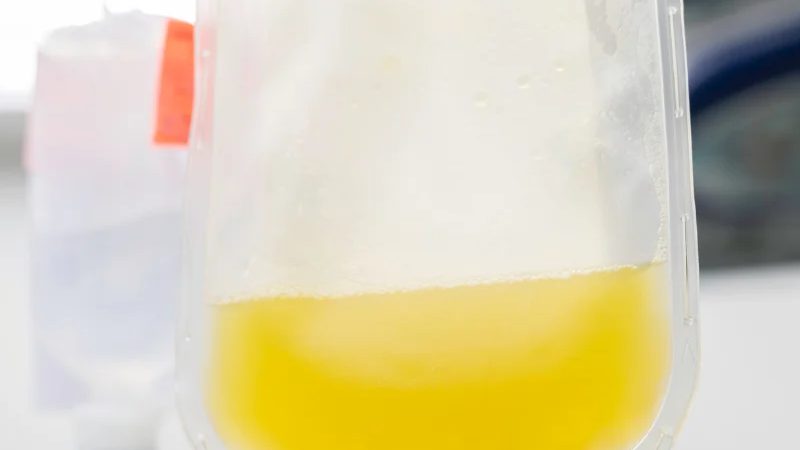
If you've encountered both "plasmapheresis" and "plasma exchange" in the context of blood-based therapies, you may have wondered whether they refer to the same procedure. The question comes up whether framed as plasmapheresis vs plasma exchange or the other way around - and the short answer is: they are closely related but not technically identical. Understanding plasma exchange vs plasmapheresis matters both for patients exploring treatment options and for clinicians communicating precisely about procedures.
This article explains what each term means, what the formal distinction is, how the procedure works mechanically, what replacement fluids are used, and when therapeutic plasma exchange is clinically indicated.
What Is Plasmapheresis?
Plasmapheresis is a broad term describing the extracorporeal separation of plasma from the cellular components of blood. The word comes from the Greek apheresis - meaning "to take away" - and refers specifically to the removal of plasma.
In a technical sense, plasmapheresis encompasses any procedure in which plasma is isolated from whole blood through centrifugation or membrane filtration. This includes:
- Therapeutic procedures in which plasma is removed and replaced to treat disease
- Plasma donation in which a healthy donor's plasma is collected for transfusion use
- Procedures involving small plasma volumes (≤15% of total plasma volume) without replacement fluid
The term "plasmapheresis" is also widely used as a synonym for therapeutic plasma exchange in clinical practice - particularly in older literature and in patient-facing communication - even when a full large-volume plasma exchange with replacement fluid is performed. According to the StatPearls reference on plasmapheresis (Sergent and Ashurst, last updated 2023), plasmapheresis involves "extracorporeal removal, return, or exchange of blood plasma or components" and can be achieved via centrifugation or membrane filtration (Sergent & Ashurst, StatPearls, 2023).
What Is Therapeutic Plasma Exchange (TPE)?
Therapeutic plasma exchange (TPE) is the specific clinical application in which a large volume of plasma - typically one to one-and-a-half times the patient's total plasma volume - is removed extracorporeally and replaced with a substitute fluid such as albumin or fresh frozen plasma (FFP).
The 2023 Core Curriculum on Therapeutic Plasma Exchange published in the American Journal of Kidney Diseases provides the clearest formal definition: "Plasmapheresis removes plasma from a patient, whereas therapeutic plasma exchange (TPE) entails removing plasma from the patient in exchange for replacement fluid" (Cervantes, Bloch & Sperati, JKD, 2023).
The purpose of this replacement is both to maintain circulatory volume and to replenish proteins that are removed along with the targeted pathological substances. The substances removed by TPE that contribute to disease include:
- Autoantibodies (e.g., anti-AChR antibodies in myasthenia gravis; anti-GQ1b in Miller Fisher syndrome)
- Immune complexes
- Inflammatory cytokines
- Pathological proteins such as excess immunoglobulins or ADAMTS13-inhibitory antibodies in TTP
TPE is performed as a hospital-based or clinical apheresis center procedure, typically using centrifuge-based equipment and requiring trained apheresis nursing staff.
Plasma Exchange vs Plasmapheresis: Core Distinctions
Terminology and Volume
The difference between plasmapheresis and plasma exchange is most precisely defined in terms of volume and replacement:
Feature | Plasmapheresis (strict definition) | Therapeutic Plasma Exchange (TPE) | |
Plasma volume removed | Small (≤15% TPV) | Large (1–1.5 TPV per session) | |
Replacement fluid | Not required | Required (albumin or FFP) | |
Primary purpose | Plasma separation (can include donation) | Removal of pathological constituents | |
Clinical setting | Donation centers or low-volume procedures | Hospital / apheresis centers |
A 2023 systematic review in Biomedicines formalizes this: "Plasmapheresis refers to procedures removing small plasma volumes (≤15% total plasma volume) without replacement," whereas "plasma exchange involves large volume removal (1–1.5 TPV) with appropriate fluid replacement" (Tonev & Momchilova, Biomedicines, 2023).
In everyday clinical usage, however, this distinction is often not maintained. The debate around plasmapheresis vs plasma exchange largely reflects a terminology gap between strict procedural definitions and common clinical language. When clinicians say "plasmapheresis," they frequently mean a full therapeutic exchange - and the ASFA (American Society for Apheresis) guidelines themselves use both terms throughout their indications documentation.
Mechanism: Centrifugation vs Membrane Filtration
Both plasmapheresis and TPE can be performed using one of two physical separation methods:
Centrifugation (preferred globally): Blood is anticoagulated and drawn into a rapidly spinning centrifuge operating at approximately 2,000–2,500 rpm. The components of blood separate by density - red blood cells settle to the outer layer, plasma rises to the center. The plasma is removed and discarded; the cellular components are returned to the patient alongside replacement fluid. Centrifugation can be continuous-flow (blood is simultaneously removed and returned) or intermittent-flow (blood is removed in discrete cycles).
Membrane filtration: Blood passes through a semipermeable hollow-fiber membrane with pore sizes calibrated to allow plasma to pass through while retaining blood cells. This method can return the filtered plasma - either in its original form or after secondary processing - without requiring a replacement fluid. Membrane-based systems are the basis for double filtration plasmapheresis (DFPP), in which a second, finer filter selectively removes high-molecular-weight substances (such as IgG) while returning albumin and smaller proteins to the patient.
Both methods achieve equivalent therapeutic plasma removal. The choice of method depends on equipment availability, clinical indication, and institutional preference.
Replacement Fluids: Albumin vs Fresh Frozen Plasma
When a large-volume plasma exchange is performed, a replacement fluid must be infused to maintain oncotic pressure and circulatory volume. Two primary options are used:
Human albumin solution (4–5%) is the most widely used replacement fluid, appearing in approximately 71% of TPE studies reviewed in a 2022 systematic scoping review of 42 controlled studies (Kohli et al., Journal of Clinical Apheresis, 2022). Albumin is heat-inactivated during manufacturing, which eliminates risk of pathogen transmission and reduces hypersensitivity reactions compared to plasma-derived products. Its primary limitation is that it does not replenish clotting factors - patients with pre-existing coagulopathy may require monitoring of fibrinogen levels after albumin-based exchanges.
Fresh frozen plasma (FFP) is used when clinical repletion of coagulation factors is necessary. The most established indication is thrombotic thrombocytopenic purpura (TTP), where FFP also provides ADAMTS13 enzyme that is deficient or inhibited in affected patients. FFP carries a higher risk of allergic reactions, transfusion-related acute lung injury (TRALI), and transfusion-transmitted infections compared to albumin.
No head-to-head comparison has established one fluid type as universally superior across all TPE indications; fluid selection is guided by the clinical indication and the patient's coagulation status.
When Is Each Used? ASFA Clinical Indications
The clinical applications for therapeutic plasma exchange are governed by the guidelines of the American Society for Apheresis (ASFA). The 9th edition of the ASFA guidelines, published in 2023, identifies 166 total therapeutic apheresis indications, of which 118 include TPE as a sole or combined apheresis technique (Connelly-Smith et al., *Journal of Clinical Apheresis*, 2023 (https://doi.org/10.1002/jca.22043)).
Indications are graded across four categories:
- Category I: First-line therapy - strong evidence supports TPE as primary treatment. Examples include thrombotic thrombocytopenic purpura (TTP), Guillain-Barré syndrome, myasthenia gravis crisis, and Goodpasture syndrome.
- Category II: Second-line therapy - TPE is evidence-supported but used when first-line options are insufficient. Examples include neuromyelitis optica spectrum disorder (NMOSD) and acute demyelinating multiple sclerosis relapse.
- Category III: Optimum role not established - evidence exists but is insufficient to define TPE's place in management. This category includes septic shock with multiorgan failure and several neurological conditions.
- Category IV: Not indicated or potentially harmful - TPE is not supported by evidence.
A 2024 analytical review in Vox Sanguinis noted that the majority of TPE indications remain in Category III, highlighting the continued challenge of generating RCT-level evidence for apheresis procedures in rare conditions (Kim et al., Vox Sanguinis, 2024).
In terms of real-world outcomes, a retrospective cohort study of 234 adult patients treated per ASFA 2023 guidelines found that Category I conditions yielded a 35.5% complete response rate, with thrombotic thrombocytopenic purpura achieving a 75% complete response rate. Category III conditions showed a 50% no-response rate, consistent with the lower level of evidence for these indications (Dogan & Aydeniz, Pakistan Journal of Medical Sciences, 2025).
Safety and Side Effects
Therapeutic plasma exchange is generally well-tolerated in experienced clinical settings. The most common adverse event is transient hypotension, reported in approximately 19% of studies reviewed in the Kohli et al. (2022) scoping review, primarily in those using albumin as replacement fluid.
Other potential adverse effects include:
- Hypocalcemia: Citrate is used as an anticoagulant during the procedure and chelates calcium; symptoms include perioral tingling, muscle cramps, and, rarely, cardiac arrhythmia
- Hypothermia: Infusion of large volumes of room-temperature replacement fluid may lower body temperature, particularly in smaller patients
- Catheter-related complications: Large-bore vascular access is required; risks include infection, thrombosis, and pneumothorax with central line placement
- Coagulopathy: Removal of clotting factors with albumin-based replacement can reduce fibrinogen; post-procedure monitoring may be warranted
Serious adverse events are uncommon. A low overall complication rate of approximately 9% was observed across 234 patients in the Dogan & Aydeniz (2025) study, consistent with other published series.
Frequently Asked Questions
Is plasma exchange the same as plasmapheresis?
Questions framed as plasmapheresis vs plasma exchange or plasma exchange vs plasmapheresis arise frequently in both patient and clinical contexts. In everyday clinical use, the terms are often used interchangeably. Technically, plasmapheresis refers to any procedure separating plasma from blood - including small-volume removal without replacement - whereas plasma exchange (therapeutic plasma exchange, TPE) specifically involves large-volume plasma removal with replacement fluid. The formal distinction matters in research contexts; in patient communication, both terms typically describe the same therapeutic procedure.
What is the difference between plasmapheresis and plasma exchange?
The difference between plasmapheresis and plasma exchange lies primarily in volume and replacement: plasmapheresis in its strict sense removes a small plasma fraction (≤15% of total plasma volume) without replacement, while plasma exchange removes one to one-and-a-half total plasma volumes and replaces it with albumin or fresh frozen plasma.
Which conditions require therapeutic plasma exchange?
The ASFA 9th edition (2023) identifies more than 100 indications for TPE. Category I (first-line) conditions include thrombotic thrombocytopenic purpura, Guillain-Barré syndrome, myasthenia gravis crisis, and anti-GBM (Goodpasture) disease. Category II (second-line) includes neuromyelitis optica spectrum disorder and acute relapsing multiple sclerosis. Many other conditions fall into Category III, where the evidence is present but not yet sufficient to establish a definitive treatment role.
What is the most common replacement fluid used in plasma exchange?
Human albumin solution (4–5%) is the most commonly used replacement fluid, used in approximately 71% of TPE studies. Fresh frozen plasma is preferred when coagulation factor replenishment is clinically required - most notably in thrombotic thrombocytopenic purpura, where FFP also provides ADAMTS13 enzyme.
What is double filtration plasmapheresis (DFPP)?
Double filtration plasmapheresis is a variant of membrane-based plasmapheresis in which plasma first passes through a primary filter to separate it from blood cells, then through a secondary, finer filter to selectively remove high-molecular-weight substances such as IgG antibodies while returning albumin and smaller proteins to the patient. DFPP reduces the need for replacement fluid and allows more selective removal of specific pathological proteins. It is used in conditions where autoantibody removal is the primary goal.
Is plasmapheresis used for longevity or anti-aging?
Therapeutic plasma exchange has attracted interest in longevity medicine based on research suggesting that plasma dilution - replacing older plasma with albumin solution - may reduce circulating pro-aging factors. A 2020 landmark study from the Conboy laboratory demonstrated that dilution of old plasma by replacing it with saline/albumin produced meaningful benefits in rodent models. Clinical research in humans remains early-stage. At Humanaut Health, therapeutic plasma exchange is offered as part of an individualized longevity protocol, with the procedure performed by trained clinical staff and guided by each patient's health profile.
Key Takeaways
- Plasma exchange vs plasmapheresis: technically distinct but widely used as synonyms in clinical practice - plasmapheresis refers broadly to plasma separation; TPE is the large-volume therapeutic exchange with replacement fluid
- The formal distinction by volume: plasmapheresis = ≤15% total plasma volume (no replacement); TPE = 1–1.5 total plasma volumes exchanged with albumin or FFP
- Two separation methods exist: centrifugation (preferred globally) and membrane filtration (the basis for DFPP)
- Albumin is the replacement fluid of choice in most conditions (~71% of studies); FFP is reserved for conditions requiring coagulation factor replenishment
- ASFA 9th edition (2023) lists 118 TPE indications; Category I conditions achieve the highest response rates - TTP, for example, shows 75% complete response in real-world cohort data
- Most TPE indications remain Category III, reflecting the challenge of generating high-quality RCT evidence for rare conditions
To learn more about how therapeutic plasma exchange is used in a personalized longevity context, or to explore how Humanaut Health integrates blood-based therapies into comprehensive care, visit our services page.
References
- Cervantes, C.E., Bloch, E.M., Sperati, C.J. "Therapeutic Plasma Exchange: Core Curriculum 2023." American Journal of Kidney Diseases, 2023; 81(4):475–492. DOI: 10.1053/j.ajkd.2022.10.017
- Sergent, S.R., Ashurst, J.V. "Plasmapheresis." StatPearls. StatPearls Publishing; 2026 Jan-. PMID: 32809401
- Tonev, D.G., Momchilova, A.B. "Therapeutic Plasma Exchange in Certain Immune-Mediated Neurological Disorders: Focus on a Novel Nanomembrane-Based Technology." Biomedicines, 2023; 11(2):328. DOI: https://doi.org/10.3390/biomedicines11020328
- Connelly-Smith, L., et al. "Guidelines on the Use of Therapeutic Apheresis in Clinical Practice – Evidence-Based Approach from the Writing Committee of the American Society for Apheresis: The Ninth Special Issue." Journal of Clinical Apheresis, 2023; 38(2):77–278. DOI: 10.1002/jca. 22043
- Kim, H.J., et al. "Trends in Category and Grade for Therapeutic Plasma Exchange in the Latest Guideline on Therapeutic Apheresis by the American Society for Apheresis: Hurdles in Pursuing Evidence-Based Medicine." Vox Sanguinis, 2024; 119(5):476–482. DOI: 10.1111/vox. 13603
- Dogan, A., Aydeniz, G. "Evaluation of Clinical Response According to Category and Level of Evidence for Therapeutic Plasma Exchange Indications: A Single-Center Experience." Pakistan Journal of Medical Sciences, 2025; 41(9). DOI: 10.12669/pjms.41.9.12597
- Hernandez, G.N., Francis, A.J., Hamid, P. "Enhancing Survival in Septic Shock: A Systematic Review and Meta-Analysis of the Efficacy of Plasma Exchange Therapy." Cureus, 2024; 16(5):e60947. DOI: 10.7759/cureus. 60947
- Kohli, R., Geneen, L.J., Brunskill, S.J., Doree, C., Estcourt, L., et al. "Assessing Efficacy and Safety of Replacement Fluids in Therapeutic Plasma Exchange: A Systematic Scoping Review of Outcome Measures Used." Journal of Clinical Apheresis, 2022; 37(5). DOI: 10.1002/jca. 21996)