Stem Cell for Disc Pain: What the Evidence Really Shows
5 min read
AUTHOR

MEDICALLY REVIEWED BY

Chronic low back pain is one of the most common reasons adults between 35 and 65 seek non-surgical treatment, and a degenerated intervertebral disc is often the overlooked source. Stem cell for disc pain has become a widely searched topic as patients look for alternatives to long-term medication or surgery. This article, from the concierge longevity team at Humanaut Health, explains what causes disc-related pain, how the therapy is proposed to work, what current trial evidence actually shows, including several large trials that did not outperform placebo, and what safety, regulatory, and candidacy considerations look like today.
What Causes Disc Pain? Understanding Intervertebral Disc Degeneration
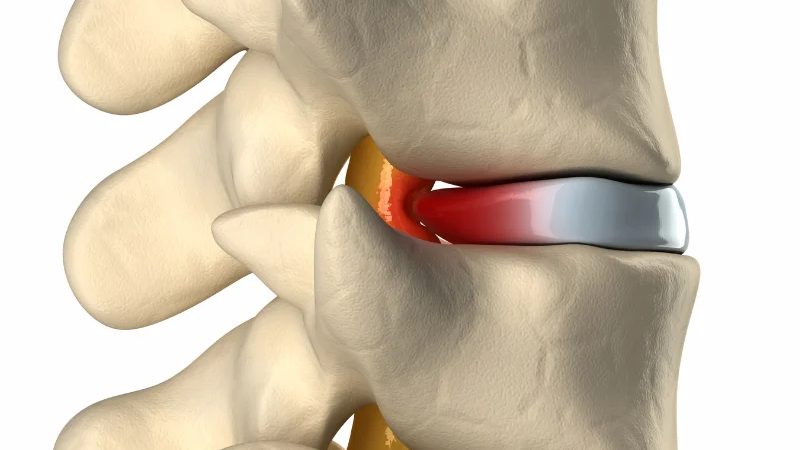
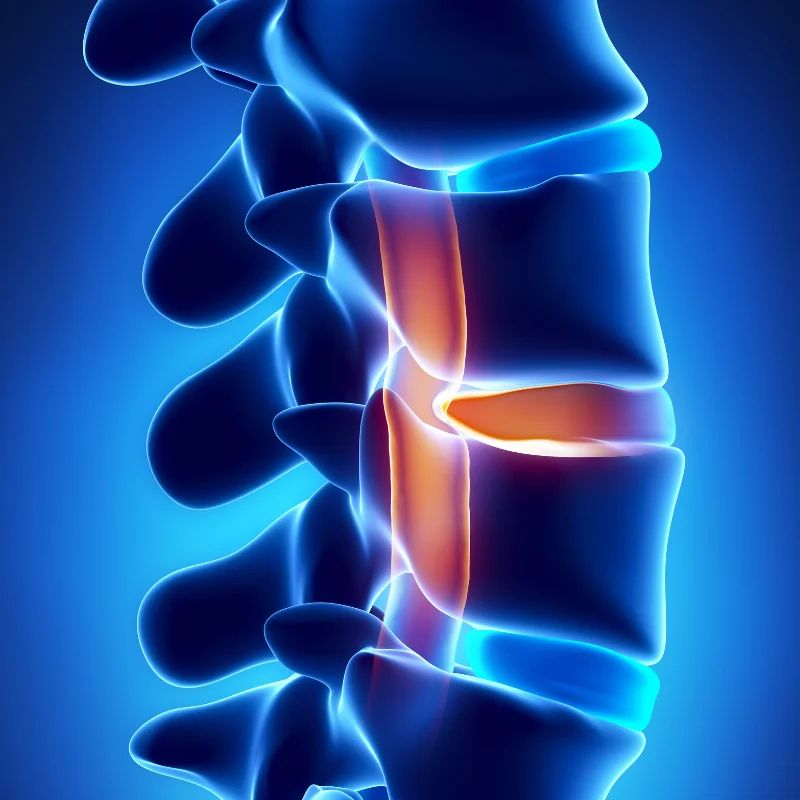
Each intervertebral disc has a soft, gel-like center, the nucleus pulposus, surrounded by a tougher fibrous ring, the annulus fibrosus. Together these structures absorb shock and let the spine bend and twist. Under repeated mechanical load, discs tend to lose water content and height, and the internal structure can develop tears.
On imaging, this often appears as Modic changes in the adjacent vertebral bone or a high-intensity zone within the disc's outer ring, both used as markers that help identify a disc as the likely pain source. Not every degenerated disc is painful, so confirming a specific disc as the pain generator requires correlating imaging with clinical presentation.
Discogenic pain is a distinct entity from other causes of chronic back pain. Readers can review Humanaut Health's article on stem cell pain management for chronic back pain for broader mechanics. When a degenerated disc compresses a nearby nerve root, the resulting nerve pain is a separate condition called sciatica, covered in Humanaut Health's article on stem cell therapy for sciatica pain. Disc pain, by contrast, arises from the disc itself.
How Does Stem Cell Therapy for Disc Pain Work?
Disc pain stem cell therapy typically uses mesenchymal stem cells, or MSCs, sourced from a patient's own bone marrow or adipose tissue, or from donor-derived (allogeneic) banks. Across the trials discussed below, researchers have used bone-marrow-derived MSCs, bone marrow aspirate concentrate, and allogeneic disc progenitor cells.
The proposed mechanism is still under study, but MSCs are thought to release anti-inflammatory signaling molecules within the disc and may help support its internal matrix. This is generally described as a paracrine effect, meaning the cells act mainly through secreted substances rather than by replacing damaged tissue. Researchers continue to study whether this signaling can meaningfully slow or reverse degeneration.
Delivery in every major trial reviewed here, including RESPINE, DREAM, and the bone marrow concentrate sham trial, involves an image-guided intradiscal injection, placing cells into the disc under fluoroscopic guidance rather than administering them systemically. Readers can learn more about Humanaut Health's regenerative medicine and stem cell therapy services.
What Does the Clinical Evidence Show?
Meta-Analyses and Systematic Reviews
Pooled data offer the broadest picture available. A meta-analysis of nine studies (245 patients) found MSC therapy associated with a mean VAS pain improvement of 41.62 points (95% CI 24.32 to 58.93, p<0.01) and a mean ODI disability improvement of 22.04 points (95% CI 8.75 to 35.33, p=0.001), though with high heterogeneity (Zhang et al., Frontiers in Bioengineering and Biotechnology, 2023).
A separate review of seven studies (283 patients) reported comparable improvements (VAS mean difference 38.97, ODI mean difference 21.57, both p<0.00001), plus a modest but significant gain in Pfirrmann grade, a measure of disc structure on MRI (Randy et al., International Journal of Spine Surgery, 2025). Narrowed to RCTs only, a meta-analysis of three trials (104 patients) found significantly reduced pain through 24 months and improved disability at 24 months and beyond, though adverse events were somewhat more frequent in the MSC group (Xie et al., Stem Cells International, 2021).
Landmark Randomized Trials
The pooled results tell only part of the story. Some of the largest, most rigorous trials have not confirmed a benefit over placebo. RESPINE, a placebo-controlled trial of 114 patients, found its primary endpoint, a 12-month responder rate, was not met: 74% of the stem cell group and 69% of the sham group responded, a difference not significant (p=0.77), with no serious adverse events across 58 injections (Pers et al., Annals of the Rheumatic Diseases, 2024).
DREAM, a Phase IIB RCT of 52 patients, similarly found MSC injections improved disc height and MRI hydration signals without a significant advantage over sham at six months (Vadalà et al., JOR Spine, 2025). A sham-controlled bone marrow concentrate trial of 63 patients reported equivalent outcomes at every timepoint, including 12 months (Levi et al., Interventional Pain Medicine, 2025). Together, these suggest structural improvement does not always translate into a symptom benefit beyond sham.
Not every trial reported a null result. IDCT tested a high-dose arm of allogeneic disc progenitor cells against low-dose, vehicle, and placebo arms in 60 patients and found the high-dose group safely increased disc volume with durable pain, function, and quality-of-life improvements through two years (Gornet et al., International Journal of Spine Surgery, 2024).
Early-Stage Safety Data
RELIEF, a small Phase I trial, evaluated the safety of a single intradiscal injection of allogeneic clonal MSCs in five patients over 24 weeks (Beheshti Maal et al., Stem Cell Research & Therapy, 2025). No serious adverse events occurred, and injection-site pain resolved within four to eight days. Three of five patients showed meaningful improvement through 24 weeks, though the tiny sample makes this hypothesis-generating only.
Pooled analyses report significant average improvement, but the largest sham-controlled trials, RESPINE and DREAM especially, have not confirmed a benefit beyond placebo. A broad review of preclinical and clinical research found the same pattern: animal studies show meaningful disc regeneration, while human trials remain low-to-moderate quality with only modest improvement (Ferraz et al., North American Spine Society Journal, 2025).
Safety Considerations and Regulatory Status
Across the trials reviewed here, stem cell for disc pain has generally shown a favorable safety profile. Serious adverse events have been rare, and no disc infections were reported across the RESPINE or bone marrow concentrate trials, together over 100 injections. The most commonly reported side effect, including in RELIEF, was transient injection-site pain resolving within about a week. One RCT-only meta-analysis found adverse events overall somewhat more frequent in the MSC group, though events like back pain or spasm were not individually significant.
How Does Stem Cell Therapy Compare to Other Options for Disc Pain?
Stem cell therapy is not the only regenerative option studied for discogenic pain. A small double-blind RCT comparing intradiscal platelet-rich plasma releasate to corticosteroid injection found no significant difference in pain at eight weeks, though the platelet-rich plasma group showed better disability scores at 26 weeks (Akeda et al., Journal of Clinical Medicine, 2022). This mixed-benefit pattern is broadly consistent with the stem cell trials above.
Conservative care, including physical therapy and anti-inflammatory medication, remains the standard first-line approach for discogenic pain, though it does not address underlying degeneration. Surgery such as discectomy or fusion remains established for patients with progressive neurological deficits or who have not responded to conservative treatment. Regenerative approaches are sometimes considered earlier in the continuum for selected patients, though not as a surgery replacement.
Who May Be a Candidate for Disc Pain Stem Cell Therapy?
The patient population most represented in the trials above has chronic discogenic low back pain that has not responded to at least six months of conservative management, without significant neurological deficit or an urgent need for surgical decompression. Patients with progressive weakness, loss of bowel or bladder control, or other red-flag symptoms are not appropriate candidates and require prompt medical evaluation instead.
Determining candidacy generally requires imaging that confirms the disc as the likely pain source, along with thorough clinical evaluation. Humanaut Health's advanced diagnostics approach reflects this same principle of building any recommendation on comprehensive evaluation rather than symptoms alone. Because the evidence includes both encouraging pooled results and rigorous null findings, candidacy should involve a detailed discussion with a qualified physician about realistic expectations.
Frequently Asked Questions
What is stem cell therapy for disc pain?
Stem cell therapy for disc pain is an investigational approach involving an injection of mesenchymal stem cells into a degenerated disc, aimed at reducing inflammation and potentially supporting disc structure. Cells are typically sourced from bone marrow, fat tissue, or donor tissue banks. It remains an area of active research, not a routine treatment.
Does stem cell for disc pain actually work?
The evidence is mixed. Pooled meta-analyses report significant average improvements in pain and disability, but some of the largest, most rigorous sham-controlled trials have not shown a clear benefit over placebo.
What happens during disc pain stem cell therapy?
A clinician uses imaging guidance, typically fluoroscopy, to inject a prepared dose of stem cells into the affected disc. The procedure is generally an outpatient injection rather than open surgery, and transient injection-site discomfort is the most common side effect.
Is stem cell therapy for disc pain FDA-approved?
No stem cell or MSC-based product is currently FDA-approved for treating disc degeneration or discogenic low back pain in the United States. Some trials are authorized to proceed as investigational studies, a different status from approval to market a treatment.
What are the risks of stem cell therapy for disc pain?
Across the trials reviewed, serious complications have been uncommon, and no disc infections were reported in the largest trials. Transient injection-site pain is the most frequently reported side effect, though one meta-analysis found adverse events somewhat more common in treated patients than comparators.
How is disc pain different from sciatica?
Disc pain, or discogenic pain, originates from the degenerated disc itself, while sciatica occurs when a disc or other structure compresses a nearby spinal nerve root. The two can occur together, since a degenerated disc can eventually herniate and press on a nerve, but they are distinct mechanisms.
Am I a candidate for stem cell therapy for disc pain?
Candidates in the available research typically have chronic discogenic pain lasting six months or more despite conservative treatment, without significant neurological symptoms or an urgent need for surgery. A physician determines candidacy through imaging and clinical evaluation.
Key Takeaways
- Stem cell for disc pain means injecting mesenchymal stem cells directly into a degenerated intervertebral disc, most often sourced from bone marrow or adipose tissue.
- Pooled meta-analyses report significant average improvements in pain and disability, but large sham-controlled trials, including RESPINE and DREAM, did not show a benefit over placebo.
- Structural improvement, such as increased disc height, does not always translate into a measurable symptom benefit.
- Safety data are generally favorable, with transient injection-site pain as the most common side effect.
- Candidacy depends on confirming the disc as the pain source through imaging and evaluation with a qualified physician.
Next Steps
To learn more about how regenerative approaches fit within a personalized, evidence-based care plan, explore Humanaut Health's regenerative medicine and stem cell therapy services.
References
- Zhang, W., Wang, D., Li, H., Xu, G., Zhang, H., Xu, C., Li, J. "Mesenchymal stem cells can improve discogenic pain in patients with intervertebral disc degeneration: a systematic review and meta-analysis." Frontiers in Bioengineering and Biotechnology, 2023; 11:1155357. DOI: 10.3389/fbioe.2023.1155357
- Randy, R., Yosua, K., Guntara, A., Hardiansyah, N.P. "Stem Cells Therapy as a Treatment for Discogenic Low Back Pain: A Systematic Review." International Journal of Spine Surgery, 2025; 19(2):156-167. DOI: 10.14444/86717
- Xie, B., Chen, S., Xu, Y., Han, W., Hu, R., Chen, M., He, R., Ding, S. "Clinical Efficacy and Safety of Human Mesenchymal Stem Cell Therapy for Degenerative Disc Disease: A Systematic Review and Meta-Analysis of Randomized Controlled Trials." Stem Cells International, 2021; 2021:9149315. DOI: 10.1155/2021/9149315
- Pers, Y-M., Soler-Rich, R., Vadalà, G., et al. "Allogenic bone marrow-derived mesenchymal stromal cell-based therapy for patients with chronic low back pain: a prospective, multicentre, randomised placebo controlled trial (RESPINE study)." Annals of the Rheumatic Diseases, 2024; 83(11):1572-1583. DOI: 10.1136/ard-2024-225771
- Vadalà, G., Russo, F., Lavazza, C., Petrucci, G., Ambrosio, L., Budelli, S., Montelatici, E., Di Giacomo, G., Cicione, C., Tilotta, V., Papalia, G.F., Pileri, M., Bruno, A., La Rosa, S., Carrino, E., Faiella, E., Carassiti, M., Lazzari, L., Papalia, R., Denaro, V. "Intradiscal Mesenchymal Stromal Cell Therapy for the Treatment of Low Back Pain Due to Moderate-to-Advanced Multilevel Disc Degeneration: A Preliminary Report of a Double-Blind, Phase IIB Randomized Clinical Trial (DREAM Study)." JOR Spine, 2025; 8(2):e70086. DOI: 10.1002/jsp2.70086
- Levi, D., Tyszko, S., Horn, S., Pham, N., Levin, J. "Bone marrow concentrate intradiscal injection for chronic discogenic low back pain: A double-blind randomized sham-controlled trial." Interventional Pain Medicine, 2025; 4(3):100611. DOI: 10.1016/j.inpm.2025.100611
- Gornet, M.F., Beall, D.P., Davis, T.T., Coric, D., LaBagnara, M., Krull, A., DePalma, M.J., Hsieh, P.C., Mallempati, S., Schranck, F.W., Kelly, C., Foley, K.T. "Allogeneic Disc Progenitor Cells Safely Increase Disc Volume and Improve Pain, Disability, and Quality of Life in Patients With Lumbar Disc Degeneration-Results of an FDA-Approved Biologic Therapy Randomized Clinical Trial." International Journal of Spine Surgery, 2024; 18(3):237-248. DOI: 10.14444/8609
- Beheshti Maal, A., Kordi, R., Madani, H., Khadivi, M., Moghadam, N., Asnaashari, A., Najafi, M., Baghaban Eslaminejad, M., Farzanbakhsh, S., Haghighatkhah, H., Sadri, B., Karimi, S., Hajizadeh-Saffar, E., Hassani, N., Baharvand, H., Vosough, M. "Intradiscal injection of allogeneic bone marrow derived clonal mesenchymal stromal cells in discogenic low back pain: a phase I study on safety and feasibility (RELIEF: phase I)." Stem Cell Research & Therapy, 2025; 16(1):525. DOI: 10.1186/s13287-025-04606-w
- Ferraz, V.R., Goulart, C.R., Ricieri Ferraz Franco de Souza, M.F., Ochoa Coelho de Souza Furlan, M., Mercier, P., Mattei, T.A. "Stem cell therapy for degenerative disc disease: A systematic review of preclinical evidence, clinical translation, and future directions." North American Spine Society Journal, 2025. DOI: 10.1016/j.xnsj.2025.100841
- Akeda, K., Ohishi, K., Takegami, N., Sudo, T., Yamada, J., Fujiwara, T., Niimi, R., Matsumoto, T., Nishimura, Y., Ogura, T., Tamaru, S., Sudo, A. "Platelet-Rich Plasma Releasate versus Corticosteroid for the Treatment of Discogenic Low Back Pain: A Double-Blind Randomized Controlled Trial." Journal of Clinical Medicine, 2022; 11(2):304. DOI: 10.3390/jcm11020304