Say Goodbye to Sciatica Pain with Stem Cell Therapy
5 min read
AUTHOR

MEDICALLY REVIEWED BY

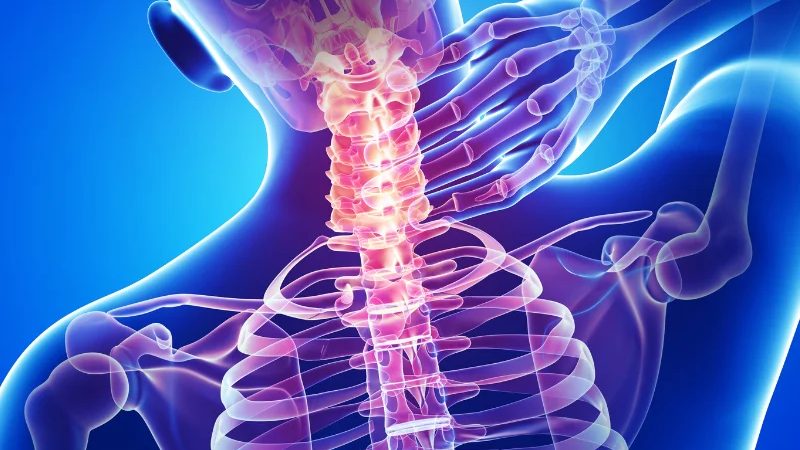
Sciatica - the sharp, radiating pain that travels from the lower back through the buttock and down the leg - affects an estimated 10–40% of adults at some point in their lives. For many, conventional treatments such as anti-inflammatory medications, physical therapy, and epidural steroid injections provide temporary relief without addressing the underlying disc pathology. Growing clinical evidence now suggests that stem cells for sciatica pain may offer a regenerative approach that targets the disc itself, not just the pain signal.
This article examines the biology behind sciatica, how stem cell therapy is thought to work at the source of the problem, what clinical trials have found, and who may be a candidate for this type of care.
What Is Sciatica and What Causes It?
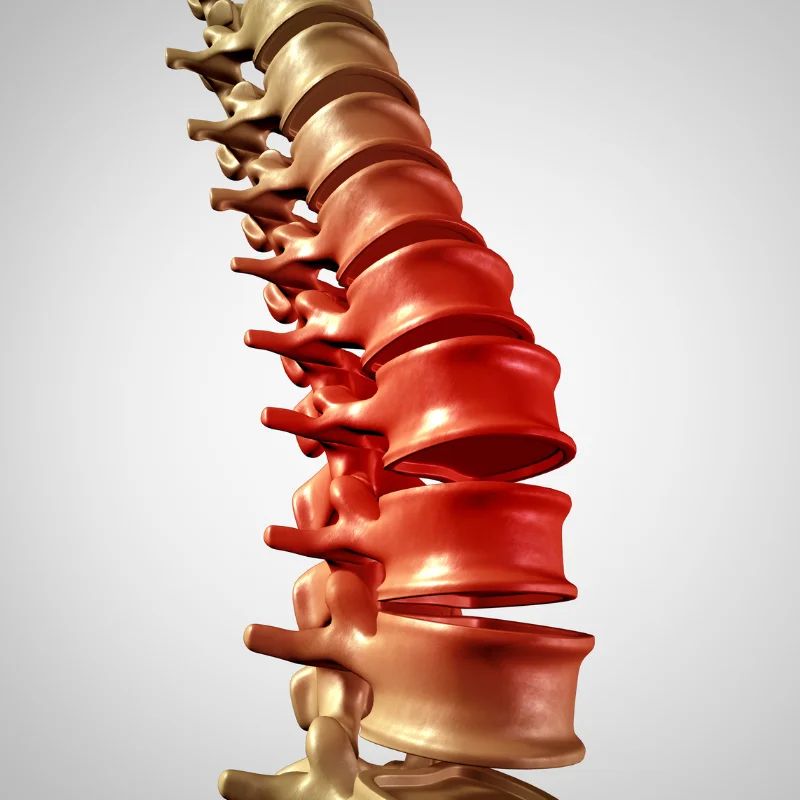
Sciatica describes symptoms arising from compression or irritation of the sciatic nerve - the largest nerve in the body, running from the lumbar spine through the pelvis and down each leg. The most common underlying cause is lumbar disc herniation, in which the nucleus pulposus (the disc's inner gel-like core) pushes through the outer annular ring and compresses an adjacent nerve root.
A closely related driver is intervertebral disc degeneration (IDD): as discs lose water content, height, and structural integrity with age, they generate a chronic pro-inflammatory microenvironment that sensitizes nerve roots and perpetuates pain even without frank herniation. Both conditions involve a decline in nucleus pulposus cell activity - the specialized cells responsible for maintaining disc matrix and water retention.
Conventional treatments - NSAIDs, corticosteroid injections, physiotherapy - address the pain and inflammation effectively in many patients, but they do not restore disc biology. This is the gap that stem cell-based approaches aim to fill.
How Stem Cell Therapy Addresses Sciatica at Its Source
Mesenchymal stem cells (MSCs) - most commonly derived from adipose (fat) tissue or bone marrow - are being studied for their capacity to address the two central features of disc degeneration: cellular depletion and the pro-inflammatory microenvironment. A 2024 systematic review confirms that MSC therapy counteracts both mechanisms through complementary pathways, including anti-inflammatory cytokine secretion, nucleus pulposus cell regeneration, and extracellular matrix synthesis stimulation.
The most studied delivery method is intradiscal injection - MSCs are introduced directly into the degenerated disc under fluoroscopic guidance, often in combination with hyaluronic acid (to support cell survival and hydration) or platelet-rich plasma (to provide additional growth factors). The goal is to reduce local inflammation, support disc matrix repair, and restore the cellular environment needed for long-term structural improvement.
What the Clinical Evidence Shows
Meta-Analysis Results
A 2023 systematic review and meta-analysis published in Frontiers in Bioengineering and Biotechnology pooled data from nine clinical studies involving 245 patients receiving MSC therapy for discogenic pain - the pain pattern that most commonly underlies sciatica. The pooled analysis found:
- Visual Analogue Scale (VAS) pain score: mean difference of 41.62 points in favor of MSC therapy (95% CI: 24.32–58.93; p<0.01)
- Oswestry Disability Index (ODI): mean difference of 22.04 points improvement (95% CI: 8.75–35.33; p=0.001)
- Reoperation rate: only 7.4% of MSC-treated patients required subsequent surgery
- Safety: no serious adverse events associated with MSC therapy across all included studies
(Zhang et al., Frontiers in Bioengineering and Biotechnology, 2023)
Phase 1 and Feasibility Trial Data
A 2022 one-year feasibility study published in Future Science OA evaluated intradiscal injection of 10 million autologous adipose-derived MSCs in nine patients with chronic low back pain from single-level disc degeneration. At 12 months:
- 78% reported overall pain reduction
- 55% achieved ≥50% improvement in average pain scores
- 89% showed improvements in the Oswestry Disability Index
- 67% reported high or complete treatment satisfaction
- No unexpected or serious adverse events were recorded
A 2023 Phase 1 clinical trial published in the International Journal of Molecular Sciences evaluated intradiscal injection of matrilin-3-primed adipose-derived stromal cell spheroids combined with hyaluronic acid in eight patients with chronic discogenic low back pain. Six of eight patients (75%) achieved the predefined success threshold of at least a 2-point VAS improvement and 10-point ODI improvement. No adverse events were linked to the procedure or stem cells throughout the six-month follow-up (Lee et al., International Journal of Molecular Sciences, 2023).
MRI and Structural Outcomes
Beyond pain scores, structural imaging in the feasibility study showed that no participant experienced disc height reduction after treatment. Annular fissures resolved or lessened in three participants, and disc protrusions were reduced in two, suggesting that this regenerative approach may produce measurable structural improvements in addition to symptom relief (Bates et al., 2022).
The Phase 1 trial similarly reported stable disc degeneration grades at follow-up, with four of eight patients showing objective radiological improvements, including reduced high-intensity zones and decreased disc protrusion (Lee et al., 2023).
Safety Profile
The safety record across reviewed studies is consistently favorable. The meta-analysis of nine studies reported no serious adverse events associated with MSC therapy. The feasibility study noted only expected minor side effects from the liposuction procedure used to harvest adipose tissue (mild pain and bruising, all resolving without intervention), not from the stem cells themselves.
The most advanced clinical program underway is the DREAM study - a double-blind, Phase IIB randomized controlled trial evaluating intradiscal MSC therapy for multilevel disc degeneration. Preliminary findings support significant improvements in pain and disability versus placebo, representing the most rigorous evidence design in this field to date.
As with all emerging therapies, no MSC-based treatment for discogenic pain or sciatica currently holds FDA approval for commercial use in the United States. Treatments are available in research and clinical settings, and candidacy should be assessed by a provider experienced in regenerative spine care.
Who May Benefit From Stem Cell Sciatica Treatment?
Based on patient populations studied in clinical trials, stem cell sciatica treatment may be of interest to adults who:
- Have chronic sciatica attributable to lumbar disc degeneration (confirmed on MRI)
- Have not achieved adequate relief from conservative care (physical therapy, injections, medications)
- Are not candidates for, or wish to avoid, surgical decompression
- Are seeking a non-surgical approach that may address disc biology rather than symptoms alone
Individuals with acute disc herniation causing severe neurological deficits (significant weakness, bowel or bladder dysfunction) typically require prompt surgical evaluation and are generally not candidates for elective regenerative protocols. Candidacy determination requires imaging review and clinical assessment by a qualified provider.
How Does It Compare to Other Approaches?
Epidural Steroid Injections: Corticosteroids are effective at reducing nerve root inflammation and providing short-term pain relief, but they do not address the degenerated disc itself and their benefits are typically temporary. MSC therapy is designed to target the disc biology at its source.
Surgery (Discectomy/Fusion): Surgery provides mechanical decompression for acute or severe nerve compression, and remains the standard of care for cases with progressive neurological deficit. MSC therapy is positioned as an option for those with chronic discogenic pain without acute compression, not as a replacement for surgery when surgery is clinically indicated.
PRP (Platelet-Rich Plasma): PRP delivers concentrated growth factors that support tissue repair. MSC therapy goes further by introducing living cells capable of active regeneration, anti-inflammatory secretion, and matrix synthesis - a broader mechanism than growth factor delivery alone.
Frequently Asked Questions
What is stem cell therapy for sciatica pain?
It is a regenerative approach in which mesenchymal stem cells - typically derived from the patient's own adipose tissue - are injected directly into the degenerated disc underlying the sciatica symptoms. The cells are thought to reduce disc inflammation and support tissue repair.
Can stem cells repair a herniated disc?
Clinical evidence suggests that MSC therapy may support structural disc improvements, including reduction of disc protrusions and resolution of annular fissures, as observed in MRI follow-up studies. However, this field is still in early clinical development, and outcomes vary by individual and disc severity.
How is stem cell sciatica treatment administered?
The most studied route is intradiscal injection - MSCs are delivered into the nucleus pulposus of the target disc under fluoroscopic (X-ray) guidance, often combined with hyaluronic acid or PRP to support cell survival and activity.
How long does it take to see results?
In the trials reviewed, measurable pain improvements were observed from one month onward, with continued gains through 6–12 months of follow-up. Structural MRI changes were detectable at 6–12 months in some participants.
Is stem cell therapy for sciatica pain FDA-approved?
No MSC-based therapy for disc degeneration or sciatica currently holds FDA approval for commercial use in the United States as of 2026. Treatments are available in clinical research and specialized clinical settings.
What are the risks of stem cell therapy for sciatica?
Reviewed clinical trials report no serious adverse events from the MSC injections themselves. Minor procedural risks include discomfort from the liposuction harvest, temporary injection-site pain, and theoretical risk of infection, which is managed with standard sterile technique.
Am I a candidate for stem cell sciatica treatment?
Candidacy typically requires a diagnosis of chronic discogenic low back pain or sciatica attributable to disc degeneration on MRI, with inadequate response to conservative care. A comprehensive clinical and imaging evaluation by a regenerative medicine provider is the appropriate first step.
Key Takeaways
- Stem cell for sciatica pain is an emerging, evidence-supported approach that targets lumbar disc degeneration - the underlying cause of most sciatica - rather than the pain signal alone
- A 2023 meta-analysis of nine studies (245 patients) found a mean VAS improvement of 41.62 points and ODI improvement of 22.04 points, with only 7.4% of patients requiring reoperation
- Phase 1 trials report 75–78% of patients experiencing meaningful pain reduction, with MRI evidence of structural disc improvement in some participants
- Safety data across reviewed studies is consistently favorable, with no serious adverse events associated with MSC injections
- No FDA-approved commercial MSC therapy for sciatica exists as of 2026; the field is advancing through Phase IIB randomized trials
- Personalized assessment, including MRI and clinical evaluation, is essential to determine candidacy
To explore whether regenerative medicine approaches may be appropriate for your spinal health and pain management goals, Humanaut Health offers comprehensive evaluation and evidence-based longevity care. Explore Humanaut Health's regenerative medicine services to learn more.
References
- Zhang, W., Wang, D., Li, H., Xu, G., Zhang, H., Xu, C., Li, J. "Mesenchymal stem cells can improve discogenic pain in patients with intervertebral disc degeneration: a systematic review and meta-analysis." Frontiers in Bioengineering and Biotechnology, 2023; 11:1155357. DOI: 10.3389/fbioe. 2023.1155357
- Bates, D., Vivian, D., Freitag, J., et al. "Low-dose mesenchymal stem cell therapy for discogenic pain: safety and efficacy results from a 1-year feasibility study." Future Science OA, 2022; 8(5):FSO794. DOI: 10.2144/fsoa-2021-0155
- Lee, D.H., Park, K.S., Shin, H.E., et al. "Safety and Feasibility of Intradiscal Administration of Matrilin-3-Primed Adipose-Derived Mesenchymal Stromal Cell Spheroids for Chronic Discogenic Low Back Pain: Phase 1 Clinical Trial." International Journal of Molecular Sciences, 2023; 24(23):16827. DOI: 10.3390/ijms242316827
- Multiple authors. "Stem Cell Therapy for Degenerative Disc Disease: A Systematic Review of Preclinical Evidence, Clinical Translation, and Future Directions." Journal of Orthopaedic Translation, 2024. Available via ScienceDirect.
- Multiple authors. "Safety and tolerability of intradiscal implantation of combined autologous adipose-derived mesenchymal stem cells and hyaluronic acid in patients with chronic discogenic low back pain: 1-year follow-up of a phase I study." Stem Cell Research & Therapy, 2017. DOI: 10.1186/s13287-017-0710-3
- Multiple authors. "Intradiscal Mesenchymal Stromal Cell Therapy for the Treatment of Low Back Pain Due to Moderate-to-Advanced Multilevel Disc Degeneration: A Preliminary Report of a Double-Blind, Phase IIB Randomized Clinical Trial (DREAM Study)." PMC, 2025. PMC12129703.