Apheresis vs Plasmapheresis: Which Procedure Is Right for You?
5 min read
AUTHOR

MEDICALLY REVIEWED BY

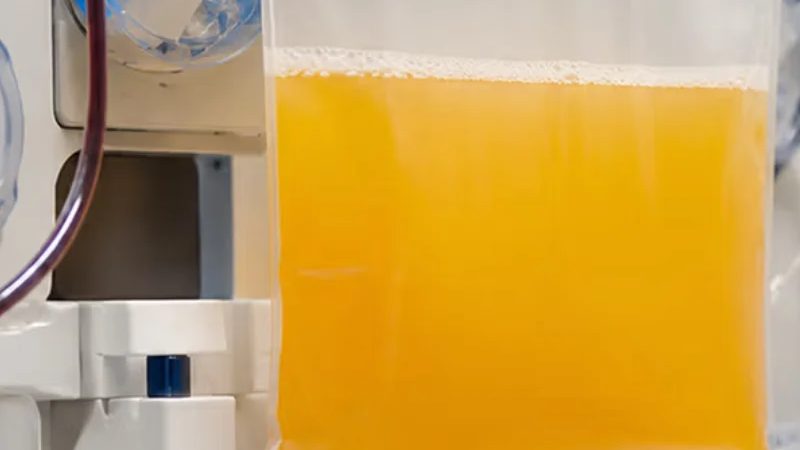
"Apheresis" and "plasmapheresis" are often used as though they mean the same thing, but they don't. If you've come across both terms while researching a blood-based treatment, the mix-up is understandable - the words are related. Understanding apheresis vs plasmapheresis matters because one term describes an entire category of medical procedures, while the other describes just one member of that category.
In short: apheresis is the umbrella medical process of separating blood into its individual components outside the body. Plasmapheresis is one specific type of apheresis - the type that targets plasma. This article explains what apheresis includes, how plasmapheresis fits into that broader picture, how the two compare side by side, when each is used, and what the evidence says about safety.
What Is Apheresis?
Apheresis is an extracorporeal procedure: blood is withdrawn, passed through a device that separates it into components, and the remainder is returned to the patient. Separation is typically achieved through centrifugation, which spins blood by density, or membrane filtration, which sorts components by particle size.
Apheresis is not a single treatment - it's a family of related techniques, each targeting a different blood component:
- Plasmapheresis targets plasma, the liquid portion of blood (covered in depth below).
- Leukapheresis targets white blood cells and may be used in hyperleukocytotic acute myeloid leukemia, where lowering white cell counts is associated with reduced leukostasis risk, a dangerous obstruction of small blood vessels (Pastore et al., PLOS ONE, 2014).
- Plateletpheresis targets platelets, used for donation and for managing excessive platelet counts.
- Erythrocytapheresis targets red blood cells, used for abnormal or excess red cell populations.
- Extracorporeal photopheresis (ECP) separates white blood cells, treats them with a light-activated medication, and reinfuses them; it is associated with apoptosis of pathogenic leukocytes and a tolerogenic immune effect, and is used for cutaneous T-cell lymphoma and graft-versus-host disease (Arora & Setia, Asian Journal of Transfusion Science, 2017; Cho et al., JDDG, 2023).
- Stem cell apheresis collects circulating hematopoietic stem cells for transplantation, with parameters that vary by target cell population (Rajsp et al., Cancers, 2022).
These apheresis subtypes are governed by a single classification framework: the American Society for Apheresis (ASFA) 9th edition guidelines, covering 166 clinical indications across 91 fact sheets spanning plasma-directed, cellular, and photopheresis-based procedures (Connelly-Smith et al., Journal of Clinical Apheresis, 2023).
What Is Plasmapheresis?
Plasmapheresis is the apheresis subtype that separates and removes plasma from blood. StatPearls defines it as the "extracorporeal removal, return, or exchange of blood plasma or components," performed via centrifugation or membrane filtration - the same methods used across apheresis (Sergent & Ashurst, StatPearls, 2023).
Not all plasmapheresis is the same. It can refer to small-volume plasma collection in donation settings, or to therapeutic plasma exchange (TPE) - the large-volume version in which plasma is removed and replaced with a substitute fluid, such as albumin, to treat disease. TPE removes pathogenic plasma constituents, including autoantibodies, immune complexes, and inflammatory cytokines, while blood cells and replacement fluid are returned to the patient (Cervantes et al., American Journal of Kidney Diseases, 2023). Plasmapheresis indications are also grouped into four categories based on the strength of supporting evidence (Sergent & Ashurst, StatPearls, 2023).
This article focuses on how apheresis and plasmapheresis relate as categories rather than re-covering plasma separation mechanics, which are addressed in detail in Humanaut Health's What Is Plasmapheresis? Benefits, Risks, and Treatment Outcomes Explained. At Humanaut Health, this large-volume, replacement-fluid form of plasmapheresis is offered as Therapeutic Plasma Exchange (TPE), performed under clinical supervision as part of an individualized care plan.
When people search plasmapheresis vs apheresis, they are usually trying to sort out exactly this relationship - whether plasmapheresis is its own separate treatment or simply one branch of a larger apheresis family. It's the latter.
Apheresis vs Plasmapheresis: Key Differences
Aspect | Apheresis (umbrella) | Plasmapheresis (subtype) | |
Scope | General process for separating any blood component | Specific process targeting plasma only | |
What's removed | Varies: plasma, white cells, platelets, red cells, or stem cells | Plasma, and any pathogenic substances carried within it | |
What's returned | Remaining blood components, with or without replacement fluid, depending on subtype | Blood cells; plasma volume may be replaced with albumin or fresh frozen plasma in therapeutic exchange | |
Equipment | Shared apheresis platform (centrifugation or membrane filtration devices) | The same equipment, configured for plasma separation | |
Examples | Leukapheresis, plateletpheresis, erythrocytapheresis, photopheresis, plasmapheresis, stem cell apheresis | One specific example within the apheresis category | |
Governing framework | ASFA categorizes all subtypes I–IV | Falls under the same ASFA I–IV system |
The relationship is consistent: every plasmapheresis procedure is a form of apheresis, but not every apheresis procedure is plasmapheresis. Readers who want a deeper dive into plasma-exchange terminology can also see Humanaut Health's Plasma Exchange vs Plasmapheresis article.
When Is Each Type of Apheresis Used?
Because ASFA's Category I–IV framework applies across the apheresis family, the right procedure depends on which blood component is driving a patient's condition (Connelly-Smith et al., Journal of Clinical Apheresis, 2023):
- Leukapheresis may be used in hyperleukocytotic leukemias to reduce leukostasis risk (Pastore et al., PLOS ONE, 2014).
- Plateletpheresis is used for platelet donation and for conditions of excessive platelet production.
- Extracorporeal photopheresis is used for cutaneous T-cell lymphoma and chronic graft-versus-host disease, among other immune-mediated conditions (Arora & Setia, Asian Journal of Transfusion Science, 2017; Cho et al., JDDG, 2023).
- Stem cell apheresis is used to collect hematopoietic stem cells ahead of transplantation (Rajsp et al., Cancers, 2022).
- Plasmapheresis and therapeutic plasma exchange are generally considered when pathogenic antibodies or other harmful substances are circulating in the plasma, as seen in a range of autoimmune and neurological conditions.
In practice, care teams select an apheresis subtype based on which blood component is implicated, rather than treating apheresis as a single interchangeable procedure.
Safety Considerations
Evidence suggests that apheresis procedures, across subtypes, are generally associated with a low incidence of significant adverse events. In a retrospective analysis of 3,367 apheresis procedures spanning plateletpheresis, therapeutic plasma exchange, and peripheral blood stem cell collection, adverse events occurred in 2.7% of procedures, with the large majority (94%) occurring during plateletpheresis. The most common events reported were citrate reactions related to anticoagulation and presyncope or syncope (Philip et al., Asian Journal of Transfusion Science, 2013).
Safety may also vary by subtype. A multicenter pediatric cohort study comparing plasma exchange with immunoadsorption - both apheresis-category techniques - found that complications occurred in roughly 11% of the 4,004 procedures studied, with immunoadsorption showing a lower complication rate than plasma exchange (Taylan et al., Frontiers in Pediatrics, 2022). This suggests subtype and technique can meaningfully influence individual risk.
All apheresis procedures, regardless of subtype, are typically performed under clinical supervision with continuous monitoring for anticoagulation-related and hemodynamic side effects.

Frequently Asked Questions
Is apheresis the same as plasmapheresis?
No. Apheresis is the umbrella term for any procedure that separates blood into components outside the body. Plasmapheresis is one specific subtype that targets plasma. Apheresis also includes leukapheresis, plateletpheresis, erythrocytapheresis, photopheresis, and stem cell apheresis.
What is the difference between plasmapheresis and apheresis?
The plasmapheresis vs apheresis distinction is one of scope. Apheresis refers broadly to any blood-component separation procedure, while plasmapheresis refers specifically to separating and removing plasma. Apheresis is the category; plasmapheresis is a member of that category.
What are the main types of apheresis?
The main apheresis subtypes are plasmapheresis (targeting plasma), leukapheresis (white blood cells), plateletpheresis (platelets), erythrocytapheresis (red blood cells), extracorporeal photopheresis (light-treated white blood cells), and stem cell apheresis (hematopoietic stem cells). ASFA's 9th edition guidelines address indications across all of these subtypes.
Is plasmapheresis a type of apheresis or a separate procedure?
Plasmapheresis is a type of apheresis, not a separate or unrelated procedure. It uses the same core extracorporeal separation technology as other apheresis subtypes, configured specifically to isolate plasma.
What conditions is plasmapheresis specifically used for?
Plasmapheresis and therapeutic plasma exchange are generally considered for conditions in which pathogenic antibodies, immune complexes, or other harmful substances circulate in the plasma, including a range of autoimmune and neurological conditions.
Is leukapheresis the same as plasmapheresis?
No. Leukapheresis targets white blood cells, while plasmapheresis targets plasma. Both are apheresis subtypes that use similar underlying equipment, but they are selected for different clinical purposes - leukapheresis, for example, may be used in hyperleukocytotic leukemias to reduce leukostasis risk.
How do doctors decide which apheresis procedure a patient needs?
The choice of apheresis subtype is generally guided by which blood component is driving a patient's condition. ASFA's Category I–IV framework helps clinicians weigh the evidence strength for a given technique against the diagnosis.
Is apheresis safe?
Research indicates that apheresis procedures are generally associated with a low rate of serious adverse events, though safety can vary by technique. Common side effects include citrate reactions and transient lightheadedness. Procedures are typically performed under clinical supervision with monitoring.
Key Takeaways
- Apheresis vs plasmapheresis is a category-versus-subtype relationship: apheresis is the umbrella blood-separation process, and plasmapheresis is one subtype that targets plasma.
- Other subtypes include leukapheresis, plateletpheresis, erythrocytapheresis, extracorporeal photopheresis, and stem cell apheresis - each matched to a different blood component.
- ASFA's 9th edition guidelines apply a single Category I–IV evidence framework across all subtypes, including plasmapheresis.
- Evidence suggests apheresis procedures generally carry a low rate of serious adverse events, though safety may vary by subtype.
- Every plasmapheresis procedure is a form of apheresis, but not every apheresis procedure is plasmapheresis.
To learn more about how Therapeutic Plasma Exchange (TPE) - the plasma-specific form of apheresis - fits into a personalized care plan, visit Humanaut Health's TPE service page.
References
- Connelly-Smith, L., et al. "Guidelines on the Use of Therapeutic Apheresis in Clinical Practice – Evidence-Based Approach from the Writing Committee of the American Society for Apheresis: The Ninth Special Issue." Journal of Clinical Apheresis, 2023; 38(2):77–278. DOI: 10.1002/jca.22043
- Sergent, S.R., Ashurst, J.V. "Plasmapheresis." StatPearls [Internet]. StatPearls Publishing; 2026 Jan-. NCBI Bookshelf ID: NBK560566
- Pastore, F., Pastore, A., Wittmann, G., Hiddemann, W., Spiekermann, K. "The Role of Therapeutic Leukapheresis in Hyperleukocytotic AML." PLOS ONE, 2014; 9(4):e95062. DOI: 10.1371/journal.pone.0095062
- Rajsp, P., Branka, M., Besson, N., Tanzmann, A., Worel, N. "Impact of Mobilization Strategies on Peripheral Blood Stem Cell Collection Efficiency and Product Quality: A Retrospective Single-Center Study." Cancers, 2022; 14(24):6259. DOI: 10.3390/cancers14246259
- Arora, S., Setia, R. "Extracorporeal Photopheresis: Review of Technical Aspects." Asian Journal of Transfusion Science, 2017; 11(2):81–86. DOI: 10.4103/ajts.AJTS_87_16
- Cho, A., et al. "Mode of Action, Indications, and Recommendations on Extracorporeal Photopheresis (ECP)." Journal der Deutschen Dermatologischen Gesellschaft (JDDG), 2023; 21(9):1010–1029. DOI: 10.1111/ddg.15167
- Philip, J., Sarkar, R.S., Pathak, A. "Adverse Events Associated with Apheresis Procedures: Incidence and Relative Frequency." Asian Journal of Transfusion Science, 2013; 7(1):37–41. DOI: 10.4103/0973-6247.106730
- Taylan, C., Schaaf, A., Dorn, C., Schmitt, C.P., Loos, S., Kanzelmeyer, N., Pape, L., Müller, D., Weber, L.T., Thumfart, J. "Safety of Therapeutic Apheresis in Children and Adolescents." Frontiers in Pediatrics, 2022; 10:850819. DOI: 10.3389/fped.2022.850819
- Cervantes, C.E., Bloch, E.M., Sperati, C.J. "Therapeutic Plasma Exchange: Core Curriculum 2023." American Journal of Kidney Diseases, 2023; 81(4):475–492. DOI: 10.1053/j.ajkd.2022.10.017