EBOO for Long COVID: What Does the Research Actually Show?
5 min read
AUTHOR

MEDICALLY REVIEWED BY

For people still dealing with fatigue, brain fog, or exercise intolerance months after a COVID-19 infection, the search for answers can lead to a long list of emerging therapies - including extracorporeal blood oxygenation and ozonation, or EBOO. Some patients and clinics have started asking whether EBOO for Long COVID is worth exploring. The honest answer is that this is a research question, not an established treatment path: no study has tested EBOO specifically in people with Long COVID, and the closest related research concerns a different, simpler ozone-based procedure. This article covers what Long COVID is, what EBOO involves, what the evidence actually shows, and what current guidelines and safety data say.
What Is Long COVID?
The Centers for Disease Control and Prevention defines Long COVID as an infection-associated chronic condition present for at least three months following SARS-CoV-2 infection, following a continuous, relapsing-remitting, or progressive course, and capable of affecting one or more organ systems. More than 200 symptoms have been documented, with fatigue, brain fog, and post-exertional malaise among the most commonly reported.
Proposed Biological Mechanisms Behind Long COVID
Researchers have proposed several overlapping mechanisms to help explain why symptoms persist. A cohort study found persistently elevated markers of endothelial injury - including von Willebrand factor antigen and enhanced thrombin generation - weeks after acute infection, correlating inversely with exercise tolerance. A separate review has hypothesized that fibrinaloid microclots, platelet hyperactivation, viral reservoirs, autoantibodies, and gut barrier compromise may contribute to ongoing microvascular injury and immune dysregulation. Notably, this same review - one of the more comprehensive mainstream discussions of candidate Long COVID therapies - does not mention ozone therapy or EBOO among the approaches under investigation.
What Is EBOO Therapy?
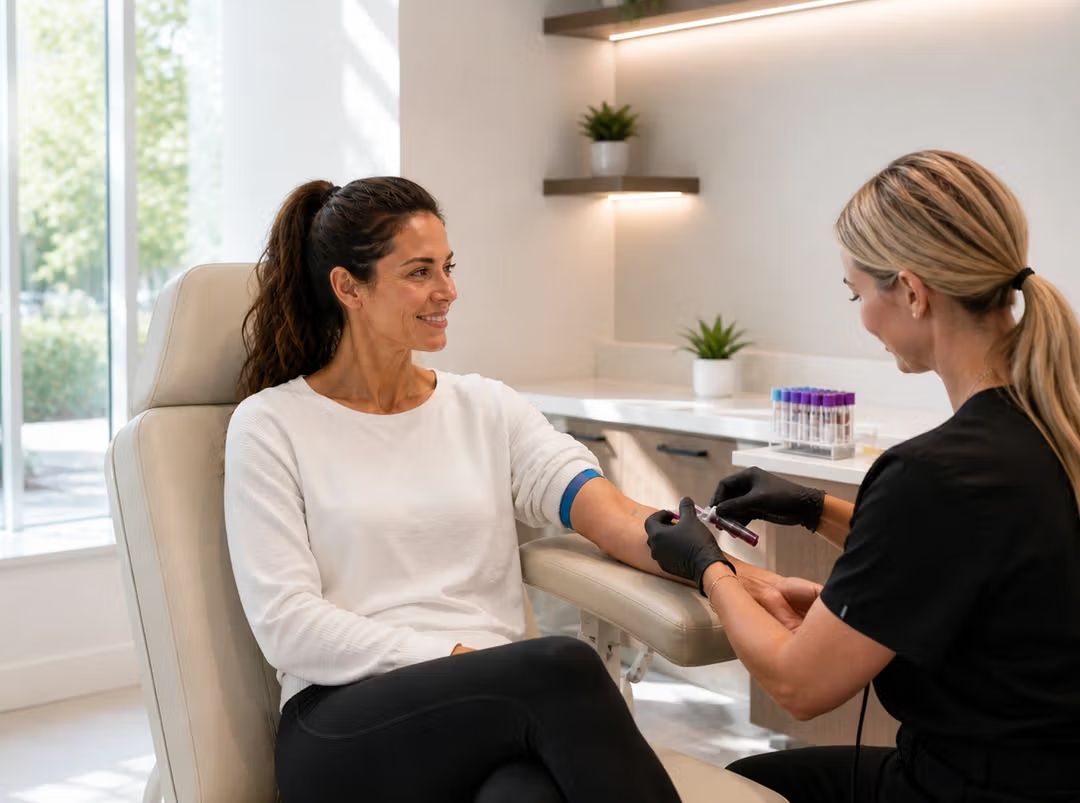
EBOO stands for extracorporeal blood oxygenation and ozonation. The technique, first described in preliminary human reports in 2000, involves drawing blood into an external, closed-loop circuit, filtering it, exposing it to a controlled oxygen-ozone mixture, and returning it to the body. Humanaut Health's own version, EBO2 blood oxygenation and ozonation therapy, is administered by a registered nurse over a roughly 90-minute session and is marketed to support circulation, inflammation response, immune support, cellular detoxification, and energy.
It's important to distinguish EBOO from simpler ozone autohemotherapy, in which a smaller volume of blood is drawn into a bag, mixed with ozone-oxygen gas, and reinfused - without the continuous closed-loop filtration or photobiomodulation light exposure that EBOO systems typically include. As the next section explains, this distinction matters because most of the available research involves ozone autohemotherapy, not EBOO itself.
Is EBOO for Long COVID Backed by Research?
This is the question behind most "EBOO long COVID" searches, and it deserves a direct answer: no published study has tested EBOO specifically in a Long COVID population. That gap is confirmed by its absence from major mechanistic reviews of Long COVID treatment research. Anyone searching "EBOO therapy long COVID" hoping to find a dedicated clinical trial will not find one yet.
What does exist is a small body of research on ozone autohemotherapy - the related but mechanically simpler procedure - in patients with post-acute sequelae of COVID-19 (PASC), a term that overlaps closely with Long COVID. One uncontrolled case series of 100 patients reported a mean 67% reduction in fatigue severity scores after oxygen-ozone autohemotherapy, with roughly 40% reporting near-complete resolution at three months - but with no control group, the improvement cannot be separated from natural recovery, placebo response, or regression to the mean. A more rigorous pilot randomized controlled trial of 73 patients found that major ozone autohemotherapy added to conventional therapy produced a higher symptom-response rate (71%) than conventional therapy alone (45%), with improvements in six-minute walk distance and inflammatory markers. This is the strongest controlled evidence available, but it remains a small, single-center pilot that requires replication. Notably, published commentary in the same journal has directly debated this evidence, underscoring that the topic is contested among specialists rather than settled.
There is a plausible biological rationale for interest in ozone-based approaches: at controlled, low doses, ozone appears to trigger a hormetic antioxidant response that may shift inflammatory signaling toward a more balanced profile. This is one reason researchers remain interested in ozone therapies for inflammation-associated conditions - but a plausible mechanism is not clinical proof, and it does not close the gap left by the absence of EBOO-specific trials. Taken together, EBOO for Long COVID remains an area of exploratory, mechanism-based research interest, not a demonstrated therapy.

What Do Health Authorities Say?
Current CDC guidance and federally funded Long COVID research focus on antivirals, symptom-targeted care, and rehabilitation approaches such as paced exercise and cognitive support - ozone-based therapies are not part of that guidance. On the regulatory side, ozone gas is classified under federal law as a toxic substance with no FDA-recognized medical application in specific, adjunctive, or preventive therapy. In plain terms, EBOO and other ozone-based procedures are not FDA-approved for any medical use, including Long COVID. This article is offered for informational purposes only and should not be read as treatment advice or a recommendation to pursue EBOO as a Long COVID treatment.
How Does EBOO Compare to Other Ozone-Based Approaches?
EBOO's closed-loop filtration and photobiomodulation exposure set it apart from major ozone autohemotherapy, the procedure actually studied in the PASC research above. Because these are mechanically distinct systems, the autohemotherapy findings cannot be assumed to transfer to EBOO - a distinction easy to lose in marketing content but important for evaluating the evidence honestly. Readers curious how EBOO relates to other blood-based procedures may also want to read how EBOO compares to plasmapheresis. None of this is meant to discourage interest in EBOO as a general wellness therapy - it simply means that, specifically for Long COVID, the evidence-backed path still runs through established, physician-guided care: symptom management, paced activity, and individualized treatment.
Safety Considerations
Ozone-based procedures carry recognized contraindications. According to an authoritative review of ozone therapy safety, individuals with G6PD deficiency, first-trimester pregnancy, hyperthyroidism, severe anemia, or active bleeding disorders should generally avoid ozone-based treatments, since G6PD deficiency carries a risk of acute hemolysis. As noted above, EBOO is not FDA-approved for any medical use. At Humanaut Health, EBO2 is administered by a registered nurse in a clinical setting - a descriptive point about delivery, not a claim about effectiveness for Long COVID.
What Might Recovery Look Like?
According to the CDC, many people with Long COVID see gradual improvement over time, though the course varies widely and some experience a relapsing-remitting pattern. There is currently no published data describing how EBOO might affect a Long COVID recovery trajectory, so this article makes no claims - implied or otherwise - about what EBOO might do for that process. Anyone navigating Long COVID recovery should continue doing so with their treating physician.
Frequently Asked Questions
Does EBOO help with long COVID?
No published research has tested EBOO specifically in people with Long COVID. Related research on ozone autohemotherapy - a simpler, mechanically distinct procedure - has shown preliminary, mixed results in similar patient populations, but this cannot be treated as direct evidence for EBOO for Long COVID. In short, there is no dedicated "EBOO long COVID" clinical trial yet.
Is EBOO the same as regular ozone therapy?
Not exactly. EBOO uses a closed-loop external circuit to filter, oxygenate, and ozonate a larger blood volume, often with added photobiomodulation light exposure, while standard ozone autohemotherapy uses a smaller blood volume drawn into a bag, mixed with ozone gas, and reinfused without continuous filtration.
Who should not consider EBOO?
People with G6PD deficiency, first-trimester pregnancy, hyperthyroidism, severe anemia, or active bleeding disorders are generally advised to avoid ozone-based procedures, and anyone considering EBOO should discuss their full medical history with a qualified provider first.
Can EBOO replace standard long COVID medical care?
No. EBOO is not a substitute for established Long COVID medical care. Anyone managing Long COVID symptoms should continue working with their treating physician, who can evaluate options in the context of their overall health.
What are the general side effects of EBOO?
Early preliminary reports describe EBOO as generally well tolerated, though as with any ozone-based or extracorporeal procedure, individual reactions and contraindications should be reviewed with a healthcare provider before treatment.
What does current research say about ozone therapy and COVID-19 more broadly?
A 2023 evidence-mapping review of 13 studies and 271 patients examined medical ozone therapy in acute COVID-19 - not Long COVID - and described the findings as preliminary and heterogeneous, with meaningful evidence gaps rather than confirmed efficacy.
Key Takeaways
- Long COVID involves proposed mechanisms including persistent inflammation, endothelial dysfunction, microclotting, and immune dysregulation - all still active areas of research.
- No study has directly tested EBOO for Long COVID; the closest related evidence comes from one uncontrolled case series and one small pilot RCT of ozone autohemotherapy, a distinct procedure.
- Current evidence on "EBOO long COVID" remains exploratory and mechanism-based - not a proven, established, or FDA-approved treatment.
- Ozone-based therapies carry real contraindications and should only be considered under medical supervision.
- Anyone exploring options for Long COVID should continue working with their treating physician; EBOO is not a substitute for established care.
If you're curious how Humanaut Health's EBO2 blood oxygenation and ozonation therapy works as part of a broader, physician-guided wellness plan, learn more about the procedure directly - it is offered as a general wellness therapy, not as a Long COVID treatment.
References
- Centers for Disease Control and Prevention. "Clinical Overview of Long COVID." Long COVID, CDC.gov, 2024. Available at: https://www.cdc.gov/long-covid/hcp/clinical-overview/index.html
- Fogarty, H., Townsend, L., Morrin, H., Ahmad, A., Comerford, C., Karampini, E., et al. "Persistent endotheliopathy in the pathogenesis of long COVID syndrome." Journal of Thrombosis and Haemostasis, 2021; 19(10):2546–2553. DOI: 10.1111/jth.15490
- Ahamed, J., Laurence, J. "Long COVID endotheliopathy: hypothesized mechanisms and potential therapeutic approaches." Journal of Clinical Investigation, 2022; 132(15):e161167. DOI: 10.1172/JCI161167
- Di Paolo, N., Bocci, V., Garosi, G., Borrelli, E., Bravi, A., Bruci, A., Aldinucci, C., Capotondo, L. "Extracorporeal blood oxygenation and ozonation (EBOO) in man. Preliminary report." International Journal of Artificial Organs, 2000; 23(2):131–141. PMID: 10741810
- Tirelli, U., Franzini, M., Valdenassi, L., Pisconti, S., Taibi, R., Torrisi, C., Pandolfi, S., Chirumbolo, S. "Fatigue in post-acute sequelae of SARS-CoV2 (PASC) treated with oxygen-ozone autohemotherapy – preliminary results on 100 patients." European Review for Medical and Pharmacological Sciences, 2021; 25(18):5871–5875.
- He, Y., Liu, X., Zha, S., Wang, Y., Zhang, J., Zhang, Q., Hu, K. "A pilot randomized controlled trial of major ozone autohemotherapy for patients with post-acute sequelae of COVID-19." International Immunopharmacology, 2024; 139:112673. DOI: 10.1016/j.intimp.2024.112673
- Chirumbolo, S., Valdenassi, L., Franzini, M., Richelmi, T., Tirelli, U. "Comments on the use of ozone therapy in post-acute sequelae of COVID-19 (PASC) patients." International Immunopharmacology, 2024; 140:112770. DOI:
- Serra, M.E.G., Baeza-Noci, J., Mendes Abdala, C.V., Luvisotto, M.M., Bertol, C.D., Anzolin, A.P. "Clinical effectiveness of medical ozone therapy in COVID-19: the evidence and gaps map." Medical Gas Research, 2023; 13(4):172–180. DOI: 10.4103/2045-9912.372819
- Napiórkowska-Baran, K., Slawatycki, J., Klemenska, P., Treichel, P., Najarian, A., Margossian, G.A., Szota, M., Plocka-Karpinska, M., Kułakowski, M. "Ozone as an Immunomodulator-New Therapeutic Possibilities in the Treatment of Immunodeficiencies-A Narrative Review." Current Issues in Molecular Biology, 2025; 47(12):1016. DOI: 10.3390/cimb47121016
- Bocci, V. "The Potential Toxicity of Ozone: Side Effects and Contraindications of Ozonetherapy." In: OZONE: A New Medical Drug, 2nd ed. Springer, Dordrecht, 2010. DOI: 10.1007/978-90-481-9234-2_7
- U.S. Code of Federal Regulations. "Maximum acceptable level of ozone." 21 CFR § 801.415. Available at: https://www.ecfr.gov/current/title-21/chapter-I/subchapter-H/part-801/subpart-H/section-801.415