Plasmapheresis vs Hemodialysis: Key Differences Explained
5 min read
AUTHOR

MEDICALLY REVIEWED BY

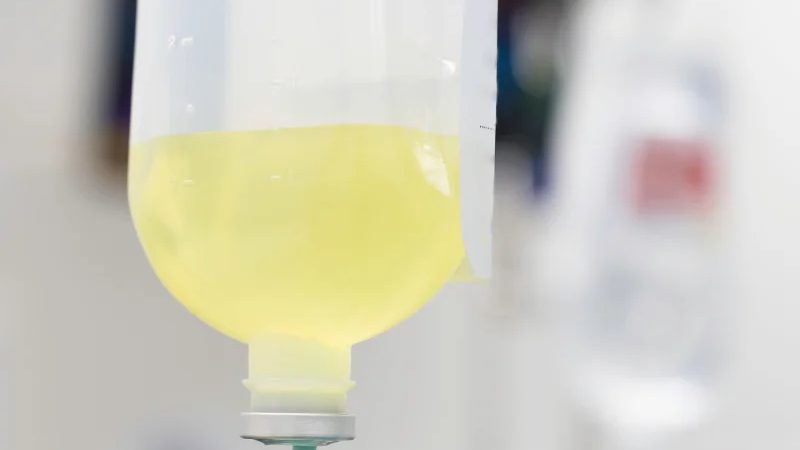
Both plasmapheresis and hemodialysis draw blood out of the body, pass it through a machine, and return it, which is where the confusion between them often starts. Anyone comparing plasmapheresis vs hemodialysis is really asking whether these are the same treatment, or two different things that look alike. In practice, they are quite different.
Plasmapheresis targets plasma itself, and substances dissolved in it, such as antibodies, while hemodialysis removes small-molecule waste and excess fluid, standing in for lost kidney function. This article covers what each procedure is, how they differ mechanically, when each is used, whether a person can need both, and their safety.
What Is Plasmapheresis?
Plasmapheresis, often used interchangeably with the term therapeutic plasma exchange (TPE), is the extracorporeal removal, return, or exchange of blood plasma or plasma components, performed by centrifugation, which separates components by specific gravity, or by membrane filtration, which separates them by particle size (Sergent & Ashurst, StatPearls, 2023). During a session, plasma is separated from the blood's cellular components, pathogenic substances such as autoantibodies, immune complexes, and inflammatory proteins are discarded, and the remaining blood cells are returned along with a replacement fluid, typically albumin (Cervantes et al., American Journal of Kidney Diseases, 2023).
Humanaut Health offers this therapy as Therapeutic Plasma Exchange (TPE), administered under clinical supervision. Readers wanting a deeper explainer can also read the full breakdown of plasmapheresis benefits, risks, and treatment outcomes.
What Is Hemodialysis?
Hemodialysis works on an entirely different principle. Blood is drawn through a vascular access point, such as a fistula, graft, or catheter, and passed into a dialyzer, where diffusion moves small waste solutes, including urea and potassium, across a semipermeable membrane into a dialysate bath, while ultrafiltration removes excess water through a pressure gradient. Blood typically flows at 300 to 500 mL per minute against counter-current dialysate flow, and the cleaned blood is then returned to the body (Agarwal & Anjum, StatPearls, 2026).
Hemodialysis substitutes for lost kidney function. It is indicated for end-stage renal disease, along with select acute conditions such as severe hyperkalemia, uremia, and diuretic-unresponsive fluid overload (Agarwal & Anjum, StatPearls, 2026). Humanaut Health does not provide hemodialysis. This section is included as educational context, not as a service Humanaut Health offers.
Plasmapheresis vs Hemodialysis: Key Differences
The clearest way to see how plasmapheresis vs hemodialysis differ is to line up what each procedure actually targets and how it gets there.
Aspect | Plasmapheresis (TPE) | Hemodialysis | |
What it targets | Plasma and substances dissolved in it, including antibodies, immune complexes, and some proteins | Small-molecule metabolic waste, such as urea, creatinine, and potassium, plus excess fluid | |
How it separates | Centrifugation or membrane filtration through large pores, roughly 0.2 to 0.6 microns wide, that pass plasma proteins while retaining blood cells | Diffusion across a membrane with much smaller pores, built to retain large proteins like albumin while passing small solutes and water | |
What's returned | Blood cells, plus a replacement fluid, often albumin | Cleaned blood; there is no plasma-volume replacement fluid, since dialysate stays on the other side of the membrane | |
Primary role | Removes disease-driving substances from the plasma itself | Substitutes for lost kidney function | |
Who typically needs it | Patients with select autoimmune, neurologic, or antibody-mediated conditions | Patients with end-stage renal disease or select acute kidney-related emergencies |
The mechanical contrast matters more than it might first appear. Membrane-based TPE systems use pores wide enough to let plasma proteins pass through while still retaining blood cells, the opposite design goal of a conventional hemodialysis membrane, built to retain large proteins like albumin (Ahmed & Kaplan, Clinical Journal of the American Society of Nephrology, 2020). In plain terms, plasmapheresis is about what is dissolved in the plasma, while hemodialysis is about what the kidneys would normally filter out. A TPE prescription also involves its own choices, including separation technique, vascular access, and replacement fluid, tailored to the individual (Dias Pais, Gaspar & Coelho, Kidney and Dialysis, 2026). Readers wanting the closely related terminology explained further may also read plasma exchange vs. plasmapheresis.
When Is Each Treatment Used?
Plasmapheresis is used when pathogenic antibodies or other harmful substances circulate in the plasma itself. The American Society for Apheresis grades 166 clinical indications for therapeutic apheresis, including plasmapheresis, across four evidence-based categories spanning autoimmune, neurologic, and other antibody-mediated conditions (Connelly-Smith et al., Journal of Clinical Apheresis, 2023). Hemodialysis, by contrast, is used for end-stage renal disease and select acute situations, such as severe hyperkalemia, uremia, or diuretic-unresponsive fluid overload (Agarwal & Anjum, StatPearls, 2026).
A randomized controlled trial in patients with severe ANCA-associated vasculitis, a condition that can involve both antibody-mediated damage and kidney failure, found that adding plasma exchange to standard therapy did not reduce death or end-stage kidney disease (Walsh et al., New England Journal of Medicine, 2020). This is a hedged reminder that plasmapheresis is not a general substitute for renal replacement therapy, even when disease affects the kidneys.
Can Someone Need Both?
Yes, in certain cases, because plasmapheresis and hemodialysis address different problems. A patient already on hemodialysis for kidney failure may still need plasmapheresis if they develop a separate, unrelated antibody-driven condition, since dialysis alone does not treat it (Kincaid et al., Diseases, 2025). In a retrospective cohort of end-stage renal disease patients who developed thrombotic thrombocytopenic purpura, therapeutic plasma exchange was associated with significantly reduced all-cause mortality (Kincaid et al., Diseases, 2025).
Among dialysis-dependent patients with ANCA-associated vasculitis, research also found plasma exchange to be independently associated with a better one-year renal prognosis, and nearly half of these patients regained dialysis independence within a year (Vignac et al., Kidney International Reports, 2025). This overlap is clinically meaningful, but it is not a reason to self-diagnose a need for both. Anyone wondering whether their situation calls for both should discuss it with their treating physician.
Safety Considerations
Plasmapheresis and hemodialysis carry somewhat different risk profiles, tied to their mechanisms. The most common plasmapheresis-specific adverse events are citrate-related hypocalcemia, caused by the citrate anticoagulant used, and, less often, allergic reactions to protein-containing replacement fluid (Kaplan, Seminars in Dialysis, 2012). Hemodialysis is more commonly associated with intradialytic hypotension and electrolyte shifts, since fluid and solutes move relatively quickly during a session.
Both procedures also share a practical risk unrelated to what is being filtered. Vascular access, whether by catheter, fistula, or graft, carries its own risk of infection or clotting across most extracorporeal procedures, plasmapheresis and hemodialysis included (Kaplan, Seminars in Dialysis, 2012). Both are performed under clinical supervision with ongoing monitoring.

Frequently Asked Questions
Is plasmapheresis the same as hemodialysis?
No. Plasmapheresis removes and often replaces plasma and substances dissolved in it, such as antibodies, while hemodialysis removes small-molecule waste and excess fluid to stand in for kidney function. They use different methods for different conditions.
What is the difference between plasmapheresis and hemodialysis?
The core plasmapheresis vs hemodialysis difference is what gets filtered out. Plasmapheresis separates plasma from blood cells using centrifugation or large-pore membrane filtration, then discards harmful plasma components and returns blood cells with a replacement fluid. Hemodialysis instead uses diffusion across a small-pore membrane to pull waste solutes into a dialysate bath, without removing or replacing plasma volume.
Can dialysis remove antibodies the way plasmapheresis does?
Not in the same way. Hemodialysis membranes are built to retain large proteins like antibodies while allowing small solutes and water through, the opposite of what plasmapheresis membranes do. Removing antibodies generally requires plasmapheresis or a related exchange procedure, not standard hemodialysis.
Does someone on dialysis ever also need plasmapheresis?
Yes, in some cases. A person already on hemodialysis for kidney failure can still develop an unrelated antibody-mediated condition that dialysis does not treat, and research suggests plasma exchange may improve outcomes there. This is a decision made with a treating physician, not on one's own.
Which conditions is plasmapheresis used for?
Plasmapheresis is generally used for select autoimmune, neurologic, and other antibody-mediated conditions, based on evidence-graded indications from the American Society for Apheresis. These vary in supporting evidence, so any decision to pursue plasmapheresis should involve a qualified provider.
How long does a plasmapheresis session take compared to hemodialysis?
Session length for both procedures varies based on the individual, equipment used, and treatment plan. Rather than citing one fixed duration, patients should ask their care team what to expect for their specific situation.
Is plasmapheresis safe?
Plasmapheresis is generally considered safe under clinical supervision, though it carries some risks, most commonly citrate-related hypocalcemia and, less often, allergic reactions to replacement fluid. Vascular access also carries its own risk of infection or clotting, as with any extracorporeal procedure.
Does Humanaut Health offer hemodialysis?
No. Humanaut Health does not provide hemodialysis. Humanaut Health offers Therapeutic Plasma Exchange (TPE), and this article is meant to help readers understand how that therapy compares to hemodialysis, not to present hemodialysis as a service it provides.
Key Takeaways
- Plasmapheresis targets plasma and substances dissolved in it, such as antibodies, while hemodialysis substitutes for lost kidney function by removing small-molecule waste and excess fluid.
- Plasmapheresis vs hemodialysis differ mechanically too: plasmapheresis uses centrifugation or large-pore membrane filtration, while hemodialysis relies on diffusion across a small-pore membrane.
- The two also differ in core indications: plasmapheresis for select autoimmune, neurologic, and antibody-mediated conditions, hemodialysis for end-stage renal disease and select acute emergencies.
- In specific cases, a person can need both therapies, since they treat different, unrelated problems rather than substituting for one another.
- Both procedures carry manageable, monitored risks, and any decision about either should be made with a qualified healthcare provider.
Next Steps
Anyone with plasma-related questions can visit Humanaut Health to learn about its Therapeutic Plasma Exchange (TPE) service.
References
- Connelly-Smith, L., et al. (ASFA Writing Committee). "Guidelines on the Use of Therapeutic Apheresis in Clinical Practice – Evidence-Based Approach from the Writing Committee of the American Society for Apheresis: The Ninth Special Issue." Journal of Clinical Apheresis, 2023; 38(2):77-278. DOI: 10.1002/jca.22043
- Sergent, S.R., Ashurst, J.V. "Plasmapheresis." StatPearls [Internet]. StatPearls Publishing; 2026 Jan-. NCBI Bookshelf ID: NBK560566
- Cervantes, C.E., Bloch, E.M., Sperati, C.J. "Therapeutic Plasma Exchange: Core Curriculum 2023." American Journal of Kidney Diseases, 2023; 81(4):475-492. DOI: 10.1053/j.ajkd.2022.10.017
- Agarwal, A., Anjum, F. "Hemodialysis." StatPearls [Internet]. StatPearls Publishing; 2026 Jan-. NCBI Bookshelf ID: NBK563296
- Ahmed, S., Kaplan, A.A. "Therapeutic Plasma Exchange Using Membrane Plasma Separation." Clinical Journal of the American Society of Nephrology, 2020; 15(9):1364-1370. DOI: 10.2215/CJN.12501019
- Dias Pais, M., Gaspar, A., Coelho, S. "Therapeutic Plasma Exchange: A Practical Guide." Kidney and Dialysis, 2026; 6(1):8. DOI: 10.3390/kidneydial6010008
- Walsh, M., et al. (PEXIVAS Investigators). "Plasma Exchange and Glucocorticoids in Severe ANCA-Associated Vasculitis." New England Journal of Medicine, 2020; 382(7):622-631. DOI: 10.1056/NEJMoa1803537
- Vignac, M., Nezam, D., Grolleau, F., et al. (French Vasculitis Study Group). "Effect of Baseline Dialysis and Plasma Exchange on Renal Prognosis in Patients With Antineutrophil Cytoplasmic Autoantibody–Associated Vasculitis." Kidney International Reports, 2025; 10(12):4199-4206. DOI: 10.1016/j.ekir.2025.09.005
- Kincaid, B.S., Kim, K., Waller, J.L., Baer, S.L., Bollag, W.B., Bollag, R.J. "Association of Therapeutic Plasma Exchange-Treated Thrombotic Thrombocytopenic Purpura with Improved Mortality Outcome in End-Stage Renal Disease." Diseases, 2025; 13(8):247. DOI: 10.3390/diseases13080247
- Kaplan, A.A. "Complications of Apheresis." Seminars in Dialysis, 2012; 25(2):152-158. DOI: 10.1111/j.1525-139X.2011.01026.x