Plasmapheresis vs Plasma Donation: Key Differences Explained
5 min read
AUTHOR

MEDICALLY REVIEWED BY

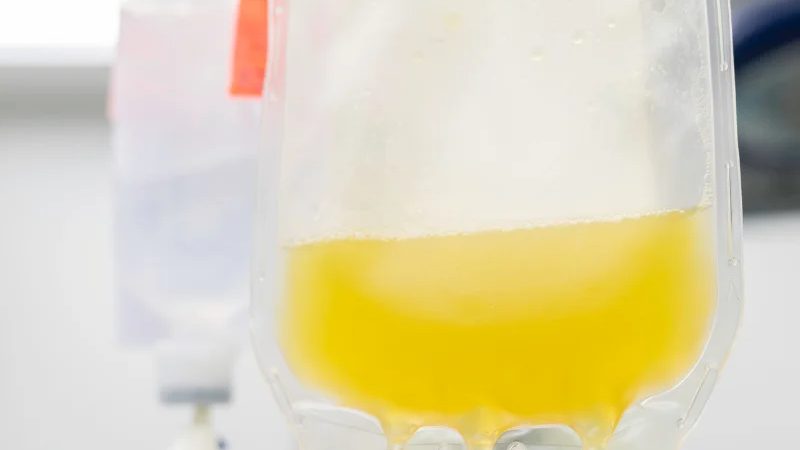
Anyone researching plasmapheresis vs plasma donation is usually trying to untangle two things that sound alike but serve entirely different purposes. Both rely on the same core apheresis technology to separate plasma from the rest of the blood, yet one is a medical treatment performed on a patient to manage that patient's own disease, while the other is a voluntary (and typically compensated) donation that supplies plasma for medicines used by other people entirely. This article compares how each procedure works, who undergoes it, how each is regulated, and what the evidence says about safety - and explains where Humanaut Health's therapeutic plasma exchange care fits for readers researching the medical side of this comparison.
What Is Therapeutic Plasmapheresis?
Therapeutic plasmapheresis, more precisely called therapeutic plasma exchange (TRE), is a medical procedure in which blood is drawn through an apheresis machine, the plasma is separated out, and that plasma - along with the pathogenic antibodies, immune complexes, or other harmful substances it may be carrying - is discarded and replaced with a substitute fluid, typically albumin (Cervantes, Bloch, Sperati, Am J Kidney Dis, 2023). It is performed under physician order, on a patient who has already been diagnosed with a specific condition, to treat that same patient's disease.
The American Society for Apheresis (ASFA) recognizes 166 clinical indications for therapeutic apheresis in its ninth-edition guidelines, with plasma exchange used as the sole or combined technique in 118 of them (Connelly-Smith et al., J Clin Apheresis, 2023). These span autoimmune neurological conditions such as Guillain-Barré syndrome and myasthenia gravis, along with a range of other immune-mediated and hematologic disorders. Cochrane-level evidence supports its use in some of these conditions: a systematic review found that plasma exchange improves recovery in Guillain-Barré syndrome compared with supportive care alone, without a significant increase in serious adverse events, though with a modestly increased relapse risk in the following 6 to 12 months (Chevret, Hughes, Annane, Cochrane Database Syst Rev, 2017). Humanaut Health's article on plasma exchange vs. plasmapheresis walks through the procedure itself in more depth, and therapeutic plasmapheresis is one of several blood-cleansing therapies offered at Humanaut Health, alongside approaches such as EBO2.
What Is Plasma Donation?
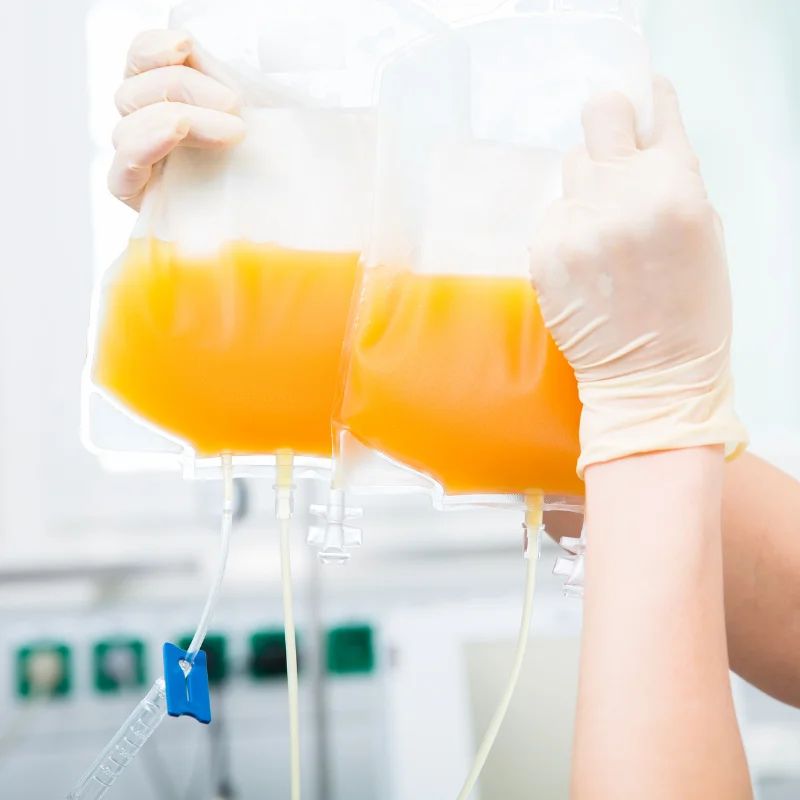
Plasma donation is a different process serving a different purpose. A healthy, screened volunteer visits a dedicated, FDA-licensed plasma collection center and gives plasma - typically for compensation - using the same core apheresis technology described above, but with none of the clinical context of a disease being treated. The FDA refers to this as "Source Plasma": plasma collected specifically for fractionation into plasma-derived medicines, such as immunoglobulins, clotting factors, and albumin, which go on to treat other patients with conditions such as hemophilia, primary immunodeficiency, or hereditary angioedema PPTA, Plasma FAQs . Manufacturing these medicines can take up to a year, and treating a single hemophilia patient for a year may require plasma pooled from roughly 1,200 donations.
It's worth being clear that plasma donation is not a service Humanaut Health provides - this section is included purely for educational comparison, since the two concepts are so often confused by name alone.
Plasmapheresis vs Plasma Donation: Key Differences at a Glance
The table below summarizes how these two procedures compare across purpose, process, and oversight.
Factor | Therapeutic Plasmapheresis | Plasma Donation | |
Purpose | Treats the patient's own diagnosed disease | Supplies plasma to manufacture medicines for other patients | |
Who undergoes it | Patients, by physician order | Healthy, screened volunteer donors | |
What happens to the plasma | Often discarded and replaced with substitute fluid | Collected, frozen, and sent for fractionation | |
Setting | Hospital or clinic, under medical supervision | FDA-licensed plasma donation center | |
Compensation | Not applicable - this is medical treatment | Donors are typically compensated | |
Frequency limits | Determined by the treatment protocol and condition | Up to twice per 7-day period (48+ hours apart), per FDA regulation | |
Regulatory oversight | Clinical practice guidelines (e.g., ASFA) | FDA Source Plasma regulations (21 CFR Part 630) | |
Common risks | Hypotension, citrate/hypocalcemia symptoms | Needle/vein-access effects; protein-depletion risk managed through monitoring |
Despite the shared apheresis technology, neither procedure can really be judged against the other on "efficacy," because they are not solving the same problem - one is treating an illness, the other is supplying raw material for medicines that help someone else entirely (synthesis of ASFA, FDA, and PPTA sources above).
How Is Plasma Donation Regulated?
Source Plasma donation operates under a specific federal framework. Donors may give no more than twice within any 7-day period, with at least 48 hours between donations - a hard ceiling of roughly 104 donations per year, distinct from the far more conservative limits on whole-blood donation, which generally allow one donation roughly every eight weeks (21 CFR Part 630, FDA eCFR). Donors are required to undergo annual physical examinations and have their protein levels monitored roughly every four months, and every collected unit is frozen and quarantined for about 60 days before it can be used in manufacturing (Weinstein, Annals of Blood, 2018).
This oversight is also an active area of ongoing research rather than a static rulebook. An analysis of more than 111,000 plasma donations found that donors with a lower total plasma volume may bear a disproportionately higher relative collection burden under the current weight-based donation nomogram, and the authors argue that a more individualized approach - accounting for height, BMI, and hematocrit - could improve donor safety going forward (Hartmann, Ragusa, Popovsky, Leitman, Am J Hematol, 2020). This is presented here as an evolving safety-optimization discussion in the field, not evidence of a current deficiency in donor protections.
Is Plasma Donation the Same as Plasmapheresis?
Mechanically, yes - both rely on the same core apheresis process to separate plasma from the rest of the blood. But in every other sense that matters to a patient or a donor, the two are not interchangeable. Therapeutic plasmapheresis is a clinical intervention ordered by a physician to manage a specific diagnosed disease in the person undergoing it. Plasma donation is a voluntary, compensated contribution of a healthy person's plasma toward medicines that will eventually help someone else. The underlying technology is shared; the purpose, regulatory framework, and patient population are not.
Safety Considerations
Each side of this comparison carries its own, well-studied risk profile, and neither should be read as more inherently dangerous than the other - both take place under structured medical or regulatory oversight.
On the therapeutic side, contemporary data on plasma exchange in neurologic disease report an overall adverse-event rate of roughly 5 to 6 percent, with the most common issues being citrate-related hypocalcemia symptoms, such as tingling or cramping, and hypotension during the exchange; severe or life-threatening events are rare, occurring in an estimated 1 to 2 percent of cases. On the donation side, the plasmapheresis vs plasma donation risks largely center on needle and vein-access effects common to any blood draw, along with a protein-depletion risk that the FDA's donation-frequency limits and periodic physical exams and protein monitoring are specifically designed to manage Weinstein, 2018 ; Hartmann et al., 2020.
Frequently Asked Questions
What is the main difference between plasmapheresis and plasma donation?
Plasmapheresis is a medical treatment that removes a patient's own pathogenic plasma to manage a diagnosed disease, while plasma donation is a healthy volunteer giving plasma, usually for compensation, so it can be made into medicines for other patients. This distinction comes down to purpose and patient population, not the underlying machine.
Does plasma donation treat a medical condition?
No. Plasma donation does not treat the donor's own health condition - it supplies plasma that is pooled and fractionated into medicines used to treat other people's conditions, such as hemophilia or primary immunodeficiency.
How often can someone donate plasma?
Under FDA regulation, Source Plasma donors may give no more than twice within any 7-day period, with at least 48 hours between donations, amounting to roughly 104 donations per year at most.
Is plasma donation paid?
Yes, Source Plasma donors are typically compensated, which distinguishes it from therapeutic plasmapheresis, a medical procedure performed to treat a patient rather than a paid activity.
What happens to donated plasma?
Donated plasma is frozen, quarantined for about 60 days, and then pooled and fractionated into plasma-derived medicines such as immunoglobulins, clotting factors, and albumin, which can take up to a year to manufacture.
What are the risks of plasmapheresis compared to plasma donation?
Therapeutic plasma exchange carries roughly a 5 to 6 percent rate of adverse events, mostly hypotension or citrate-related symptoms, with severe events rare. Plasma donation's risks mainly involve needle/vein-access effects and a protein-depletion risk that regulated donation-frequency limits and donor monitoring are designed to manage.
Who performs therapeutic plasmapheresis?
Therapeutic plasmapheresis is performed in a hospital or clinical setting under physician order and direct medical supervision, as part of a treatment plan for a diagnosed condition.
Can the same machine be used for both procedures?
Both rely on the same underlying apheresis technology to separate plasma from blood, but they are used in entirely different contexts - one in a clinical treatment setting, the other in an FDA-licensed donation center.
Key Takeaways
- The plasmapheresis vs plasma donation difference comes down to purpose: plasmapheresis treats the patient's own diagnosed disease, while plasma donation supplies plasma for medicines that help other patients.
- Both rely on the same core apheresis technology, but they take place in different settings, follow different regulatory frameworks, and serve different populations.
- Plasma donation is regulated by the FDA, which limits Source Plasma donors to twice per 7-day period and requires regular physical exams and protein monitoring.
- Each procedure carries its own well-characterized, generally manageable risk profile rather than one being categorically riskier than the other.
- Plasma donation is not a service Humanaut Health provides; readers researching therapeutic plasma exchange for a diagnosed condition can learn more directly from the clinic's care team.
Talk to Humanaut Health About Therapeutic Plasma Exchange
If your research into how plasmapheresis compares with plasma donation was prompted by a diagnosed autoimmune or neurological condition, schedule a consultation with Humanaut Health to discuss whether therapeutic plasma exchange may be appropriate as part of your care.
References
- Sergent, S.R., Ashurst, J.V. "Plasmapheresis." StatPearls [Internet], StatPearls Publishing, 2026 Jan ed. NCBI Bookshelf ID: NBK560566. URL: https://www.ncbi.nlm.nih.gov/books/NBK560566/
- Cervantes, C.E., Bloch, E.M., Sperati, C.J. "Therapeutic Plasma Exchange: Core Curriculum 2023." American Journal of Kidney Diseases, 2023; 81(4):475-492. DOI: 10.1053/j.ajkd.2022.10.017
- Connelly-Smith, L., et al. (ASFA Writing Committee). "Guidelines on the Use of Therapeutic Apheresis in Clinical Practice – Evidence-Based Approach from the Writing Committee of the American Society for Apheresis: The Ninth Special Issue." Journal of Clinical Apheresis, 2023; 38(2):77-278. DOI: 10.1002/jca.22043
- Chevret, S., Hughes, R.A.C., Annane, D. "Plasma exchange for Guillain-Barré syndrome." Cochrane Database of Systematic Reviews, 2017; Issue 2, Art. No. CD001798. DOI: 10.1002/14651858.CD001798.pub3
- Ganjiani, F., Abdi, S. "Complications of Therapeutic Plasma Exchange in Patients with Neurologic Disorders." Jundishapur Journal of Chronic Disease Care, 2025; 14(2):e149149. DOI: 10.5812/jjcdc-149149
- Weinstein, M. "Regulation of plasma for fractionation in the United States." Annals of Blood, 2018; 3:3. DOI: 10.21037/aob.2017.12.02
- Hartmann, J., Ragusa, M.J., Popovsky, M.A., Leitman, S.F. "Source plasma collection in the United States: Toward a more personalized approach." American Journal of Hematology, 2020; 95(6):E139-E142. DOI: 10.1002/ajh.25817
- U.S. Food and Drug Administration. Code of Federal Regulations, Title 21, Part 630 ("Requirements for Blood and Blood Components Intended for Transfusion or for Further Manufacturing Use"). URL: https://www.ecfr.gov/current/title-21/chapter-I/subchapter-F/part-630
- Plasma Protein Therapeutics Association (PPTA). "Plasma FAQs." URL: https://www.pptaglobal.org/resources/plasma-faqs