EBOO Therapy News 2026: Latest Trends, Research, and Developments
5 min read
AUTHOR

MEDICALLY REVIEWED BY

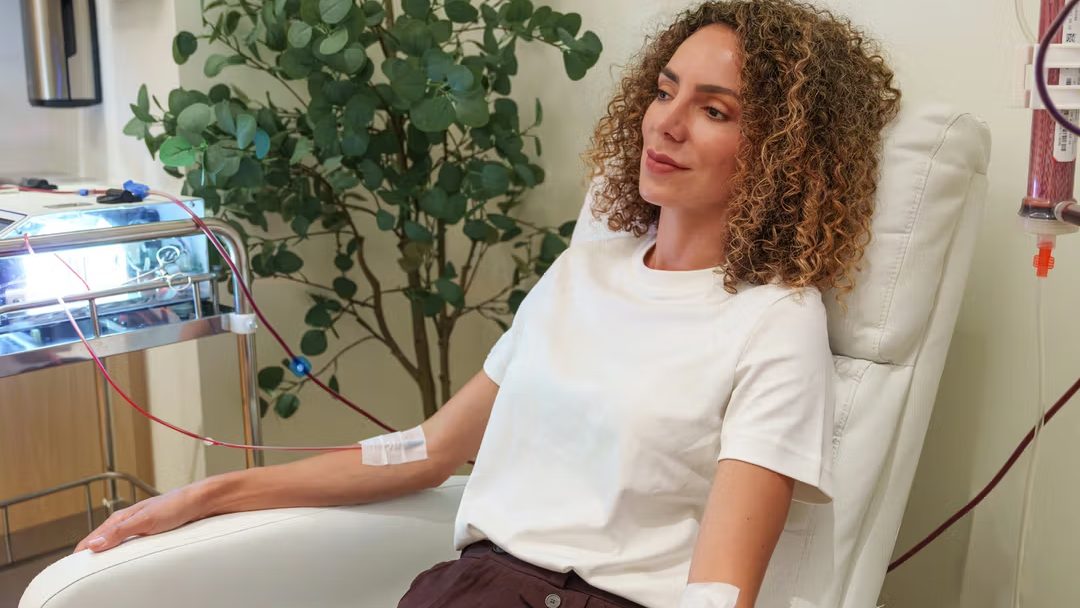
Extracorporeal blood oxygenation and ozonation, better known as EBOO, has moved from a niche procedure into a growing number of wellness and longevity clinics. That growth has produced a steady flow of EBOO therapy news, but much of it comes from press releases rather than published research. For anyone trying to understand where the field stands, the useful question is not "what is being announced" but "what has actually been studied, regulated, or learned."
This article reviews the developments from 2025 and 2026 that matter most: new reviews of ozone therapy, a federal warning letter about EBOO equipment, the small number of new studies, updated safety data, and the commercial trends behind the headlines. Readers who want the fundamentals first can start with Humanaut Health's overview of EBOO therapy benefits and risks.
What the Latest EBOO Therapy News Actually Covers
The honest headline is that EBOO-specific research has grown very little. Literature and trial-registry searches for this article found one new EBOO clinical publication from 2025 to 2026, a single-patient case report, and no EBOO-specific registered trial. Most of the recent developments concern medical ozone in general, the regulation of ozone devices, or the business side of the wellness market.
Here is how the main items line up:
- In June 2025, researchers published an animal study testing an extracorporeal ozone circuit in septic shock.
- In July 2025, the FDA issued a warning letter to a manufacturer of EBOO and autohemotherapy devices.
- In December 2025, a case report described an 88-year-old patient treated with EBOO.
- In February 2026, a small study reported on ozone autohemotherapy in post-COVID syndrome.
- In June 2026, a major umbrella review summarized the randomized evidence for ozone therapy.
- During 2026, two safety studies added data on adverse events with ozone blood treatments.
Regulatory EBOO Ozone Therapy News: The FDA's 2025 Warning Letter
The regulatory baseline has not changed. Federal regulation still describes ozone as "a toxic gas with no known useful medical application in specific, adjunctive, or preventive therapy" (U.S. FDA, 21 CFR 801.415). No EBOO device or protocol is FDA-approved for any medical condition.
What did change was enforcement attention. On July 7, 2025, the FDA's Center for Biologics Evaluation and Research issued a warning letter to a U.S. manufacturer of autohemotherapy devices, one of which was marketed as an EBOO system. The agency stated that the products were intended to expose patients' blood to ozone and ultraviolet light to treat diseases, that they lacked an approved premarket approval application or investigational device exemption, and that they were therefore considered adulterated.
The letter also cited misbranding issues, including missing premarket notification, registration, and device-identification requirements, along with quality-system gaps. In plain terms, this was the most direct federal action on EBOO equipment in recent years. It signals that the agency treats these machines as regulated medical devices, and that EBOO ozone therapy news in the U.S. is increasingly about compliance as much as clinical promise.
New Research in 2025 and 2026
The 2026 Umbrella Review of Ozone Therapy
The most significant research development was a June 2026 umbrella review that pooled systematic reviews and meta-analyses of randomized trials on ozone therapy in humans (Cacciatore et al., Medical Sciences, 2026). It found usable meta-analyses for only four conditions: chronic periodontitis, hospitalized COVID-19, diabetic foot ulcers, and wisdom-tooth surgery. Certainty was rated low or very low for nearly every outcome.
Some results were sobering. In COVID-19, ozone was associated with lower PCR positivity but did not significantly change hospital stay, ICU admission, or mortality, and diabetic foot ulcer healing was not significantly improved. The authors concluded that routine clinical use of ozone therapy is not justified on the current evidence. EBOO was not among the approaches reviewed, which itself reflects how little controlled EBOO data exist.
The First New EBOO Case Report in Years
A December 2025 case report described an 88-year-old woman with chronic anemia who received two series of three EBOO sessions (Bennett et al., Cureus, 2025). Urinary measurements of mycotoxins, heavy metals, and environmental toxins relative to creatinine declined over about four months, while hemoglobin stayed largely unchanged.
The authors noted there was no control for ongoing exposure, and a single case cannot show that EBOO caused the change. The report is a reason for further study, not evidence of a detox effect. The broader detox question is covered in our article on EBOO for detox.
Post-COVID Autohemotherapy Studies
A February 2026 retrospective study followed 40 adults with post-COVID syndrome through 10 sessions of major ozone autohemotherapy, a related but smaller-volume procedure (Kuculmez, Frontiers in Medicine, 2026). Fatigue, anxiety, and depression scores improved, but there was no control group, so natural recovery cannot be ruled out.
The strongest controlled data remain a 73-patient pilot randomized trial that reported a higher response rate with added autohemotherapy (He et al., International Immunopharmacology, 2024), which drew published debate from other specialists (Chirumbolo et al., International Immunopharmacology, 2024). No trial has tested EBOO itself in this population, as discussed in our review of EBOO for long COVID.
Animal Research on Extracorporeal Ozone Circuits
A June 2025 study tested a prototype extracorporeal ozone circuit in 13 pigs with induced septic shock (Rundgren et al., Scientific Reports, 2025). One pass reduced live bacteria by 53% in blood inside the circuit, but not in circulating blood, and several inflammatory cytokines decreased. Survival did not differ between groups.
The study was funded by the device developer, and the authors describe it as proof of concept. It shows that researchers are exploring extracorporeal ozone for acute illness, a direction quite different from wellness use, but it offers no direct evidence for people.
What Has Not Changed: The Core EBOO Evidence Base
The foundation of EBOO research is still a small set of studies from the mid-2000s. The best-known controlled trial randomized 28 patients with peripheral artery disease to EBOO or intravenous prostacyclin (Di Paolo et al., International Journal of Artificial Organs, 2005). The EBOO group showed greater regression of skin lesions and better symptom scores, without a measurable change in limb blood flow, and no complications were recorded across 210 sessions.
The same research group described more than 1,200 treatments in 82 patients, typically 14 one-hour sessions over seven weeks, and called for further trials (Di Paolo, Gaggiotti & Galli, Redox Report, 2005). Dose measurements suggest dialysis-style ozone treatment delivers roughly three or more times the ozone of other blood-ozonation methods (Rowen et al., Medical Gas Research, 2023), although that describes dose, not benefit.
Mechanistic interest focuses on how controlled oxidative stress may trigger protective antioxidant and anti-inflammatory signaling, which reviewers still describe as preliminary (Napiórkowska-Baran et al., Current Issues in Molecular Biology, 2025). For how EBOO differs from plasma-based blood cleansing, see our comparison of plasmapheresis vs EBOO.
Safety Updates From 2026 Studies
Two 2026 publications added useful safety context, although neither studied EBOO directly. A scoping review of oxygen-ozone autohemotherapy found that the literature mainly consists of case reports of rare but potentially serious events, including hemolysis and kidney injury at high ozone concentrations, gas embolism in people with a patent foramen ovale, heart attack, reinfusion reactions, and infection after protocol breaches (Casale et al., Clinical and Experimental Rheumatology, 2026). The authors stated that true incidence cannot be calculated without prospective registries, but that current evidence does not show a pattern of frequent serious harm when standardized protocols are followed.
The safeguards they highlighted include:
- Clinicians screen for G6PD deficiency before treatment.
- Protocols keep ozone concentrations within a moderate range of about 10 to 40 µg/mL.
- Staff reinfuse blood slowly and evaluate cardiovascular risk in selected patients.
- Teams follow strict aseptic technique throughout.
A retrospective study of 240 adults receiving major ozone autohemotherapy reported adverse events during treatment in 11.3% of patients, mostly related to vein access, and after treatment in 3.8% (Yılmaz & Çevik, Journal of Health Sciences and Medicine, 2026). Only 65% completed all planned sessions, and difficult access was more common in people aged 60 and older. A separate 2025 case of encephalopathy after an unsupervised home ozone injection is a reminder that clinical oversight matters Gante & Dias, Cureus, 2025.
Trends Shaping EBOO in 2026
The most visible trend is commercial. Throughout 2026, clinics in several states announced new EBOO services, often describing it as advanced detoxification. Consumer demand appears strong, yet the volume of announcements has far outpaced the volume of new peer-reviewed evidence.
At the same time, scrutiny is increasing. The FDA's attention to device approval, the umbrella review's call for standardized dosing and adequately powered blinded trials, and the safety researchers' call for prospective registries all point toward a field being asked to prove itself.
When reading any EBOO news item, a few questions help separate signal from noise:
- The reader can check whether the source is a study or a press release.
- The reader can note whether the study involved EBOO or a different ozone method.
- The reader can look for a control group and the number of participants.
- The reader can check who funded the research and whether results were peer-reviewed.
Frequently Asked Questions
Is there any new EBOO therapy news 2026 readers should know about?
The main developments are a June 2026 umbrella review that found low-certainty evidence for ozone therapy overall and two 2026 safety studies. The only new EBOO-specific clinical publication found was a single-patient case report from late 2025.
Has EBOO been approved by the FDA?
No. Federal regulation describes ozone as having no known useful medical application, and no EBOO device or protocol is FDA-approved for any condition.
What did the FDA warning letter about EBOO devices say?
In July 2025, the FDA stated that a manufacturer's ozone and ultraviolet blood-treatment devices lacked required premarket approval and were considered adulterated and misbranded. The letter also cited quality-system problems.
Are there new clinical trials on EBOO?
Searches for this article found no EBOO-specific registered trial. Recent trials and studies have mostly examined major ozone autohemotherapy, a related but different procedure.
What does recent EBOO ozone therapy news say about safety?
A 2026 scoping review found that serious adverse events appear rare under standardized protocols but cannot be precisely counted. A 240-patient study found most problems were related to vein access.
Does the 2026 umbrella review apply to EBOO?
Only indirectly. None of the seven pooled analyses examined an extracorporeal circuit, so its verdict speaks to periodontal, wound, dental, and COVID-19 uses of ozone, and it leaves the question of EBOO open.
How is EBOO different from major autohemotherapy?
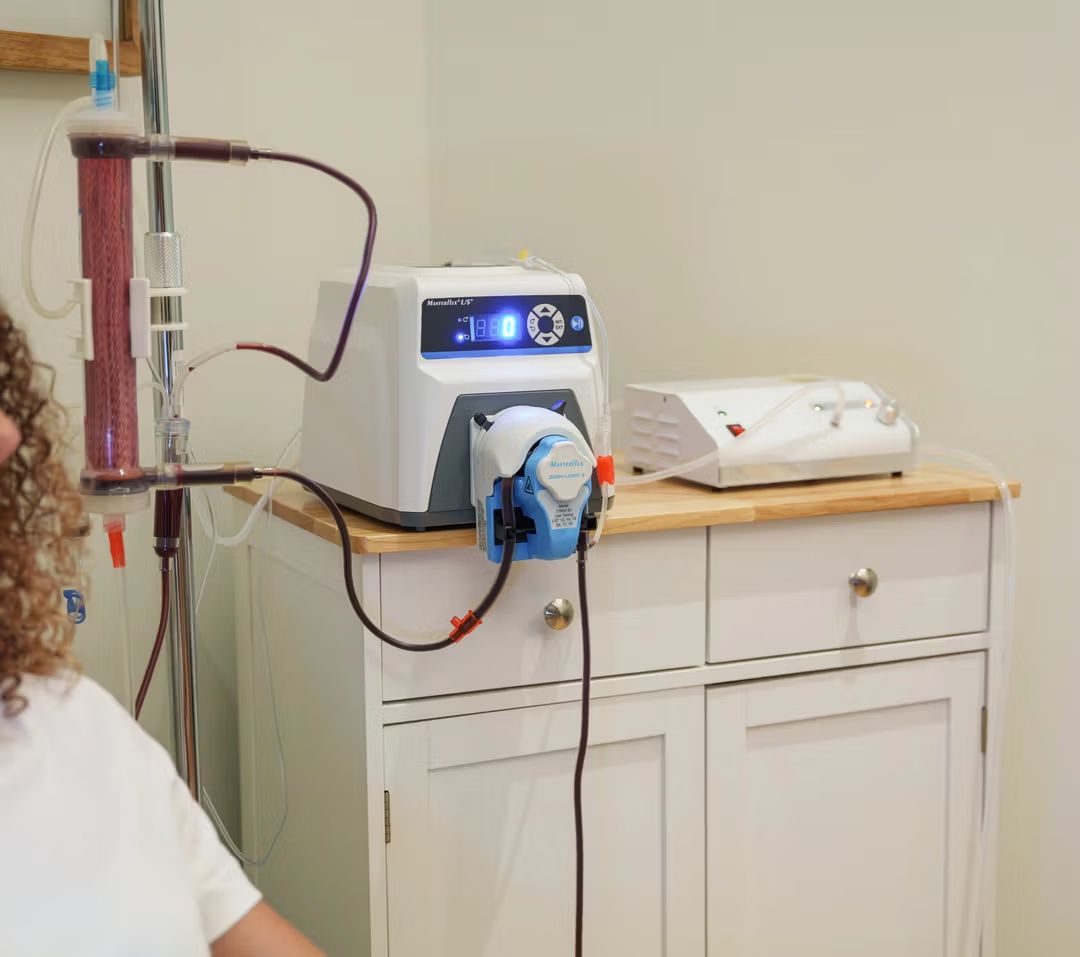
In autohemotherapy, roughly a single bag of the patient's blood is mixed with an oxygen-ozone gas and then dripped back in. EBOO instead runs blood continuously through a filter-style circuit, so liters rather than milliliters pass through during one sitting.
Key Takeaways
- Looking past the press releases, most EBOO therapy news in this period is about the ozone field as a whole, about federal oversight, and about clinic openings, not about fresh EBOO trials.
- Federal rules still classify ozone as lacking any known medical use, and a mid-2025 letter from regulators flagged an EBOO machine maker for operating without device approval.
- Pooled randomized data on ozone, summarized in mid-2026, earned only low or very low certainty grades, and EBOO sat outside that analysis.
- A lone 2025 case write-up is the only new EBOO clinical report, so the 28-person trial from 2005 still anchors the controlled evidence.
- Recent safety papers point to vein access, not the gas itself, as the usual source of trouble when teams follow standardized protocols.
Learn More About EBO2 at Humanaut Health
Anyone curious about how the Humanaut Health clinical team selects candidates for, monitors, and delivers blood ozonation can review the EBO2 therapy page and bring personal questions to a consultation.
References
- U.S. Food and Drug Administration. "21 CFR 801.415: Maximum acceptable level of ozone." Code of Federal Regulations. Available at: law.cornell.edu/cfr/text/21/801.415
- U.S. Food and Drug Administration, Center for Biologics Evaluation and Research. "Warning Letter CBER 25-668840." July 7, 2025. Available at: fda.gov
- Cacciatore S, Abbatecola G, Calvani R, Veronese N. "Effectiveness and Safety of Ozone Therapy in Humans: An Umbrella Review of Systematic Reviews with Meta-Analyses of Randomized Clinical Trials." Medical Sciences, 2026; 14(2):289. DOI: 10.3390/medsci14020289
- Bennett SJ, Kuo J, Wang S, Salway RJ. "Observed Reduction in Urinary Toxin Excretion With Extracorporeal Blood Oxygenation and Ozonation (EBOO) Treatment in an 88-Year-Old With Chronic Anemia: A Case Report." Cureus, 2025; 17(12):e99948. DOI: 10.7759/cureus.99948
- Kuculmez O. "Efficacy of major ozone autohemotherapy in patients with post-COVID syndrome." Frontiers in Medicine, 2026; 13:1720578. DOI: 10.3389/fmed.2026.1720578
- He Y, Liu X, Zha S, Wang Y, Zhang J, Zhang Q, Hu K. "A pilot randomized controlled trial of major ozone autohemotherapy for patients with post-acute sequelae of COVID-19." International Immunopharmacology, 2024; 139:112673. DOI: 10.1016/j.intimp.2024.112673
- Chirumbolo S, Valdenassi L, Franzini M, Richelmi T, Tirelli U. "Comments on the use of ozone therapy in post-acute sequelae of COVID-19 (PASC) patients." International Immunopharmacology, 2024; 140:112770. DOI: 10.1016/j.intimp.2024.112770
- Rundgren H, Sjöholm J, Juric S, Janson P, Kolerud J, Wallin R, Skorup P, Lipcsey M, Günther M. "Immunomodulation by extracorporeal ozone-based bactericide system in porcine Pseudomonas aeruginosa septic shock." Scientific Reports, 2025; 15:20295. DOI: 10.1038/s41598-025-07408-5
- Di Paolo N, Bocci V, Salvo DP, et al. "Extracorporeal blood oxygenation and ozonation (EBOO): a controlled trial in patients with peripheral artery disease." International Journal of Artificial Organs, 2005; 28(10):1039-1050. DOI: 10.1177/039139880502801012
- Di Paolo N, Gaggiotti E, Galli F. "Extracorporeal blood oxygenation and ozonation: clinical and biological implications of ozone therapy." Redox Report, 2005; 10(3):121-130. DOI: 10.1179/135100005X38888
- Rowen RJ, Grabovac S, Su TB. "Ozone dialysis delivers three or more times the ozone than other forms of ozone blood treatment." Medical Gas Research, 2023; 13(2):67-71. DOI: 10.4103/2045-9912.356474
- Napiórkowska-Baran K, Sławatycki J, Klemenska P, et al. "Ozone as an Immunomodulator: New Therapeutic Possibilities in the Treatment of Immunodeficiencies. A Narrative Review." Current Issues in Molecular Biology, 2025; 47(12):1016. DOI: 10.3390/cimb47121016
- Casale R, Petrikonis K, Ahmadian A, Bazzichi L, Sarzi-Puttini P. "Oxygen-ozone autohaemotherapy in fibromyalgia: safety profile and adverse events. A scoping review." Clinical and Experimental Rheumatology, 2026; 44(6):1199-1207. DOI: 10.55563/clinexprheumatol/l4g4nf
- Yılmaz E, Çevik C. "Safety, treatment adherence, and patient satisfaction in major ozone autohemotherapy: a single-center retrospective study." Journal of Health Sciences and Medicine, 2026; 9(3):774-779. DOI: 10.32322/jhsm.1905576
- Gante C, Dias L. "Ozone-Induced Encephalopathy Following Subcutaneous Ozone Injection: A Case Report." Cureus, 2025; 17(12):e98527. DOI: 10.7759/cureus.98527