MUSE Cells vs PRP: Which Regenerative Approach Is Different?
5 min read
AUTHOR

MEDICALLY REVIEWED BY

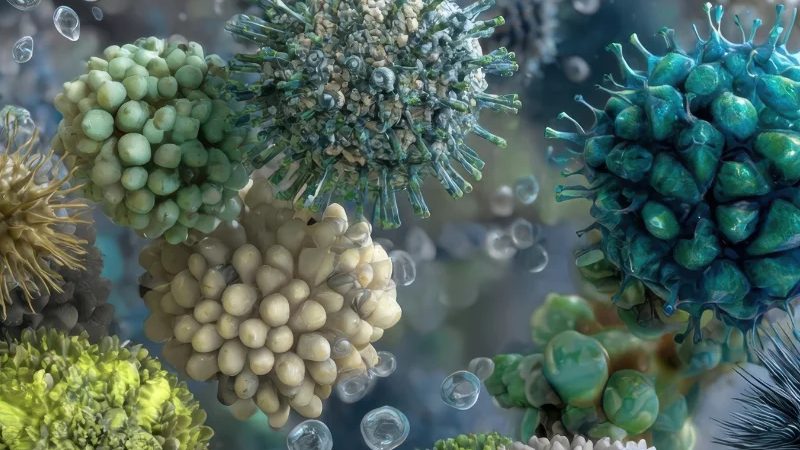
This article explains what PRP is, what muse stem cells are, how the two actually differ in material, mechanism, and evidence, and what happens when you look for research comparing them directly.
What Is PRP?
Platelet-rich plasma (PRP) is prepared from a patient's own blood. A sample is drawn and centrifuged to concentrate platelets, which release growth factors including PDGF, TGF-beta, VEGF, and EGF at roughly three to five times their normal concentration in blood (Wu et al., International Journal of Molecular Sciences, 2025). That concentrated fluid is then injected at the treatment site.
PRP's proposed mechanisms include reducing pro-inflammatory activity, supporting angiogenesis through VEGF and PDGF signaling, and modulating pain and immune cell activity. Clinical results are described in the research itself as variable, with some orthopedic trials showing meaningful functional improvement and others showing minimal benefit over placebo, particularly in hair-restoration applications (Wu et al., International Journal of Molecular Sciences, 2025).
What Are MUSE Cells?
MUSE stem cells, short for multilineage-differentiating stress-enduring cells, are a distinct, naturally occurring subpopulation found within mesenchymal stem cell populations. They are identified by co-expression of the SSEA-3 marker with CD105 or CD45, and unlike PRP, they are actual cells capable of homing to injured tissue and differentiating into tissue from all three embryonic germ layers (Alanazi et al., Cells, 2023). Humanaut Health explains this biology in more depth in its dedicated article on how these cells work.
MUSE Cells vs PRP: How They Actually Differ
Where the Material Comes From
PRP is autologous: it is prepared from the patient's own blood, drawn and processed in the same clinical visit. MUSE cell products studied in clinical trials to date, such as CL2020, are allogeneic, meaning they are manufactured from donor tissue and administered as a separate biological product rather than something extracted from the patient during treatment.
What Each One Delivers to the Body
PRP does not contain stem cells. It delivers a concentrated burst of growth-factor and cytokine signaling intended to support the body's own repair processes at the injection site. MUSE cells, by contrast, are living cells that appear to sense injury signals such as sphingosine-1-phosphate and migrate toward damaged tissue after intravenous delivery, where researchers propose they can integrate and differentiate into needed cell types (Alanazi et al., Cells, 2023).
What Conditions Each Is Studied For
PRP research concentrates heavily on orthopedic and dermatologic applications: tendinopathy, osteoarthritis, hair restoration, and wound healing. MUSE cell trials to date have focused on a largely different set of conditions, including subacute ischemic stroke (Niizuma et al., Journal of Cerebral Blood Flow & Metabolism, 2023) and cervical spinal cord injury (Koda et al., Stem Cell Research & Therapy, 2024). Because the two are typically studied for different problems, "which one is better" is often the wrong question. Which one has been studied for the specific condition in front of you is usually the more useful one.
Is There Research Comparing Them Directly?
No peer-reviewed trial comparing MUSE cells and PRP head-to-head was identified for this article. Any comparison between them is necessarily indirect, built from each therapy's own separate evidence base rather than a study that enrolled patients into one arm or the other. This is a meaningfully different situation from muse cells vs stem cells, where MUSE cells are being compared to the broader mesenchymal stem cell category they naturally belong to, not to an unrelated therapy from a different biological family.
Safety and Regulatory Status
PRP is generally well tolerated, since it is prepared from the patient's own blood and carries minimal immune risk. Reported efficacy, however, is inconsistent across conditions, and most PRP protocols are performed as an autologous blood-product procedure rather than as an FDA-approved drug.
MUSE cell products have shown a favorable early safety signal across the small trials conducted so far, but they remain strictly investigational. No MUSE cell product currently holds FDA approval for any indication, and access is limited to clinical trial or research settings rather than routine clinical use.
Why the Comparison Gets Confusing
Part of the confusion comes from marketing language that groups PRP, fat-graft treatments, and purified cell therapies under one loose "regenerative medicine" or "stem cell" banner, even though they are biologically distinct. A clinic offering PRP for a tendon injury and a research program studying MUSE cells for stroke recovery are not offering variations on the same treatment. They are working with different starting material, different delivery routes, and different bodies of evidence entirely.
This matters practically because a patient comparing options for a specific condition, such as a tendon injury or joint pain, is unlikely to find MUSE cell research directly relevant, since that research has concentrated on neurological and systemic conditions instead. Conversely, someone researching stroke recovery is unlikely to find PRP studies relevant, since PRP research rarely extends to central nervous system injury. Framing the decision around "which condition has been studied with which therapy" tends to be more useful than treating MUSE and PRP as competing options for the same problem.
Frequently Asked Questions
What is the difference between MUSE cells and PRP?
PRP is a concentrate of a patient's own blood platelets and growth factors, while MUSE cells are actual donor-derived stem cells studied in an entirely different set of conditions, mostly neurological rather than orthopedic.
Are muse stem cells better than PRP?
Neither is categorically better, since they are typically studied for different conditions with different evidence bases. Whether either is appropriate depends on the specific condition, the available research for that condition, and a physician's assessment.
Is PRP a type of stem cell therapy?
No. PRP does not contain isolated stem cells. It delivers concentrated growth factors from the patient's own platelets rather than cells capable of differentiating into other tissue types.
Does the muse cells vs stem cells comparison also apply to PRP?
No. That comparison covers MUSE cells against the broader mesenchymal stem cell category they naturally belong to, while MUSE vs PRP is a comparison against an entirely different, non-cellular therapy.
Which is safer, MUSE cells or PRP?
PRP has a long track record of good tolerability since it uses the patient's own blood. MUSE cell products have shown a favorable safety profile in early trials as well, but with a much smaller evidence base, so safety comparisons should be discussed with a qualified provider rather than assumed.
Can PRP and MUSE cell therapy be used together?
No published clinical trial has tested combining the two, so any claim that a combination protocol is more effective than either alone is not currently supported by controlled research.
Key Takeaways
- Muse cells vs prp is a comparison between two fundamentally different approaches: PRP concentrates a patient's own blood growth factors, while MUSE cells are actual donor-derived stem cells.
- PRP research concentrates on orthopedic and dermatologic conditions, while MUSE cell research to date has focused on stroke, spinal cord injury, and other largely non-overlapping conditions.
- No peer-reviewed head-to-head trial comparing MUSE cells and PRP currently exists.
- PRP is generally well tolerated but has inconsistent efficacy across conditions; MUSE cell products show early favorable safety but remain investigational, with no FDA-approved product available.
- Choosing between them should be based on the specific condition and current evidence for that condition, discussed with a qualified physician.
Talk to Humanaut Health About Regenerative Medicine
Anyone weighing MUSE cell therapy against PRP or other options can start with a personalized regenerative medicine consultation at Humanaut Health to review which evidence base fits their specific goals. Learn more about Humanaut Health's concierge approach to longevity and human optimization care.
Sources
- Wu et al., International Journal of Molecular Sciences, 2025
- Alanazi et al., Cells, 2023
- Niizuma et al., Journal of Cerebral Blood Flow & Metabolism, 2023
- Koda et al., Stem Cell Research & Therapy, 2024
References
- Wu, W-S., Chen, L-R., Chen, K-H. "Platelet-Rich Plasma (PRP): Molecular Mechanisms, Actions and Clinical Applications in Human Body." International Journal of Molecular Sciences, 2025; 26(21):10804. DOI: 10.3390/ijms262110804
- Alanazi, R.F., Alhwity, B.S., Almahlawi, R.M., et al. "Multilineage Differentiating Stress Enduring (Muse) Cells: A New Era of Stem Cell-Based Therapy." Cells, 2023; 12(13):1676. DOI: 10.3390/cells12131676
- Niizuma, K., Osawa, S.I., Endo, H., et al. "Randomized placebo-controlled trial of CL2020, an allogenic muse cell-based product, in subacute ischemic stroke." Journal of Cerebral Blood Flow & Metabolism, 2023; 43(12):2029-2039. DOI: 10.1177/0271678X231202594
- Koda, M., Imagama, S., Nakashima, H., et al. "Safety and feasibility of intravenous administration of a single dose of allogenic-Muse cells to treat human cervical traumatic spinal cord injury: a clinical trial." Stem Cell Research & Therapy, 2024; 15:259. DOI: 10.1186/s13287-024-03842-w