Photopheresis vs Plasmapheresis: Key Differences Explained
5 min read
AUTHOR

MEDICALLY REVIEWED BY

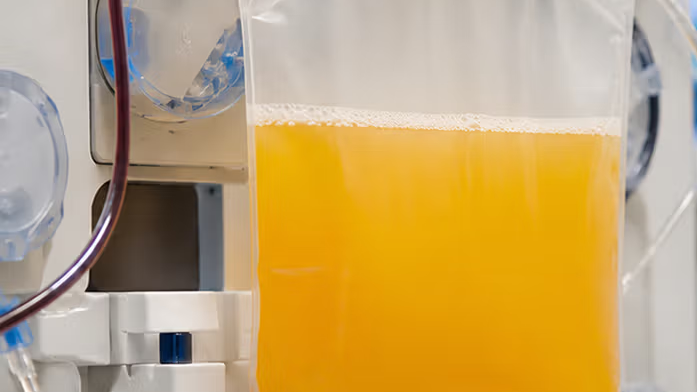
Patients and caregivers researching apheresis-based treatments often come across two similarly named procedures: photopheresis and plasmapheresis. Because both use apheresis equipment to process blood outside the body, it is easy to assume they treat the same conditions. In reality, a photopheresis vs plasmapheresis comparison reveals two mechanistically distinct procedures. Photopheresis treats white blood cells with a light-activated medication and returns them to the body, while plasmapheresis removes or exchanges plasma itself. This article compares the two procedures, reviews when each is used, covers safety, and outlines where Humanaut Health's Therapeutic Plasma Exchange (TPE) service fits for readers researching plasma-directed care. Humanaut Health does not offer photopheresis, so this article is educational background, not a description of an in-house treatment.
What Is Photopheresis?
Extracorporeal photopheresis (ECP) separates white blood cells, known as leukocytes, from the rest of the blood using apheresis technology. The collected leukocytes are treated with a photosensitizing agent called 8-methoxypsoralen (8-MOP) and exposed to ultraviolet A (UVA) light before being reinfused (Cho et al., JDDG 2023); Arora & Setia, Asian J Transfus Sci 2017. No plasma is removed or replaced at any point, which is the key structural distinction from plasmapheresis, detailed in the comparison below.
At a cellular level, the treated white blood cells appear to undergo a controlled process of programmed cell death called apoptosis, which researchers believe may shift the immune system toward a more tolerant, less inflammatory state rather than broadly suppressing immune function (Cho et al., 2023).
Photopheresis was first studied in the 1980s for cutaneous T-cell lymphoma (CTCL), with a landmark trial reporting encouraging early results (Edelson et al., NEJM 1987), forming the basis for its eventual FDA clearance for palliative treatment of CTCL skin manifestations. Other uses, including chronic graft-versus-host disease and transplant-rejection prevention, are guideline-supported but should not be described as FDA-approved.
What Is Plasmapheresis?
Plasmapheresis, often performed clinically as therapeutic plasma exchange (TPE), separates plasma from the rest of the blood using centrifugation or membrane filtration. Pathogenic components carried in the plasma, such as autoantibodies, immune complexes, or excess inflammatory cytokines, are discarded, and the removed volume is typically replaced with a fluid such as albumin (Cervantes et al., AJKD 2023); Sergent & Ashurst, StatPearls).
This runs in the opposite direction of photopheresis. In a plasmapheresis vs photopheresis comparison, plasmapheresis targets and removes plasma itself, while photopheresis leaves plasma untouched and treats white blood cells instead. Readers wanting a deeper walkthrough of plasmapheresis mechanics can review Humanaut Health's explainer on plasma exchange vs. plasmapheresis.
For readers who arrived here with a plasma-related concern, Humanaut Health's Therapeutic Plasma Exchange service is the clinically relevant offering. Photopheresis is not part of Humanaut Health's service menu.
Photopheresis vs Plasmapheresis: Key Differences
The table below summarizes how photopheresis vs plasmapheresis differ in mechanism, target, and evidence-backed uses.
Aspect | Photopheresis (ECP) | Plasmapheresis (TPE) | |
What is separated | White blood cells (leukocytes) | Plasma | |
What happens to it | Treated with a photosensitizer and UVA light, then returned | Discarded (with pathogenic constituents) or exchanged for replacement fluid | |
What is returned | Treated white blood cells plus remaining blood components | Blood cells plus replacement fluid (such as albumin) | |
Primary mechanism | Immunomodulation (shifts immune activity) | Removal of pathogenic substances from plasma | |
Main evidence-backed uses | Cutaneous T-cell lymphoma, chronic GvHD, select transplant-rejection indications | Autoimmune/neurological conditions with pathogenic circulating antibodies, TTP, and related conditions | |
Offered by Humanaut Health | No | Yes (Therapeutic Plasma Exchange) |
Both use apheresis equipment, but they target different blood components for different therapeutic goals, so they are not interchangeable and are not generally used to treat the same conditions.
When Is Each Procedure Used?
Clinical guidelines from the American Society for Apheresis (ASFA) assign category ratings to both procedures based on the strength of available evidence (Connelly-Smith et al., J Clin Apheresis 2023). For photopheresis, that evidence covers:
- Cutaneous T-cell lymphoma, the original indication studied in early research (Edelson et al., 1987).
- Chronic graft-versus-host disease, particularly steroid-refractory cases, supported by a meta-analysis reporting a 64 percent overall response rate (Malik et al., Blood Research 2014) and a randomized trial showing more steroid-dose reductions with photopheresis than with standard therapy alone (Flowers et al., Blood 2008).
- Graft-versus-host disease prevention, where evidence is weaker: a 157-patient randomized trial found no significant benefit when photopheresis was used prophylactically, suggesting it works better for established disease than for prevention (Ali et al., Transplant Cell Ther 2023).
- Lung transplant rejection prevention, where a 62-patient randomized trial linked photopheresis to lower chronic lung allograft dysfunction at three years (Benazzo et al., Eur Respir J 2024).
- Antibody-mediated heart transplant rejection in select high-risk patients, where a retrospective cohort found photopheresis associated with reduced donor-specific antibodies and improved rejection-free survival (Rubinstein et al., Clin Transplant 2025).
Plasmapheresis/TPE addresses a different set of conditions, generally autoimmune and neurological conditions involving pathogenic circulating antibodies, and ASFA groups these into four categories using the same evidence-strength framework (Sergent & Ashurst, StatPearls).
Which procedure a care team recommends depends on which blood component is thought to be driving the condition, not on general apheresis candidacy. For the fuller apheresis classification picture, see Humanaut Health's apheresis vs. plasmapheresis.
Safety Considerations
Photopheresis appears generally well tolerated in the trials and reviews cited above. Most reported effects relate to the apheresis and venous-access portion of the procedure, such as mild hypotension or transient citrate-related effects, rather than the light-treatment step itself (Cho et al., 2023).
Plasmapheresis/TPE safety has already been covered in depth in Humanaut Health's existing plasmapheresis content. At a summary level, TPE involves replacing removed plasma volume with a fluid such as albumin, which carries its own considerations, including possible reactions to the replacement fluid, distinct from anything involved in photopheresis. Both are performed under direct clinical supervision with ongoing monitoring, and neither should be pursued outside a qualified clinical setting.
Frequently Asked Questions
Is photopheresis the same as plasmapheresis?
No. Photopheresis treats white blood cells with light-activated medication and returns them, while plasmapheresis removes or exchanges plasma itself. Both use apheresis equipment, but they target different blood components and are generally used for different conditions.
What is the main difference between photopheresis and plasmapheresis?
The main difference is which part of the blood is processed. Photopheresis works on white blood cells using a photosensitizing agent and UVA light, while plasmapheresis separates and removes plasma, discarding or exchanging the components it carries.
What conditions is photopheresis used for?
Photopheresis is used for cutaneous T-cell lymphoma and, per guideline-supported evidence, chronic graft-versus-host disease and select transplant-rejection cases. Its FDA clearance covers only palliative CTCL treatment; the other uses are guideline-supported, not FDA-approved.
What conditions is plasmapheresis used for?
Plasmapheresis is used for autoimmune and neurological conditions where pathogenic antibodies in the plasma are believed to drive symptoms, among other indications. Humanaut Health offers this procedure clinically as Therapeutic Plasma Exchange.
Does photopheresis remove plasma?
No. Photopheresis separates and treats white blood cells, then returns them with the rest of the blood's components. Plasma is not removed or replaced, which is a key distinction from plasmapheresis.
Is photopheresis or plasmapheresis considered safer?
Both procedures appear generally well tolerated under clinical supervision, though each carries its own considerations. Neither is categorically safer, since the risks relate more to what each procedure involves than to one being inherently riskier.
Does Humanaut Health offer photopheresis?
No. Humanaut Health does not offer photopheresis as a clinical service. Readers researching photopheresis should consult a transplant, dermatology, or hematology specialist, while Humanaut Health's relevant plasma-directed service is Therapeutic Plasma Exchange.
How do doctors decide between photopheresis and plasmapheresis?
In a plasmapheresis vs photopheresis decision, clinicians typically consider which blood component, white cells or plasma, appears to be driving the condition. Guideline category ratings from professional apheresis societies also inform which procedure is considered appropriate.

Key Takeaways
- A photopheresis vs plasmapheresis comparison comes down to what each procedure processes: photopheresis treats white blood cells, while plasmapheresis removes or exchanges plasma.
- Both use apheresis equipment, but they are mechanistically distinct and not interchangeable.
- Plasmapheresis, delivered as Therapeutic Plasma Exchange, addresses autoimmune and neurological conditions involving pathogenic circulating antibodies.
- Both procedures appear generally well tolerated under clinical supervision, though their specific safety considerations differ.
Talk to Humanaut Health About Therapeutic Plasma Exchange
If your research into photopheresis vs plasmapheresis was prompted by a plasma-related concern, schedule a consultation with Humanaut Health to discuss whether Therapeutic Plasma Exchange may be right for you, since photopheresis is not offered as a Humanaut Health service.
References
- Connelly-Smith, L., Alquist, C.R., Aqui, N.A., et al. (ASFA Writing Committee). "Guidelines on the Use of Therapeutic Apheresis in Clinical Practice – Evidence-Based Approach from the Writing Committee of the American Society for Apheresis: The Ninth Special Issue." Journal of Clinical Apheresis, 2023; 38(2):77-278. DOI: 10.1002/jca.22043
- Cho, A., Jantschitsch, C., Knobler, R., et al. "Mode of Action, Indications, and Recommendations on Extracorporeal Photopheresis (ECP)." Journal der Deutschen Dermatologischen Gesellschaft, 2023; 21(9):1010-1029. DOI: 10.1111/ddg.15167
- Arora, S., Setia, R. "Extracorporeal Photopheresis: Review of Technical Aspects." Asian Journal of Transfusion Science, 2017; 11(2):81-86. DOI: 10.4103/ajts.AJTS_87_16
- Edelson, R., Berger, C., Gasparro, F., et al. "Treatment of Cutaneous T-Cell Lymphoma by Extracorporeal Photochemotherapy: Preliminary Results." New England Journal of Medicine, 1987; 316(6):297-303. DOI: 10.1056/NEJM198702053160603
- Flowers, M.E.D., Apperley, J.F., van Besien, K., et al. "A Multicenter Prospective Phase 2 Randomized Study of Extracorporeal Photopheresis for Treatment of Chronic Graft-versus-Host Disease." Blood, 2008; 112(7):2667-2674. DOI: 10.1182/blood-2008-03-141481
- Malik, M.I., Litzow, M., Hogan, W., Patnaik, M., Murad, M.H., Prokop, L.J., Winters, J.L., Hashmi, S. "Extracorporeal Photopheresis for Chronic Graft-versus-Host Disease: A Systematic Review and Meta-Analysis." Blood Research, 2014; 49(2):100-106. DOI: 10.5045/br.2014.49.2.100
- Ali, M.M., Gedde-Dahl, T., Osnes, L.T., Perrier, F., Veierod, M.B., Tjonnfjord, G.E., Iversen, P.O. "Extracorporeal Photopheresis as Graft-versus-Host Disease Prophylaxis: A Randomized Controlled Trial." Transplantation and Cellular Therapy, 2023; 29(6):364.e1-364.e11. DOI: 10.1016/j.jtct.2023.02.023
- Benazzo, A., Cho, A., Auner, S., et al. "Extracorporeal Photopheresis for the Prevention of Rejection After Lung Transplantation: A Prospective Randomised Controlled Trial." European Respiratory Journal, 2025; 65(2):2400733. DOI: 10.1183/13993003.00733-2024
- Rubinstein, G., Fernandez Valledor, A., Moeller, C.M., et al. "Extracorporeal Photopheresis in the Treatment of Cardiac Allograft Rejection in the Modern Era: A Single-Center Experience." Clinical Transplantation, 2025; 39(8):e70247. DOI: 10.1111/ctr.70247
- Cervantes, C.E., Bloch, E.M., Sperati, C.J. "Therapeutic Plasma Exchange: Core Curriculum 2023." American Journal of Kidney Diseases, 2023; 81(4):475-492. DOI: 10.1053/j.ajkd.2022.10.017
- Sergent, S.R., Ashurst, J.V. "Plasmapheresis." StatPearls [Internet], StatPearls Publishing, Treasure Island (FL), 2026 Jan- (updated 2023). NCBI Bookshelf ID: NBK560566. Available at: https://www.ncbi.nlm.nih.gov/books/NBK560566/