Exchange Transfusion vs Plasmapheresis: What's the Difference?
5 min read
AUTHOR

MEDICALLY REVIEWED BY

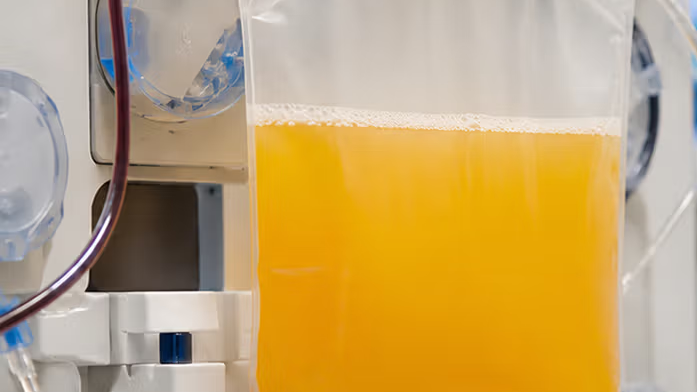
Both procedures take blood out of the body, change something about it, and send the rest back. That shared outline is why the names get mixed up so often. The real distinction is simple once it is stated plainly: exchange transfusion swaps out red blood cells, while plasmapheresis swaps out plasma, the liquid portion of blood that carries antibodies and proteins.
This guide to exchange transfusion vs plasmapheresis explains how each procedure works, which conditions each one is used for, what major medical societies say about them, and how their safety profiles differ. At Humanaut Health, we believe patients make better decisions when complex medical terms are explained clearly, and this comparison comes up often among people researching blood-based therapies.
Why These Two Procedures Get Confused
Blood has two main compartments. One is the cellular part, made up mostly of red blood cells along with white cells and platelets. The other is plasma, a protein-rich fluid that makes up a little more than half of total blood volume.
Some diseases are driven by abnormal red cells. Others are driven by harmful substances floating in the plasma, such as autoantibodies. The procedure a specialist chooses depends on which compartment holds the problem, and that single question explains most of the difference between these two treatments.
A Quick Terminology Map
Medical vocabulary in this area overlaps heavily. "Exchange transfusion," "red blood cell exchange," and "erythrocytapheresis" all describe removing a patient's red cells and replacing them with donor red cells. On the plasma side, "plasmapheresis" and "therapeutic plasma exchange" are used almost interchangeably in everyday clinical practice.
Readers comparing plasmapheresis vs plasma exchange specifically can find a detailed breakdown in our plasma exchange vs plasmapheresis article. Both red cell exchange and plasma exchange belong to a broader family of procedures, which we cover in our guide to the apheresis family.
What Is Exchange Transfusion?
How It Works
During an exchange transfusion, a patient's own red blood cells are gradually removed and replaced with red cells from screened donors. It can be performed manually, in small repeated cycles, or with an automated apheresis machine that separates and exchanges red cells continuously. Choosing between these approaches, and deciding whether a peripheral vein or a central catheter is needed, are central planning steps (Otrock et al., Transfusion, 2018).
Unlike a simple transfusion, which only adds blood, an exchange removes blood at the same time. This lets clinicians lower the proportion of abnormal cells without overloading the circulation with extra volume or iron.
When It Is Used
Sickle cell disease is the most common modern reason for red cell exchange. In this condition, red cells containing hemoglobin S can stiffen and block small blood vessels. A consensus report from the AABB therapeutic apheresis subsection describes typical goals as bringing hemoglobin S to about 30% or lower while keeping hematocrit below roughly 30%, which helps avoid thickened, sluggish blood (Biller et al., Transfusion, 2018). The same group generally discourages red cell exchange as an acute treatment for an uncomplicated pain crisis.
Why lowering hemoglobin S matters was shown in the landmark STOP trial. Among high-risk children with sickle cell anemia, regular transfusions that kept hemoglobin S at or below 30% were associated with one stroke versus ten in the standard care group, and the trial was stopped early (Adams et al., New England Journal of Medicine, 1998). Those transfusions were mainly simple transfusions, but the principle of reducing sickle hemoglobin is the same one red cell exchange relies on.
The American Society for Apheresis lists red cell exchange as a first-line option for acute stroke and stroke prevention in sickle cell disease and as an accepted second-line option for severe acute chest syndrome (Connelly-Smith et al., Journal of Clinical Apheresis, 2023).
Newborns are the other classic group. Severe jaundice from very high bilirubin can, in rare cases, call for an exchange transfusion. The American Academy of Pediatrics 2022 guideline modestly raised treatment thresholds and introduced an "escalation of care" stage, with intensive phototherapy starting 2 mg/dL below the exchange threshold, so exchange transfusion is reserved for the most severe cases (Kemper et al., Pediatrics, 2022).
The list of uses has also narrowed over time. Exchange transfusion was once used as an add-on treatment for severe malaria, but a review by CDC researchers found no survival benefit and concluded it cannot be recommended for that purpose (Tan et al., Clinical Infectious Diseases, 2013).

What Is Plasmapheresis?
How It Works
Plasmapheresis draws blood into a machine that separates plasma from cells, either by spinning the blood in a centrifuge or by passing it through a membrane filter. The patient's plasma is discarded and replaced with albumin, donor plasma, or a combination, while the patient's own red cells, white cells, and platelets are returned (Cervantes et al., American Journal of Kidney Diseases, 2023).
The goal is to lower the level of harmful substances in the plasma. These may include autoantibodies, immune complexes, or certain abnormal proteins. Because the body keeps producing many of these substances, a course of several sessions is usually planned.
When It Is Used
Plasmapheresis is mainly used for conditions in which the immune system or a circulating substance drives the disease. Examples include certain autoimmune neurological disorders, some kidney conditions, and specific blood disorders. The ASFA guidelines grade 166 indications across both plasma and red cell procedures, with evidence strength varying widely between conditions.
Guillain-Barré syndrome offers one of the clearest examples of supporting evidence. A Cochrane review of six trials with 649 participants found that plasma exchange was associated with faster recovery than supportive care alone, including a median of 30 versus 44 days to walk with aid in one trial, without a significant rise in serious adverse events (Chevret et al., Cochrane Database of Systematic Reviews, 2017). Therapeutic plasma exchange is one of several blood cleansing therapies offered at Humanaut Health under physician supervision.
Exchange Transfusion vs Plasmapheresis at a Glance
The table below summarizes the main points of plasmapheresis vs exchange transfusion side by side.
Factor | Exchange Transfusion (Red Cell Exchange) | Plasmapheresis (Plasma Exchange) | |
What is removed | Patient's red blood cells | Patient's plasma | |
What is returned or given | Donor red blood cells | Patient's own cells plus albumin and/or donor plasma | |
Core problem targeted | Abnormal or damaged red cells, or bilirubin in newborns | Harmful antibodies or proteins in plasma | |
Common examples | Sickle cell disease complications, severe newborn jaundice | Guillain-Barré syndrome, other immune-mediated conditions | |
Donor products needed | Yes, red cells, often antigen-matched | Sometimes, depending on replacement fluid | |
Typical setting | Hospital, apheresis unit, or neonatal intensive care | Apheresis unit or specialized clinic |
The key idea is that the two procedures are not interchangeable. A disease caused by sickled red cells would not be expected to respond to plasma removal, and an antibody-driven disease would not be expected to improve by swapping red cells.
Safety Considerations
Both procedures are generally performed by trained teams with careful monitoring, and serious complications are uncommon. A multinational registry of 50,846 apheresis procedures found that adverse events occurred in 8.4% of first procedures and 5.5% of later ones, with most being mild or moderate (Mörtzell Henriksson et al., Transfusion and Apheresis Science, 2016).
Each procedure also carries its own specific risks:
- Red cell exchange exposes patients to donor red cells, which can trigger antibody formation against donor blood. The American Society of Hematology recommends extended red cell antigen matching to help reduce this risk (Chou et al., Blood Advances, 2020).
- Plasmapheresis can cause tingling or cramps from the citrate anticoagulant, drops in blood pressure, and temporary reductions in clotting factors when albumin is the replacement fluid (Cervantes et al., American Journal of Kidney Diseases, 2023).
- Both procedures may require a central venous catheter, which carries a risk of infection or clotting.
Neonatal exchange transfusion deserves separate mention because the patients are so vulnerable. In a large study of U.S. neonatal intensive care units, 4% of infants died within 7 days of the procedure, with risk concentrated among the most premature babies, although the authors note that underlying illness contributes heavily to these outcomes (Wolf et al., Journal of Perinatology, 2020 ).
Frequently Asked Questions
Is exchange transfusion the same as plasmapheresis?
No. Exchange transfusion replaces red blood cells with donor red cells, while plasmapheresis removes plasma and returns the patient's own cells. They target different parts of the blood and different diseases.
What is the main difference in plasmapheresis vs exchange transfusion?
The main difference is the blood compartment being exchanged. Plasmapheresis focuses on substances in the plasma, such as antibodies, while exchange transfusion focuses on the red cells themselves.
Is red cell exchange the same as exchange transfusion?
In most modern usage, yes. Red cell exchange and erythrocytapheresis describe the same goal, often performed with an automated machine rather than by hand.
Why is exchange transfusion used for sickle cell disease?
It lowers the share of red cells containing hemoglobin S without adding excess blood volume or iron. Guidelines support it in specific situations, such as stroke, rather than for routine pain episodes.
Are exchange transfusions still done for newborn jaundice?
They are still used, but rarely. Current pediatric guidance relies on phototherapy first and reserves exchange transfusion for the most severe cases.
What is replaced during plasmapheresis?
The removed plasma is typically replaced with albumin, donor plasma, or a mix of the two. The patient's own blood cells are returned, which is why discussions of plasmapheresis vs plasma exchange usually describe the same process.
Which procedure carries more risk?
Risk depends far more on the patient's condition than on the procedure name. Both are generally well tolerated in experienced hands, with mostly mild side effects reported in large registries.
Does Humanaut Health offer exchange transfusion?
No. Humanaut Health offers therapeutic plasma exchange, while exchange transfusion for sickle cell disease or newborns is managed by hospital-based specialist teams.
Key Takeaways
- The difference in exchange transfusion vs plasmapheresis comes down to which part of the blood is replaced: red cells or plasma.
- Exchange transfusion, also called red cell exchange, is mainly used for sickle cell disease complications and severe newborn jaundice.
- Plasmapheresis removes plasma carrying harmful antibodies or proteins and is used for a range of immune-mediated conditions.
- Major guidelines from ASFA, ASH, and the AAP define when each procedure may be appropriate.
- Both procedures are generally well tolerated, though each carries distinct risks that specialists weigh carefully.
Explore Therapeutic Plasma Exchange at Humanaut Health
To learn whether plasma-based care could fit into a personalized, proactive partnership with our clinical team, explore our therapeutic plasma exchange.
References
- Connelly-Smith, L., Alquist, C.R., Aqui, N.A., et al. "Guidelines on the Use of Therapeutic Apheresis in Clinical Practice – Evidence-Based Approach from the Writing Committee of the American Society for Apheresis: The Ninth Special Issue." Journal of Clinical Apheresis, 2023; 38(2):77-278. DOI: 10.1002/jca.22043
- Chou, S.T., Alsawas, M., Fasano, R.M., et al. "American Society of Hematology 2020 guidelines for sickle cell disease: transfusion support." Blood Advances, 2020; 4(2):327-355. DOI: 10.1182/bloodadvances.2019001143
- Biller, E., Zhao, Y., Berg, M., et al. "Red blood cell exchange in patients with sickle cell disease: indications and management: a review and consensus report by the therapeutic apheresis subsection of the AABB." Transfusion, 2018; 58(8):1965-1972. DOI: 10.1111/trf.14806
- Kemper, A.R., Newman, T.B., Slaughter, J.L., et al. "Clinical Practice Guideline Revision: Management of Hyperbilirubinemia in the Newborn Infant 35 or More Weeks of Gestation." Pediatrics, 2022; 150(3):e2022058859. DOI: 10.1542/peds.2022-058859
- Chevret, S., Hughes, R.A.C., Annane, D. "Plasma exchange for Guillain-Barré syndrome." Cochrane Database of Systematic Reviews, 2017; Issue 2, Art. No. CD001798. DOI: 10.1002/14651858.CD001798.pub3
- Adams, R.J., McKie, V.C., Hsu, L., et al. "Prevention of a First Stroke by Transfusions in Children with Sickle Cell Anemia and Abnormal Results on Transcranial Doppler Ultrasonography." New England Journal of Medicine, 1998; 339(1):5-11. DOI: 10.1056/NEJM199807023390102
- Tan, K.R., Wiegand, R.E., Arguin, P.M. "Exchange Transfusion for Severe Malaria: Evidence Base and Literature Review." Clinical Infectious Diseases, 2013; 57(7):923-928. DOI: 10.1093/cid/cit429
- Cervantes, C.E., Bloch, E.M., Sperati, C.J. "Therapeutic Plasma Exchange: Core Curriculum 2023." American Journal of Kidney Diseases, 2023; 81(4):475-492. DOI: 10.1053/j.ajkd.2022.10.017
- Otrock, Z.K., Thibodeaux, S.R., Jackups, R. Jr. "Vascular access for red blood cell exchange." Transfusion, 2018; 58(Suppl 1):569-579. DOI: 10.1111/trf.14495
- Mörtzell Henriksson, M., Newman, E., Witt, V., et al. "Adverse events in apheresis: An update of the WAA registry data." Transfusion and Apheresis Science, 2016; 54(1):2-15. DOI: 10.1016/j.transci.2016.01.003
- Wolf, M.F., Childers, J., Gray, K.D., et al. "Exchange transfusion safety and outcomes in neonatal hyperbilirubinemia." Journal of Perinatology, 2020; 40(10):1506-1512. DOI: 10.1038/s41372-020-0642-0